Aller au contenu principal

Universal menu

  • Mondiale
  • Régions
    • Afrique
    • Amériques et Caraïbes
    • États arabes
    • Asie et Pacifique
    • Europe et Asie centrale
  • Connaissance
  • Donnés
  • Entraînement
  • Transparence
ONU Femmes - Pour toutes les femmes et les filles

Main Navigation-HQ

  • Qui nous sommes
    • À propos de nous
      • À propos d’ONU Femmes
      • Modèle opérationnel
      • Documents directeurs
      • Présence mondiale
    • Dirección
      • Structure de gouvernance
      • Leadership exécutif
      • Conseil d'administration
      • Responsabilité
    • Travaillez avec nous
      • Empleo
      • Approvisionnement
      • Contactez-nous
      • Plan stratégique d’ONU Femmes 2026–2029
      • UN Women Strategic Plan 2026–2029 - social media image
        Plan stratégique d’ONU Femmes 2026–2029
  • Notre travail
    • Comment nous travaillons
      • Programme de développement durable à l'horizon 2030
      • Commission de la condition de la femme
      • Parité des sexes dans le système des Nations Unies
      • Soutien intergouvernemental
      • Partenariats
      • Recherche et données
      • Centre de formation
      • Fonds de subventions
      • Coordination du système des Nations Unies
    • Domaines d'intervention
      • Mettre fin à la violence contre les femmes
      • Femmes handicapées
      • Action humanitaire
      • Leadership et gouvernance
      • Autonomisation économique
      • Innovation et technologie
      • Femmes handicapées
      • VIH et SIDA
  • Nouvelles
    • Centre des médias
      • Matériel de presse
      • Contacts médias
      • Pourquoi les femmes sont-elles si épuisées ? Le travail de soins et la charge mentale
      • Two adults stand at a table changing diapers on baby dolls, with laundry hanging on a clothesline behind them in a home setting.
        Pourquoi les femmes sont-elles si épuisées ? Le travail de soins et la charge mentale
      • Les coupes budgétaires dans l’aide humanitaire entraînent le démantèlement d’organisations de femmes intervenant dans les crises humanitaires
      • A young Ugandan woman sits with another local woman to talk
        Les coupes budgétaires dans l’aide humanitaire entraînent le démantèlement d’organisations de femmes intervenant dans les crises humanitaires
    • Dernière
      • Nouvelles
      • Articles explicatifs
      • Au point
  • Digithèque
    • Resources
      • Publications
      • Rapport annuel
      • Progress of the world’s women
      • World survey on the role of women in development
      • The gender snapshot
    • SexeTerme
      • SexeTerme
      • Autorisations de réimpression
      • Gros plan sur l’égalité des sexes 2025
      • gender snapshot thumbnail transparent
        Gros plan sur l’égalité des sexes 2025
  • Rejoignez-nous
    • Comment s'impliquer
      • Pour TOUTES les femmes et les filles
      • Journée internationale de la femme
      • 16 jours d'activisme pour mettre fin à la violence contre les femmes et les filles
      • Campagne UNiTE! pour mettre fin à la violence faite aux femmes
      • Lui pour Elle
Demandez à l'IA
https://84e5cfacd5c7e99f9825edf344450c.1b.environment.api.powerplatform.com/powervirtualagents/botsbyschema/crad4_websiteQA/directline/token?api-version=2022-03-01-preview
1
-
Posez votre question ici
Assistant de site Web IA

Bonjour, comment puis-je vous aider ?

Les réponses des chatbots IA peuvent être incorrectes. Vérifiez toujours les informations importantes.

Donate button menu

Donner

Fil d'Ariane

  1. Accueil
  2. Parcourez Nos Nouvelles Les Plus Récentes

Website survey

We want to know how we can improve your experience on this website. Completing this survey takes less than 5 minutes.

TAKE THE SURVEY
Selon les mots de …

Selon les mots de Mariam : « Quand j’ai trouvé un avocat, tout a changé »

13 novembre 2021
  • Share to Facebook
  • Share to Twitter
  • Share to LinkedIn
  • Share to E-mail

Mariam*, qui a 47 ans, a vécu avec un mari violent pendant 17 ans avant de le quitter en 2018 après avoir demandé la protection et l’aide juridique de la KAFA, une organisation non gouvernementale libanaise et partenaire d’ONU Femmes. Grâce aux services juridiques et au soutien qu’elle a reçu d’eux, Mariam a pu accéder à la justice et retrouver la force qu’elle croyait avoir perdue.

Trigger warning: The following story includes descriptions of gender-based violence.
Image
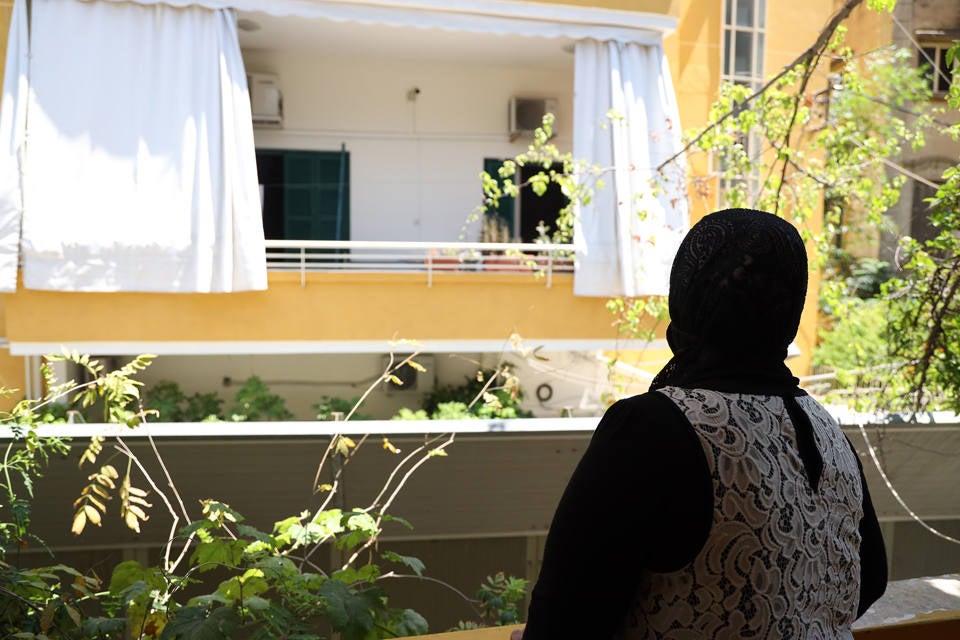
Mariam, photographed in Beirut.
Mariam, photographed in Beirut. Picture: UN Women/Dar Al Mussawir.
Mariam, photographiée à Beyrouth. Photo: ONU Femmes/Dar Al Mussawir.
open quote

For 17 years, my ex-husband physically abused me, forbid me from moving freely, and threatened to kill me when I would disagree with him. One day, as we sat on the balcony he said, out of the blue, “I wish I could know in advance when I will die. I would shoot you five minutes before. I would hate to die and leave you by yourself, feeling happy.” We were not even arguing that day.

I had married him despite the objection of my parents. My dad told me: “If you want to marry him, fine. Do it, but don’t come back feeling distressed or as a divorcee.” For this reason, I remained quiet for so long. At one point, I could not hide the abuse anymore, and my parents told me I could return home alone, without my children. I couldn’t leave them behind.

When I finally got the courage to leave my husband, he took away my kids and forbade me to see them for seven months. He deceived me into believing that I had no rights, that I could not divorce him, and that, regardless of what I said, the religious court [ 1] would only believe him.

When I first filed for divorce, I did not understand anything about the law. I was humiliated in court, my husband attacked me, both verbally and physically, and a judge called me crazy.

Then, a cousin of mine who works with the Lebanese Internal Security Forces suggested I seek KAFA’s help, and they assigned a lawyer to my case.

Once I had a lawyer with me, everything changed. I was respected in court and the final verdict allowed me to keep my children, who were being physically and verbally abused by my ex-husband. I also requested alimony through the divorce proceeding.

Without the help of KAFA, I would still be struggling in court to this day.

When my ex-husband died of heart disease, eight months ago, I again became entangled in a custody battle. My ex-husband’s family wanted custody of my children. Once again KAFA helped me to keep my children.

My experience is that women facing violence usually stay silent, as they think no one will help them or believe their stories. KAFA provided me with free legal and psychological aid. The extensive therapy sessions helped me to cope with the trauma. Before, I felt weak and lacked self-confidence. Now, not only I am surprised by how far I have come, but my family and everyone around me are also amazed by my confidence. I feel as if I am reborn.

I hope more women can benefit from the same support and services.”

Mariam is one of 364 women to be provided with a total of 707 legal consultations, psychological support services, and support in court procedures through the “Access to justice” project since January 2021. Funded by the Government of Netherlands and launched in July 2020, UN Women Lebanon supports KAFA in providing women from all backgrounds, especially from marginalized groups, with legal support and services to tackle cases related to the personal status laws, gender-based violence, and other gender-related issues. 

*The name has been changed to protect her identity.


Notes

[1] Lebanon does not have a civil code regulating personal status matters. Instead, there are 15 separate personal status laws for the country’s different recognized religious communities including 12 Christian, four Muslim, the Druze, and Jewish confessions, which are administered by separate religious courts. Most religious courts usually grant custody of children to the fathers at young ages despite economic, financial, and stability factors.

If you have experienced abuse, feel threatened, unsafe or need assistance, help is available. Find helplines here. Learn about some common signs of abuse and how to help here.

Sujets

  • Élimination de la violence contre les femmes et les filles
  • Interventions contre la violence
  • Accès la justice et à la protection juridique
  • États arabes / Afrique du Nord
  • Donneurs du CAD de l’OCDE et des autres pays
  • Liban
  • Pays-Bas

Contenu associé

Image
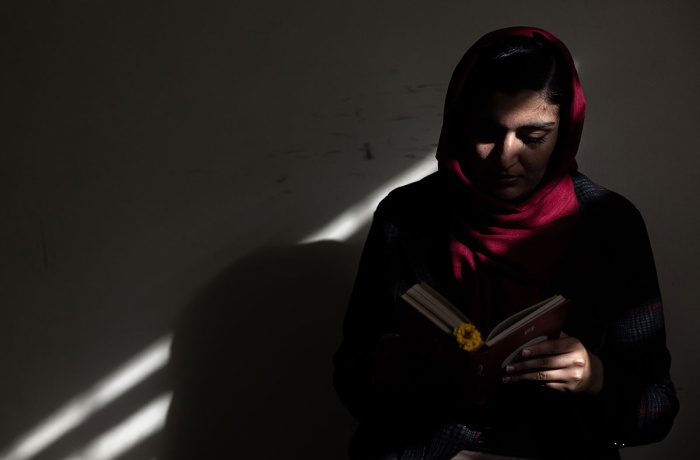
Masoma* est responsable au sein d’une organisation dirigée par des femmes dans le centre de l’Afghanistan qui, avec le soutien d’ONU Femmes, dispense des soins de santé primaires, des consultations en santé mentale, un accompagnement psychosocial et des formations professionnelles à près de 400 femmes chaque semaine.
Communiqué de presse

Cinq ans après la prise du pouvoir par les talibans : l’exclusion des femmes et des filles est devenue la norme en Afghanistan

12 août 2026
Cinq ans après la prise du pouvoir par les talibans : l’exclusion des femmes et des filles est devenue la norme en Afghanistan
Image
Six women standing closely together against a blue-to-purple gradient background, facing the camera with serious expressions. They are positioned in two rows, with a metallic UN Women logo displayed behind them. The women have diverse appearances and wear dark and neutral-toned clothing, creating a strong, unified group portrait.
Communiqué de presse

Aucun pays dans le monde n’est parvenu à instaurer la pleine égalité juridique pour les femmes et les filles

4 mars 2026
Aucun pays dans le monde n’est parvenu à instaurer la pleine égalité juridique pour les femmes et les filles
Image
Des hommes brandissent des pancartes contre les MGF lors de sessions de sensibilisation.
Reportage

Survivre aux mutilations génitales féminines (MGF)

29 janvier 2026
Survivre aux mutilations génitales féminines (MGF)

Footer menu-HQ

  • Nouvelles
  • Ressources
  • Notre travail
  • Nos méthodes
  • Dans le monde
  • Partenaires
  • Recrutement
  • Achats
  • Contactez-nous
  • Conseil d’administration
  • Commission de la condition de la femme

Donate button menu [Footer tablet]

  • Donner

Donate button menu [Footer]

  • Donner

Social media menu

  • Facebook
  • Twitter
  • LinkedIn
  • Flickr
  • YouTube
  • Instagram
ONU Femmes - Pour toutes les femmes et les filles

Footer bottom [Menu]

  • Sécurité de l’information
  • Confidentialité
  • Enquêtes
  • Conditions d’utilisation
Share this page
  • Share to Facebook
  • Share to Twitter
  • Share to LinkedIn
  • Share to E-mail

Or copy link