
Universal menu

  • Global
  • Regions
    • Africa
    • Americas and the Caribbean
    • Arab States
    • Asia and the Pacific
    • Europe and Central Asia
  • Knowledge
  • Data
  • Training
  • Transparency
UN Women - For all women and girls

Main Navigation-HQ

  • Who we are
    • About us
      • About UN Women
      • Business model
      • Guiding documents
      • Worldwide presence
    • Leadership
      • Governance structure
      • Executive leadership
      • Executive Board
      • Accountability
    • Work with us
      • Employment
      • Procurement
      • Calls for proposals
      • Contact us
      • UN Women Strategic Plan 2026–2029
      • UN Women Strategic Plan 2026–2029 - social media image
        UN Women Strategic Plan 2026–2029
  • What we do
    • Focus areas
      • Ending violence against women
      • Peace and security
      • Humanitarian action
      • Leadership and governance
      • Economic empowerment
      • Innovation and technology
      • Women with disabilities
      • Youth
      • HIV and AIDS
    • How we work
      • 2030 Agenda for Sustainable Development
      • Commission on the Status of Women
      • Gender parity in the UN system
      • Intergovernmental support
      • Partnerships
      • Research and data
      • Training Centre
      • Trust funds
      • UN system coordination
      • Gender Equality Accelerators
      • Gender Equality Accelerators artwork
        Gender Equality Accelerators
  • News and stories
    • Latest
      • News
      • Articles and explainers
      • In focus
    • Media center
      • Press materials
      • Media contacts
      • Explainer: Why are women so exhausted? Care work and the mental load
      • Two adults stand at a table changing diapers on baby dolls, with laundry hanging on a clothesline behind them in a home setting.
        Explainer: Why are women so exhausted? Care work and the mental load
      • Press release: Aid cuts dismantle women’s organizations working in humanitarian crises
      • A young Ugandan woman sits with another local woman to talk
        Press release: Aid cuts dismantle women’s organizations working in humanitarian crises
  • Digital library
    • Resources
      • Publications
      • Annual reports
      • Progress of the world’s women
      • World survey on the role of women in development
      • The gender snapshot
    • GenderTerm
      • GenderTerm
      • Reprint permissions
      • UN Women Highlights 2025–2026
      • A smiling woman.
        UN Women Highlights 2025–2026
      • The gender snapshot 2025
      • gender snapshot thumbnail transparent
        The gender snapshot 2025
  • Get involved
    • How to get involved
      • For ALL Women and Girls
      • International Women's Day
      • 16 Days of Activism to End Violence against Women and Girls
      • UNiTE! Campaign to End Violence against Women
      • Generation Equality
      • He for She
Ask AI
https://84e5cfacd5c7e99f9825edf344450c.1b.environment.api.powerplatform.com/powervirtualagents/botsbyschema/crad4_websiteQA/directline/token?api-version=2022-03-01-preview
1
-
Ask your question here
AI website assistant

Hello, how can I assist you?

AI chatbot responses may be incorrect. Always verify important information.

Donate button menu

Donate

Breadcrumb

  1. Home
  2. How we work

Website survey

We want to know how we can improve your experience on this website. Completing this survey takes less than 5 minutes.

TAKE THE SURVEY

Breadcrumb

  1. Home
  2. How we work

The 2030 Agenda for Sustainable Development
  • Share to Facebook
  • Share to Twitter
  • Share to LinkedIn
  • Share to E-mail
Image
2030 Agenda for Sustainable Development hero

In 2015, countries agreed on the need for comprehensive financing for development, adopted a new sustainable development agenda, and charted a universal and legally binding global agreement on climate change.

Concluding a negotiating process that spanned more than two years and featured the unprecedented participation of civil society, on 2 August 2015, governments united behind an ambitious agenda that features 17 new Sustainable Development Goals (SDGs) and 169 targets  to be achieved by 2030. These goals and targets seek to realize the human rights of all and to achieve gender equality and the empowerment of all women and girls. They are integrated and indivisible and balance the three dimensions of sustainable development: the economic, social, and environmental. The Goals and targets were adapted to stimulate action over the next fifteen years in areas of critical importance for humanity and the planet.

Each year, the High-level Political Forum on Sustainable Development convenes for follow-up and review of the 2030 Agenda for Sustainable Development and the SDGs. UN Women’s contribution to this review includes the annual release of the Progress on the Sustainable Development Goals: The Gender Snapshot report.

Progress on the Sustainable Development Goals

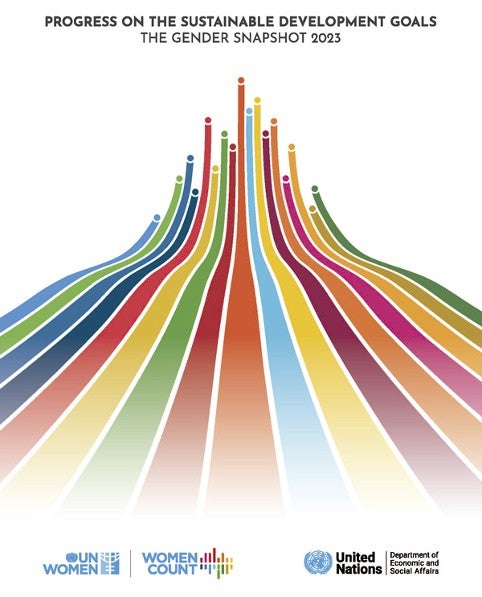
The Gender Snapshot brings together the latest available data on gender equality across all 17 goals to provide an updated assessment of progress to date.

The findings are sobering. Progress towards achieving the gender equality goal has been slow and insufficient. The distance to equal is long and time is short. The world is currently not on track to achieve gender equality by 2030.
Gender Snapshot
Image
gender snapshot 2025 banner

Tracking progress of Sustainable Development Goal 5

Of the 18 indicators tracked under SDG 5, only two are close to target: the proportion of seats held by women in local government, and laws on equal access to reproductive health, information and education. In four areas critical to women’s empowerment—equality between women and men in time spent on unpaid care and domestic work, decision making regarding sexual and reproductive health, mobile phone ownership among women, and having comprehensive systems in place to track and make public allocations for gender equality—the world is far or very far from the target. Progress on the other nine indicators with data stands moderately far from the target, but moderate is deeply insufficient when gender equality is a necessary foundation for progress across the 2030 Agenda for Sustainable Development. 

Explore SDG 5 progress at the global, regional and country level.

SDG Spotlight Series publications

In addition to the flagship report on the SDGs, The Gender Snapshot, UN Women in collaboration with partners routinely produces the Spotlight on the SDGs paper series.  

The objective of the series is to analyse and assess global trends in thematic areas across the SDGs from a gender perspective. Each paper reviews the state of gender equality in one of the 17 SDGs and showcases how multi-level data disaggregation by sex, age, and other relevant characteristics can help in identifying gender gaps and inequalities among groups of women and girls. Pressing data gaps and measurement challenges are also highlighted in each spotlight.

Other SDG-related publications

Technical brief by UN Women: Forecasting women in leadership positions Forecast…
Forecasting women in leadership positions Forecasting women in leadership positions

Forecasting women in leadership positions

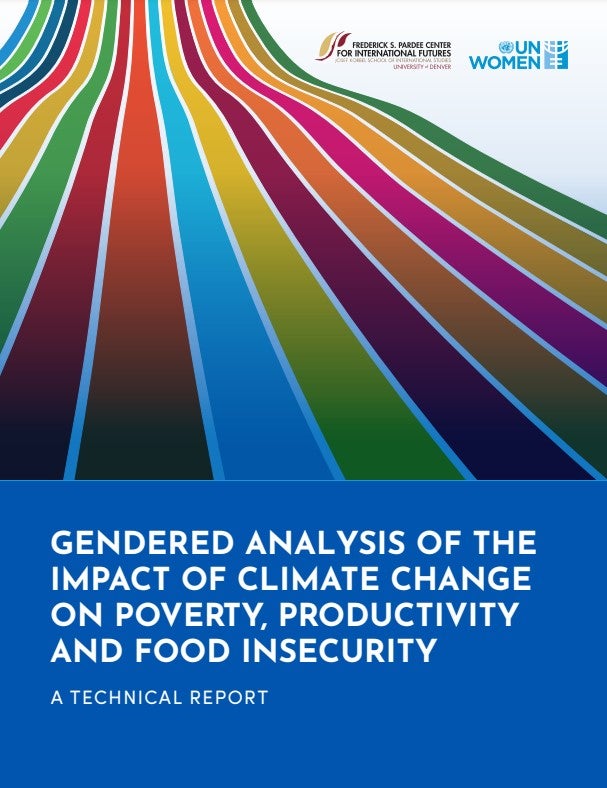
UN Women's Gendered analysis of the impact of climate change on poverty, produc…
Gendered analysis of the impact of climate change on poverty, productivity and food insecurity

Gendered analysis of the impact of climate change on poverty, productivity and food insecurity

Explore UN Women's technical brief on time spent on unpaid care and domestic wo…
Technical brief on Forecasting time spent in unpaid care and domestic work

Forecasting time spent in unpaid care and domestic work

Learn more

3
3
Image
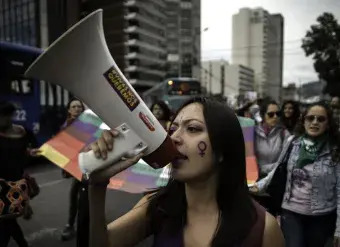
Activists, social leaders, organizations, women and men shout slogans against gender-based violence during the "Vivas nos Queremos" protest in Quito, Ecuador. Photo: UN Women/Johis Alarcon
Explainer
Sustainable Development Goal 5
Image
SDG Indicator Dashboard
Data
SDG indicator dashboard
Image
It will take 22 years to close SDG gender data gaps
Explainer
It will take 22 years to close SDG gender data gaps

Footer menu-HQ

  • News and stories
  • Resources
  • What we do
  • How we work
  • Where we are
  • Partnerships
  • Employment
  • Procurement
  • Contact us
  • Executive Board
  • Commission on the Status of Women

Donate button menu [Footer tablet]

  • Donate

Donate button menu [Footer]

  • Donate

Social media menu

  • Facebook
  • Twitter
  • LinkedIn
  • Flickr
  • YouTube
  • Instagram
UN Women - For all women and girls

Footer bottom [Menu]

  • Copyright
  • Information security
  • Privacy notice
  • Report wrongdoing
  • Terms of use
Share this page
  • Share to Facebook
  • Share to Twitter
  • Share to LinkedIn
  • Share to E-mail

Or copy link