
Universal menu

  • Global
  • Regions
    • Africa
    • Americas and the Caribbean
    • Arab States
    • Asia and the Pacific
    • Europe and Central Asia
  • Knowledge
  • Data
  • Training
  • Transparency
UN Women - For all women and girls

Main Navigation-HQ

  • Who we are
    • About us
      • About UN Women
      • Business model
      • Guiding documents
      • Worldwide presence
    • Leadership
      • Governance structure
      • Executive leadership
      • Executive Board
      • Accountability
    • Work with us
      • Employment
      • Procurement
      • Calls for proposals
      • Contact us
      • UN Women Strategic Plan 2026–2029
      • UN Women Strategic Plan 2026–2029 - social media image
        UN Women Strategic Plan 2026–2029
  • What we do
    • Focus areas
      • Ending violence against women
      • Peace and security
      • Humanitarian action
      • Leadership and governance
      • Economic empowerment
      • Innovation and technology
      • Women with disabilities
      • Youth
      • HIV and AIDS
    • How we work
      • 2030 Agenda for Sustainable Development
      • Commission on the Status of Women
      • Gender parity in the UN system
      • Intergovernmental support
      • Partnerships
      • Research and data
      • Training Centre
      • Trust funds
      • UN system coordination
      • Gender Equality Accelerators
      • Gender Equality Accelerators artwork
        Gender Equality Accelerators
  • News and stories
    • Latest
      • News
      • Articles and explainers
      • In focus
    • Media center
      • Press materials
      • Media contacts
      • Explainer: Why are women so exhausted? Care work and the mental load
      • Two adults stand at a table changing diapers on baby dolls, with laundry hanging on a clothesline behind them in a home setting.
        Explainer: Why are women so exhausted? Care work and the mental load
      • Press release: Aid cuts dismantle women’s organizations working in humanitarian crises
      • A young Ugandan woman sits with another local woman to talk
        Press release: Aid cuts dismantle women’s organizations working in humanitarian crises
  • Digital library
    • Resources
      • Publications
      • Annual reports
      • Progress of the world’s women
      • World survey on the role of women in development
      • The gender snapshot
    • GenderTerm
      • GenderTerm
      • Reprint permissions
      • UN Women Highlights 2025–2026
      • A smiling woman.
        UN Women Highlights 2025–2026
      • The gender snapshot 2025
      • gender snapshot thumbnail transparent
        The gender snapshot 2025
  • Get involved
    • How to get involved
      • For ALL Women and Girls
      • International Women's Day
      • 16 Days of Activism to End Violence against Women and Girls
      • UNiTE! Campaign to End Violence against Women
      • Generation Equality
      • He for She
Ask AI
https://84e5cfacd5c7e99f9825edf344450c.1b.environment.api.powerplatform.com/powervirtualagents/botsbyschema/crad4_websiteQA/directline/token?api-version=2022-03-01-preview
1
-
Ask your question here
AI website assistant

Hello, how can I assist you?

AI chatbot responses may be incorrect. Always verify important information.

Donate button menu

Donate

Breadcrumb

  1. Home
  2. Explore Our Latest News
  3. Explore Our Latest News

Website survey

We want to know how we can improve your experience on this website. Completing this survey takes less than 5 minutes.

TAKE THE SURVEY
Feature

How men and boys can help women survivors of gender-based violence: Shu Hang’s story

22 November 2023
  • Share to Facebook
  • Share to Twitter
  • Share to LinkedIn
  • Share to E-mail

In the southwestern Chinese city of Kunming, the Yunnan Mingxin Social Work Service Center has worked for nearly 10 years aiding survivors of gender-based violence. The organization’s services range from an abuse hotline to a shelter, “Nesting House”, that operates in an undisclosed location. Since April 2023, the organization has been a member of the network of local civil society organizations in China to receive support from UN Women.

Gender-based violence has had a place on China’s national policy agenda in recent years; since the country’s first national law on domestic violence went into effect in 2016, the national hotline to report such abuse has received 250,000 calls. From March 2016 to December 2022, authorities issued about 15,000 protective orders to survivors.

One detail that sets the Yunnan Mingxin Social Work Service Center apart from similar groups is the fact that its director, Shu Hang, is a man.
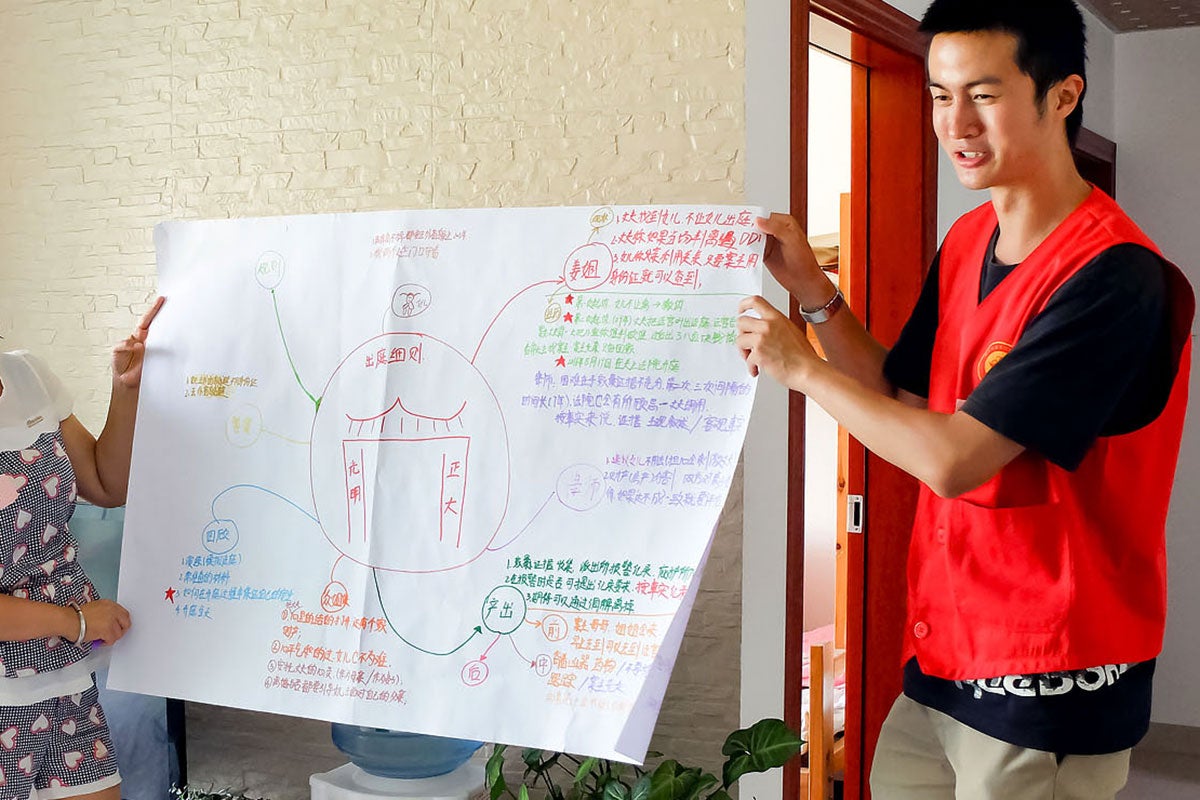
Image
Shu Hang is seen working to create a safety plan at a shelter in 2016.
Shu Hang is seen working to create a safety plan at a shelter in 2016. Photo courtesy of Shu Hang

“Initially, as a male social worker, I held gender biases and struggled to understand the challenges faced by abused women and their hesitations to leave their abusers”, Shu said. As he proceeded with the work, however, “I gradually began to understand the root causes of gender-based violence and survivors’ complex situations”.

He noted that many survivors depend economically on their abusers, lack support systems that would allow them to leave abusive relationships, or fear that their personal lives may be publicly exposed.

The Yunnan Mingxin Social Work Service Center has both men and women volunteers and social workers who offer survivors a wide array of support, from collaborating with authorities on their cases to accompanying them to court.

Shu said that biased social norms were among the biggest hurdles for preventing gender-based violence. 

“We encounter many biases, such as the belief in male dominance—that men are more powerful than women, and women are subordinate to the family”, he said. “If we can’t break down these biases, survivors of domestic violence and gender-based violence will continue to face societal pressure.” 

In some cases, Shu said, men can provide unique support. 

“Given that over 95 per cent of the cases we deal with involve male perpetrators, as a male social worker, I’m the one to communicate and engage with many of them”, he said.

The Yunnan Mingxin Social Work Service Center has run a variety of programmes aimed at helping men become advocates against gender-based violence. 

In one instance, male volunteers attended local matchmaking events, where they advocated for gender equality and held discussions on preventing abuse. In another programme, single and divorced male migrant workers, some of whom had formerly been abusers themselves, were brought together for workshops and community activities centred on preventing domestic abuse, cultivating respectful relationship with their partners, non-violent communication skills, and reflection on social norms that facilitated violence against women and girls.

“We encourage more men and boys to engage in activities that promote gender equality and address gender-based violence”, Shu said. “In the future, we hope to see more men actively participate in the fight against gender-based violence through their practical actions.”

Topics

  • Ending violence against women and girls
  • Anti-violence interventions
  • Domestic violence/interpersonal violence
  • Asia and the Pacific
  • China

Related content

Image
A young woman poses for a portrait while wearing a UN Women vest
Feature

Serving through crisis: UN Women’s humanitarian workers on what keeps them going

17 August 2026
Serving through crisis: UN Women’s humanitarian workers on what keeps them going
Image
Image placeholder with UN Women logo (English) - 3:2 aspect ratio
Press briefing

Press briefing at the United Nations by UN Women Special Representative in Afghanistan, Susan Ferguson

14 August 2026
Press briefing at the United Nations by UN Women Special Representative in Afghanistan, Susan Ferguson
Image
A portrait of an Afghan woman in silhouette
Press release

Five years after the Taliban takeover: the normalization of the exclusion of women and girls in Afghanistan

12 August 2026
Five years after the Taliban takeover: the normalization of the exclusion of women and girls in Afghanistan

Footer menu-HQ

  • News and stories
  • Resources
  • What we do
  • How we work
  • Where we are
  • Partnerships
  • Employment
  • Procurement
  • Contact us
  • Executive Board
  • Commission on the Status of Women

Donate button menu [Footer tablet]

  • Donate

Donate button menu [Footer]

  • Donate

Social media menu

  • Facebook
  • Twitter
  • LinkedIn
  • Flickr
  • YouTube
  • Instagram
UN Women - For all women and girls

Footer bottom [Menu]

  • Copyright
  • Information security
  • Privacy notice
  • Report wrongdoing
  • Terms of use
Share this page
  • Share to Facebook
  • Share to Twitter
  • Share to LinkedIn
  • Share to E-mail

Or copy link