
Universal menu

  • Global
  • Regions
    • Africa
    • Americas and the Caribbean
    • Arab States
    • Asia and the Pacific
    • Europe and Central Asia
  • Knowledge
  • Data
  • Training
  • Transparency
UN Women - For all women and girls

Main Navigation-HQ

  • Who we are
    • About us
      • About UN Women
      • Business model
      • Guiding documents
      • Worldwide presence
    • Leadership
      • Governance structure
      • Executive leadership
      • Executive Board
      • Accountability
    • Work with us
      • Employment
      • Procurement
      • Calls for proposals
      • Contact us
      • UN Women Strategic Plan 2026–2029
      • UN Women Strategic Plan 2026–2029 - social media image
        UN Women Strategic Plan 2026–2029
  • What we do
    • Focus areas
      • Ending violence against women
      • Peace and security
      • Humanitarian action
      • Leadership and governance
      • Economic empowerment
      • Innovation and technology
      • Women with disabilities
      • Youth
      • HIV and AIDS
    • How we work
      • 2030 Agenda for Sustainable Development
      • Commission on the Status of Women
      • Gender parity in the UN system
      • Intergovernmental support
      • Partnerships
      • Research and data
      • Training Centre
      • Trust funds
      • UN system coordination
      • Gender Equality Accelerators
      • Gender Equality Accelerators artwork
        Gender Equality Accelerators
  • News and stories
    • Latest
      • News
      • Articles and explainers
      • In focus
    • Media center
      • Press materials
      • Media contacts
      • Explainer: Why are women so exhausted? Care work and the mental load
      • Two adults stand at a table changing diapers on baby dolls, with laundry hanging on a clothesline behind them in a home setting.
        Explainer: Why are women so exhausted? Care work and the mental load
      • Press release: Aid cuts dismantle women’s organizations working in humanitarian crises
      • A young Ugandan woman sits with another local woman to talk
        Press release: Aid cuts dismantle women’s organizations working in humanitarian crises
  • Digital library
    • Resources
      • Publications
      • Annual reports
      • Progress of the world’s women
      • World survey on the role of women in development
      • The gender snapshot
    • GenderTerm
      • GenderTerm
      • Reprint permissions
      • UN Women Highlights 2025–2026
      • A smiling woman.
        UN Women Highlights 2025–2026
      • The gender snapshot 2025
      • gender snapshot thumbnail transparent
        The gender snapshot 2025
  • Get involved
    • How to get involved
      • For ALL Women and Girls
      • International Women's Day
      • 16 Days of Activism to End Violence against Women and Girls
      • UNiTE! Campaign to End Violence against Women
      • Generation Equality
      • He for She
Ask AI
https://84e5cfacd5c7e99f9825edf344450c.1b.environment.api.powerplatform.com/powervirtualagents/botsbyschema/crad4_websiteQA/directline/token?api-version=2022-03-01-preview
1
-
Ask your question here
AI website assistant

Hello, how can I assist you?

AI chatbot responses may be incorrect. Always verify important information.

Donate button menu

Donate

Breadcrumb

  1. Home
  2. Explore Our Latest News
  3. Explore Our Latest News

Website survey

We want to know how we can improve your experience on this website. Completing this survey takes less than 5 minutes.

TAKE THE SURVEY
Feature

Women rise from poverty and gain economic independence through Oasis Centres in Jordan

4 March 2024
  • Share to Facebook
  • Share to Twitter
  • Share to LinkedIn
  • Share to E-mail

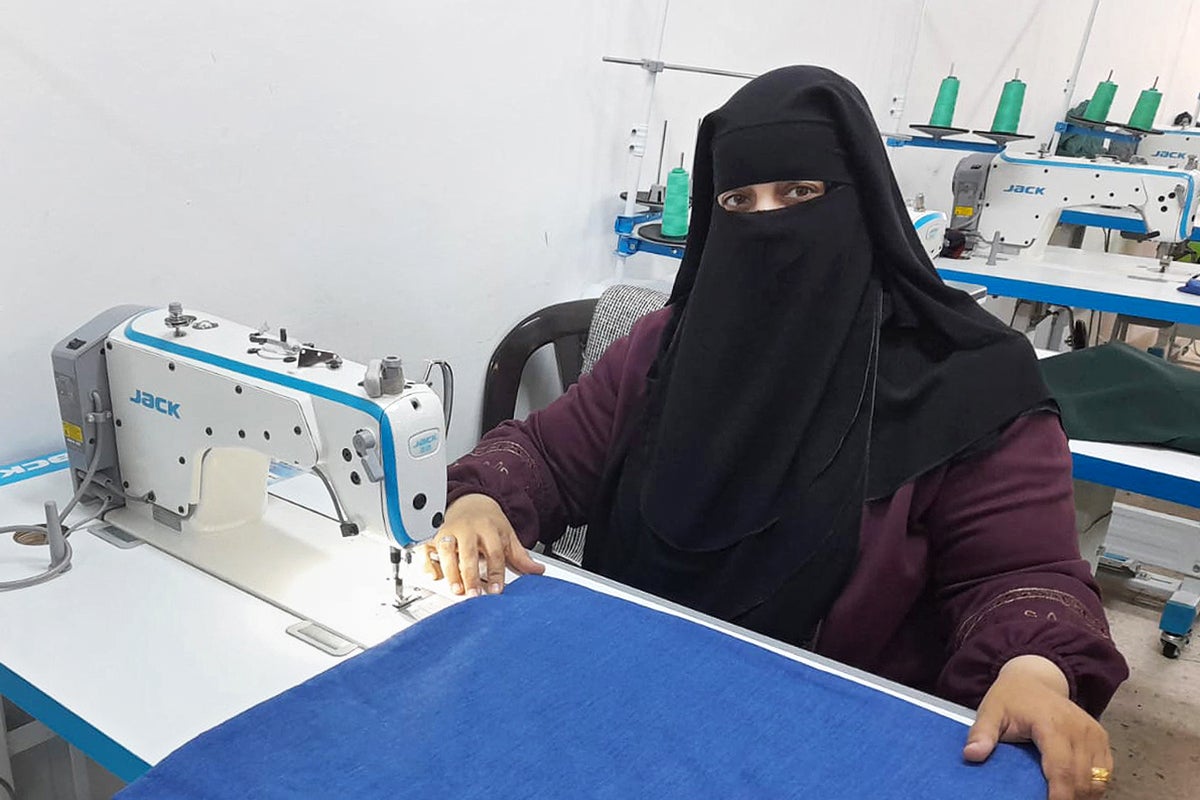
When Azhar Riyati, a Jordanian woman with six children, first joined UN Women’s Oasis Centre programme, “I was afraid I wouldn't do a good job” while juggling her family commitments, she said.

But fortunately, she found, that “interacting with staff and participants from different ages and backgrounds made me enjoy my time, overcome fears, get familiar with the equipment, and become more flexible in dealing with others”.

Riyati, who had not previously had any job outside of her home, now serves as a trainer at one of the programme’s centres, and said the tailoring skills she learned through the project helped her gain an income and develop her self-confidence.
Image
Azhar Riyati, a Jordanian woman with six children, now serves as a trainer at one of Oasis Centre’s facilities.
Azhar Riyati, a Jordanian woman with six children, now serves as a trainer at one of Oasis Centre’s facilities. Photo: UN Women

Since its launch in 2012, the Oasis Centres have served more than 30,000 people, predominantly Syrian refugees and vulnerable Jordanian women and their families. The programme operates 18 centres throughout Jordan in partnership with the Ministry of Social Development, and an additional four facilities in the Za’atari and Azraq refugee camps.

“The Oasis Centres offer a safe space where women voice concerns and gain positive coping strategies”, said Hadeel Qunaibi, an Oasis protection officer. “It's more than workshops; it's about community integration, creating an effect of empowered women equipped to face life's responsibilities.”

The Oasis programme receives support through the EU Regional Trust Fund in Response to the Syrian Crisis, the Madad Fund, as well as the Australian Department of Foreign Affairs and Trade and the governments of Canada, Finland, France, Iceland, and Italy. Centres throughout Jordan seek to empower women and support community cohesion by bringing together Syrian refugee and Jordanian women to learn valuable skills.

In 2023, 1,624 women and 142 men were directly engaged in cash for work activities under the Oasis programme. Of those, 589 women—454 Jordanians and 135 Syrians—also completed the centres’ business training programme. According to a report conducted by UN Women’s partner Education for Employment-Jordan, some 70 per cent of those women had started business projects after graduating from the courses.

“On a professional level, I developed many skills and could earn a stable income throughout the time of the training. I could contribute to the family’s income, which made me proud”, said Layal Al-Khalaf, a 37-year-old Syrian mother of five. “The skills I gained will also help me start a business and continue generating income to support my family.”
Image
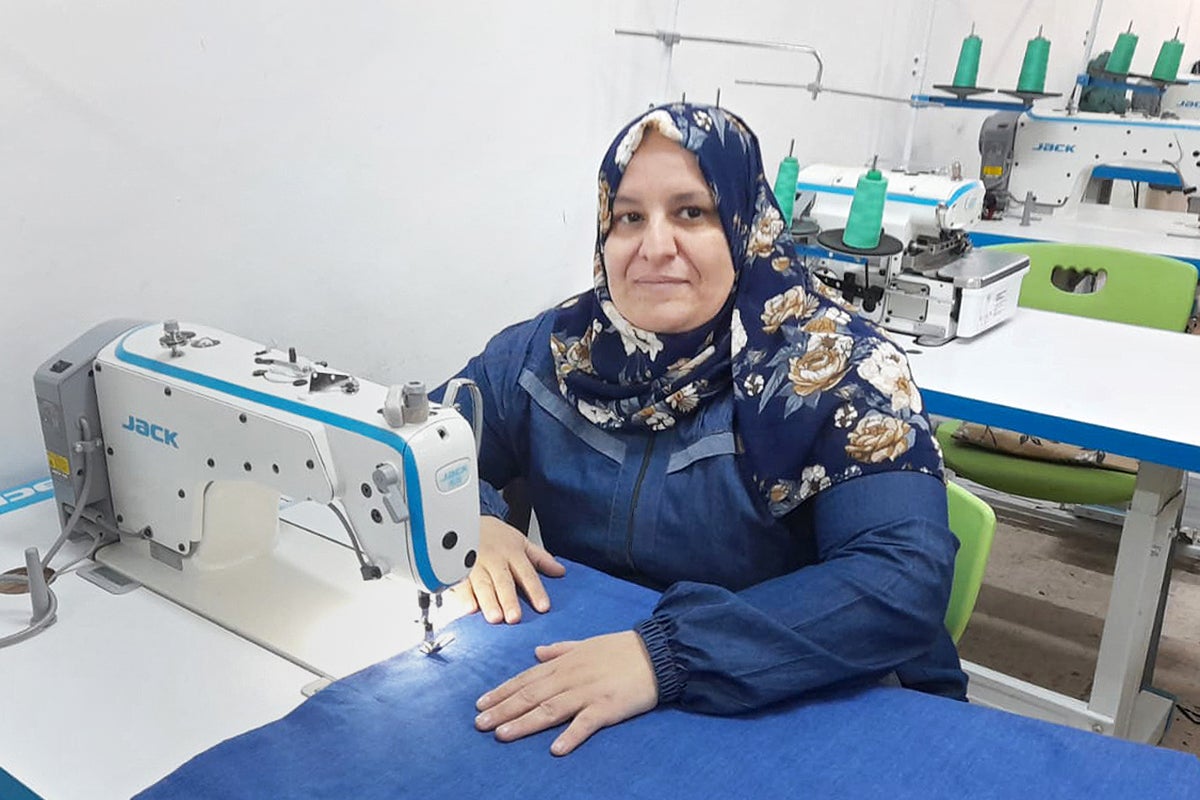
Mariam Al-Gharableh, a Jordanian widow and mother of four, attended an Oasis Centre in the coastal city of Aqaba.
Mariam Al-Gharableh, a Jordanian widow and mother of four, attended an Oasis Centre in the coastal city of Aqaba. Photo: UN Women

Al-Khalaf attended workshops at an Oasis Centre in the Zaatari refugee camp, and in addition to learning practical skills she has worked as a receptionist at the centre.

“Interacting with other women at the centre was incredibly enriching as we were women with different perspectives and backgrounds”, she added. “We were all like a family and we always supported each other.”

“I recommended the programme for many women I know, so they can benefit as much as I did”, said Mariam Al-Gharableh, a Jordanian widow and mother of four. Since attending an Oasis Centre in the coastal city of Aqaba, she has her new skills to expand her small business, which creates and sells soaps, perfumes, and bags.

Riyati echoed that advice, saying she encouraged women to “Overcome their fears and get out of their comfort zone”.

“For housewives, I advise them to educate themselves, always learn something new, and try having their own business”, she said. “This will change their perception of life and the way they see things.”

Topics

  • Economic empowerment
  • Employment
  • Entrepreneurship
  • Migration
  • Arab States/North Africa
  • Jordan

Related content

Image
Image placeholder with UN Women logo (English) - 3:2 aspect ratio
Statement

UN Women statement for International Equal Pay Day 2026

18 September 2026
UN Women statement for International Equal Pay Day 2026
Image
UNWomen_Placeholder
Press release

Media fact sheet: Women in the occupied West Bank fear violence and arrest, as settler attacks, military operations, and movement restrictions reach two-decade high

15 September 2026
Media fact sheet: Women in the occupied West Bank fear violence and arrest, as settler attacks, military operations, and movement restrictions reach two-decade high
Image
UNWomen_Placeholder
Press briefing

Women in the occupied West Bank increasingly cut off from daily life, living in fear amid rising violence and restrictions

15 September 2026
Women in the occupied West Bank increasingly cut off from daily life, living in fear amid rising violence and restrictions

Footer menu-HQ

  • News and stories
  • Resources
  • What we do
  • How we work
  • Where we are
  • Partnerships
  • Employment
  • Procurement
  • Contact us
  • Executive Board
  • Commission on the Status of Women

Donate button menu [Footer tablet]

  • Donate

Donate button menu [Footer]

  • Donate

Social media menu

  • Facebook
  • Twitter
  • LinkedIn
  • Flickr
  • YouTube
  • Instagram
UN Women - For all women and girls

Footer bottom [Menu]

  • Copyright
  • Information security
  • Privacy notice
  • Report wrongdoing
  • Terms of use
Share this page
  • Share to Facebook
  • Share to Twitter
  • Share to LinkedIn
  • Share to E-mail

Or copy link