
Universal menu

  • Global
  • Regions
    • Africa
    • Americas and the Caribbean
    • Arab States
    • Asia and the Pacific
    • Europe and Central Asia
  • Knowledge
  • Data
  • Training
  • Transparency
UN Women - For all women and girls

Main Navigation-HQ

  • Who we are
    • About us
      • About UN Women
      • Business model
      • Guiding documents
      • Worldwide presence
    • Leadership
      • Governance structure
      • Executive leadership
      • Executive Board
      • Accountability
    • Work with us
      • Employment
      • Procurement
      • Calls for proposals
      • Contact us
      • UN Women Strategic Plan 2026–2029
      • UN Women Strategic Plan 2026–2029 - social media image
        UN Women Strategic Plan 2026–2029
  • What we do
    • Focus areas
      • Ending violence against women
      • Peace and security
      • Humanitarian action
      • Leadership and governance
      • Economic empowerment
      • Innovation and technology
      • Women with disabilities
      • Youth
      • HIV and AIDS
    • How we work
      • 2030 Agenda for Sustainable Development
      • Commission on the Status of Women
      • Gender parity in the UN system
      • Intergovernmental support
      • Partnerships
      • Research and data
      • Training Centre
      • Trust funds
      • UN system coordination
      • Gender Equality Accelerators
      • Gender Equality Accelerators artwork
        Gender Equality Accelerators
  • News and stories
    • Latest
      • News
      • Articles and explainers
      • In focus
    • Media center
      • Press materials
      • Media contacts
      • Explainer: Why are women so exhausted? Care work and the mental load
      • Two adults stand at a table changing diapers on baby dolls, with laundry hanging on a clothesline behind them in a home setting.
        Explainer: Why are women so exhausted? Care work and the mental load
      • Press release: Aid cuts dismantle women’s organizations working in humanitarian crises
      • A young Ugandan woman sits with another local woman to talk
        Press release: Aid cuts dismantle women’s organizations working in humanitarian crises
  • Digital library
    • Resources
      • Publications
      • Annual reports
      • Progress of the world’s women
      • World survey on the role of women in development
      • The gender snapshot
    • GenderTerm
      • GenderTerm
      • Reprint permissions
      • UN Women Highlights 2025–2026
      • A smiling woman.
        UN Women Highlights 2025–2026
      • The gender snapshot 2025
      • gender snapshot thumbnail transparent
        The gender snapshot 2025
  • Get involved
    • How to get involved
      • For ALL Women and Girls
      • International Women's Day
      • 16 Days of Activism to End Violence against Women and Girls
      • UNiTE! Campaign to End Violence against Women
      • Generation Equality
      • He for She
Ask AI
https://84e5cfacd5c7e99f9825edf344450c.1b.environment.api.powerplatform.com/powervirtualagents/botsbyschema/crad4_websiteQA/directline/token?api-version=2022-03-01-preview
1
-
Ask your question here
AI website assistant

Hello, how can I assist you?

AI chatbot responses may be incorrect. Always verify important information.

Donate button menu

Donate

Breadcrumb

  1. Home
  2. Explore Our Latest News
  3. Explore Our Latest News

Website survey

We want to know how we can improve your experience on this website. Completing this survey takes less than 5 minutes.

TAKE THE SURVEY
Feature

‘No food, no water, no tents’ – Women in Gaza fight for survival as famine looms

21 March 2024
  • Share to Facebook
  • Share to Twitter
  • Share to LinkedIn
  • Share to E-mail

“Women in Gaza are superheroes,” said Rana Khalil, a project coordinator for the Palestinian Working Women Society for Development (PWWSD), based in the West Bank.

“I'm a Gazan woman, and I know how women in Gaza are. They are so strong,” she said.

As the Integrated Food Security Phase Classification (IPC) warns of “imminent” famine in northern Gaza, with some 1.1 million people experiencing catastrophic food insecurity amid bombardment by Israeli forces and restriction of humanitarian aid, women’s strength is being tested like never before.
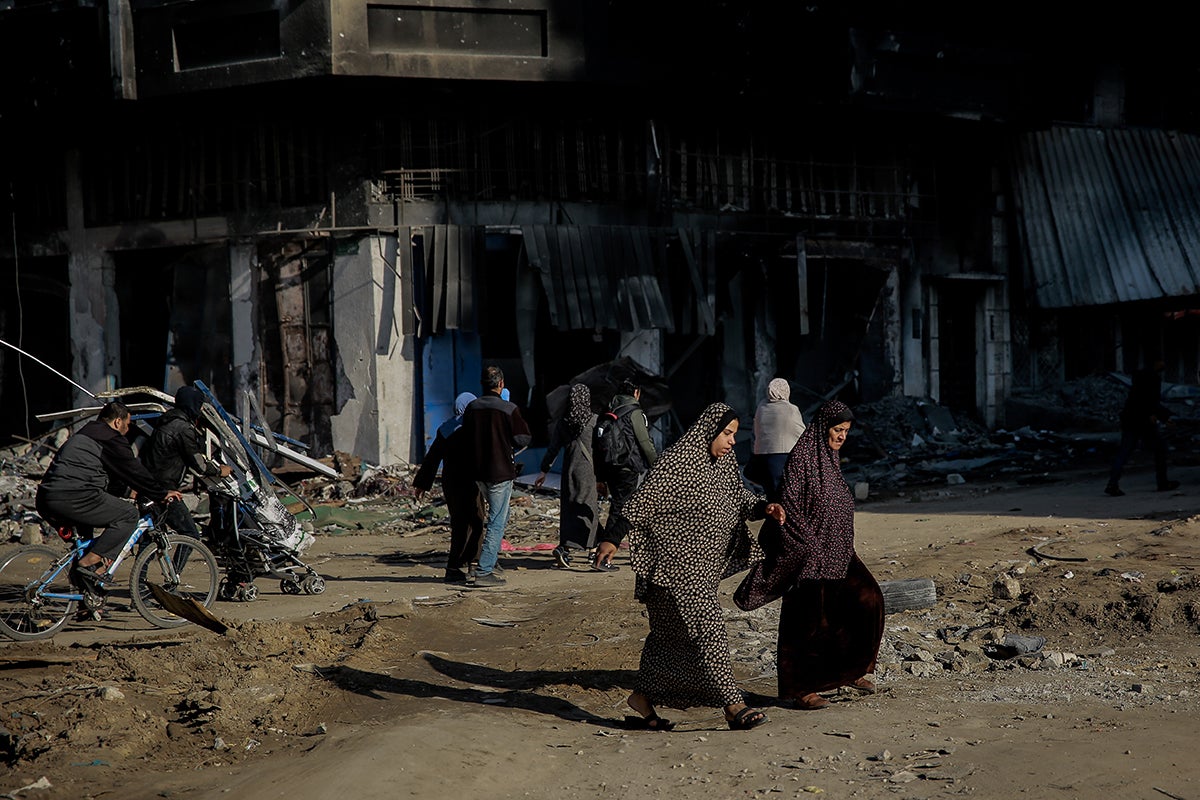
Image
Two women cross the road and are surrounded by destroyed buildings at al-Jalaa Street in the center of Gaza City on 11 January 2024.
Photo: UNICEF/Omar Al-Qattaa
Two women cross the road and are surrounded by destroyed buildings at al-Jalaa Street in the center of Gaza City on 11 January 2024. Photo: UNICEF/Omar Al-Qattaa

There is “no food, no water, no tents, there is no place to go to the bathroom,” said Khalil. She described a recent call with her aunt in Gaza, who said that running water was sometimes available for two hours a day—and at other times for only two hours per week.

“So when the water comes, she starts filling it in buckets, anything she can fill,” she said, adding that her family has been mixing what water they have into a plate of rice to make a thin soup.

“They have that for three days,” Khalil said. “There are no eggs, no chickens, no goats...nothing, even the animals are not alive anymore.”

“And I feel so bad that I can eat and they can’t.”

Water to drink.
Water to wash.
Water to clean.

This #WorldWaterDay, let’s recognize that women and girls in #Gaza need access to safe water.

They need an immediate humanitarian ceasefire. pic.twitter.com/PPZgoNsZjy

— UN Women (@UN_Women) March 22, 2024

“Because there is no water... They cannot wash their hair. So, there is a lot of lice now. They are shaving their hair.”

As of February, water production in Gaza had dropped to just 5.7 per cent of pre-7 October levels, according to the IPC report. Beyond immediate needs for hydration, the lack of water has also forced women to make stark choices to preserve their hygiene.

“Because there is no water, they cannot take a shower. They cannot wash their hair. So, there is a lot of lice now. They are shaving their hair,” Khalil said.

Khalil also shared the story of some of her family members in Gaza who were expelled from their home.

“The Israeli soldiers called them to leave their building. And after a week, his daughter had to give birth and there was no water,” she said. “I don't know how she gave birth without water. That was inhumane.”

"What women in Gaza need right now is ceasefire."

On 1 March, UN Women reported that more than 4 out of 5 women (84 per cent) said their family was eating half or less of the food they had prior to 7 October, with mothers and adult women being those tasked with sourcing food, yet eating less than everyone else. Nearly 9 in 10 women reported finding it harder to access food than men.

When thinking about the long-term impacts of this crisis, Khalil said, “when I look [at] the girls and women in my family and try to give them support, I don't know how they will look at the world [after this]. And how will they recover?”

“I'm sure they will rise again,” she added, “what women in Gaza need right now is ceasefire.”

Topics

  • Water
  • Humanitarian action
  • Peace and security
  • Conflict, war
  • Arab States/North Africa
  • Palestine, State of

Related content

Image
A young woman poses for a portrait while wearing a UN Women vest
Feature

Serving through crisis: UN Women’s humanitarian workers on what keeps them going

17 August 2026
Serving through crisis: UN Women’s humanitarian workers on what keeps them going
Image
A portrait of an Afghan woman in silhouette
Press release

Five years after the Taliban takeover: the normalization of the exclusion of women and girls in Afghanistan

12 August 2026
Five years after the Taliban takeover: the normalization of the exclusion of women and girls in Afghanistan
Image
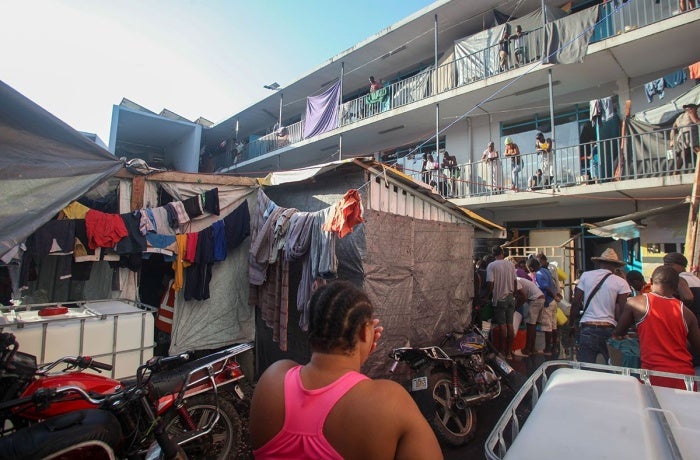
A woman stands amid a crowd of people and motorcycles on a busy street.
Feature

How aid cuts are threatening women’s organizations responding to Haiti’s gang violence

6 August 2026
How aid cuts are threatening women’s organizations responding to Haiti’s gang violence

Footer menu-HQ

  • News and stories
  • Resources
  • What we do
  • How we work
  • Where we are
  • Partnerships
  • Employment
  • Procurement
  • Contact us
  • Executive Board
  • Commission on the Status of Women

Donate button menu [Footer tablet]

  • Donate

Donate button menu [Footer]

  • Donate

Social media menu

  • Facebook
  • Twitter
  • LinkedIn
  • Flickr
  • YouTube
  • Instagram
UN Women - For all women and girls

Footer bottom [Menu]

  • Copyright
  • Information security
  • Privacy notice
  • Report wrongdoing
  • Terms of use
Share this page
  • Share to Facebook
  • Share to Twitter
  • Share to LinkedIn
  • Share to E-mail

Or copy link