
Universal menu

  • Global
  • Regions
    • Africa
    • Americas and the Caribbean
    • Arab States
    • Asia and the Pacific
    • Europe and Central Asia
  • Knowledge
  • Data
  • Training
  • Transparency
UN Women - For all women and girls

Main Navigation-HQ

  • Who we are
    • About us
      • About UN Women
      • Business model
      • Guiding documents
      • Worldwide presence
    • Leadership
      • Governance structure
      • Executive leadership
      • Executive Board
      • Accountability
    • Work with us
      • Employment
      • Procurement
      • Calls for proposals
      • Contact us
      • UN Women Strategic Plan 2026–2029
      • UN Women Strategic Plan 2026–2029 - social media image
        UN Women Strategic Plan 2026–2029
  • What we do
    • Focus areas
      • Ending violence against women
      • Peace and security
      • Humanitarian action
      • Leadership and governance
      • Economic empowerment
      • Innovation and technology
      • Women with disabilities
      • Youth
      • HIV and AIDS
    • How we work
      • 2030 Agenda for Sustainable Development
      • Commission on the Status of Women
      • Gender parity in the UN system
      • Intergovernmental support
      • Partnerships
      • Research and data
      • Training Centre
      • Trust funds
      • UN system coordination
      • Gender Equality Accelerators
      • Gender Equality Accelerators artwork
        Gender Equality Accelerators
  • News and stories
    • Latest
      • News
      • Articles and explainers
      • In focus
    • Media center
      • Press materials
      • Media contacts
      • Explainer: Why are women so exhausted? Care work and the mental load
      • Two adults stand at a table changing diapers on baby dolls, with laundry hanging on a clothesline behind them in a home setting.
        Explainer: Why are women so exhausted? Care work and the mental load
      • Press release: Aid cuts dismantle women’s organizations working in humanitarian crises
      • A young Ugandan woman sits with another local woman to talk
        Press release: Aid cuts dismantle women’s organizations working in humanitarian crises
  • Digital library
    • Resources
      • Publications
      • Annual reports
      • Progress of the world’s women
      • World survey on the role of women in development
      • The gender snapshot
    • GenderTerm
      • GenderTerm
      • Reprint permissions
      • UN Women Highlights 2025–2026
      • A smiling woman.
        UN Women Highlights 2025–2026
      • The gender snapshot 2025
      • gender snapshot thumbnail transparent
        The gender snapshot 2025
  • Get involved
    • How to get involved
      • For ALL Women and Girls
      • International Women's Day
      • 16 Days of Activism to End Violence against Women and Girls
      • UNiTE! Campaign to End Violence against Women
      • Generation Equality
      • He for She
Ask AI
https://84e5cfacd5c7e99f9825edf344450c.1b.environment.api.powerplatform.com/powervirtualagents/botsbyschema/crad4_websiteQA/directline/token?api-version=2022-03-01-preview
1
-
Ask your question here
AI website assistant

Hello, how can I assist you?

AI chatbot responses may be incorrect. Always verify important information.

Donate button menu

Donate

Breadcrumb

  1. Home
  2. Explore Our Latest News
  3. Explore Our Latest News

Website survey

We want to know how we can improve your experience on this website. Completing this survey takes less than 5 minutes.

TAKE THE SURVEY
Feature

Breaking tradition to end child marriage in Pakistan’s remote village

13 November 2024
  • Share to Facebook
  • Share to Twitter
  • Share to LinkedIn
  • Share to E-mail

In the rugged mountains of Mohmand, in the heart of Khyber Pakhtunkhwa, Pakistan, Yasmin Gul’s* life was shaped by unyielding traditions. Her three daughters – Meena*, Fatima*, and Ayesha* helped her all day with chores to keep the household running.

In these remote villages, girls are not encouraged to dream big, but Gul’s daughters dreamed of going to school, learning to read and write, and some day, teach other girls. Meena and Fatima’s dreams were cut short when they reached the age of 14 and 15. Their marriage was fixed, as tradition demanded.
Image
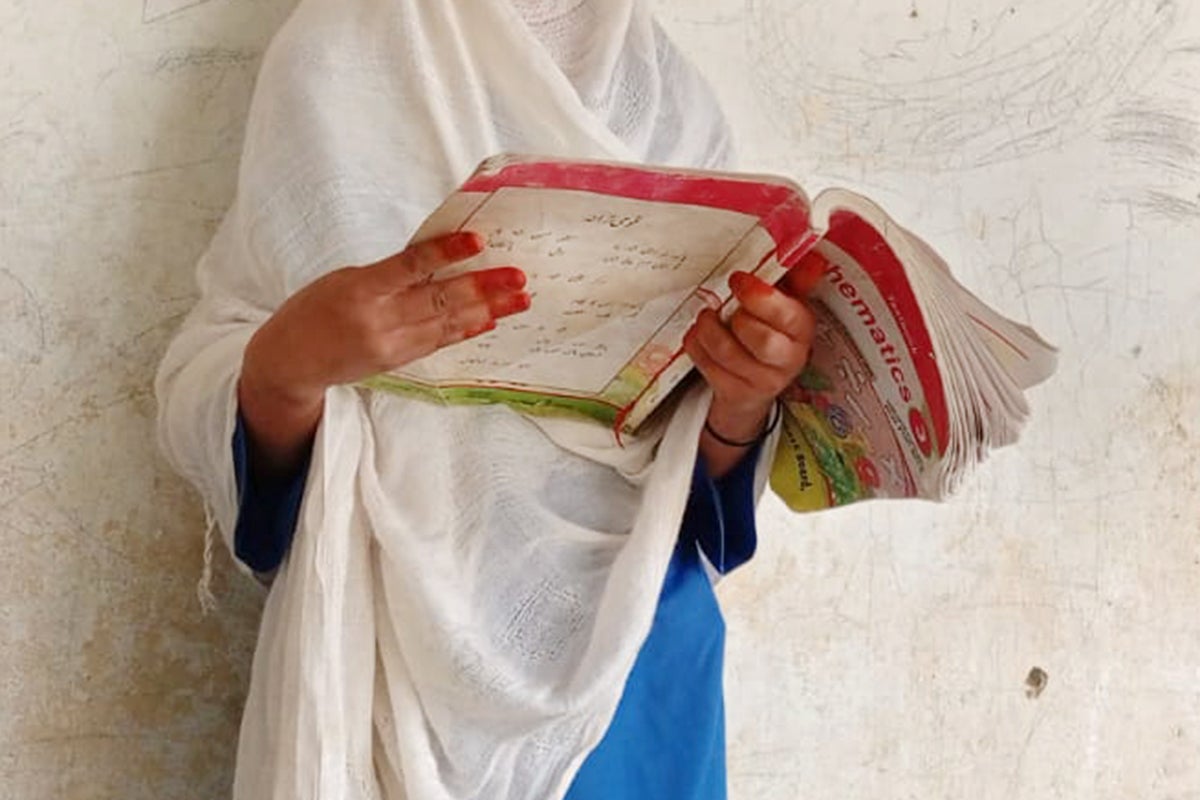
Yasmin Gul’s youngest daughter can now complete her studies. Photo credit: UN Women Pakistan, 2024

“I tried to comfort them,” said Gul, who was married early as well. “I told them this was the way things had always been, that they would adapt, that they would be fine. But deep in my heart, I knew they were not ready. No daughter, no mother, is ever ready for such a life.”

Seeing the fear and sadness in her daughters’ eyes, Gul hesitated.

Child marriage robs girls of education, freedom and opportunities

With one in six young girls married in childhood, Pakistan is home to nearly 19 million child brides today.

For girls like Meena and Fatima, marriage at such a young age come with grave risks: abuse, complications in childbirth, and a lifetime of lost opportunities.

On the night of Fatima’s marriage, she came home trembling, refusing to return to her husband’s house. Gul remembers her sobs, as she asked Fatima to go back to her husband. 

“I thought I was doing the right thing, that this was normal," she shared.
Image
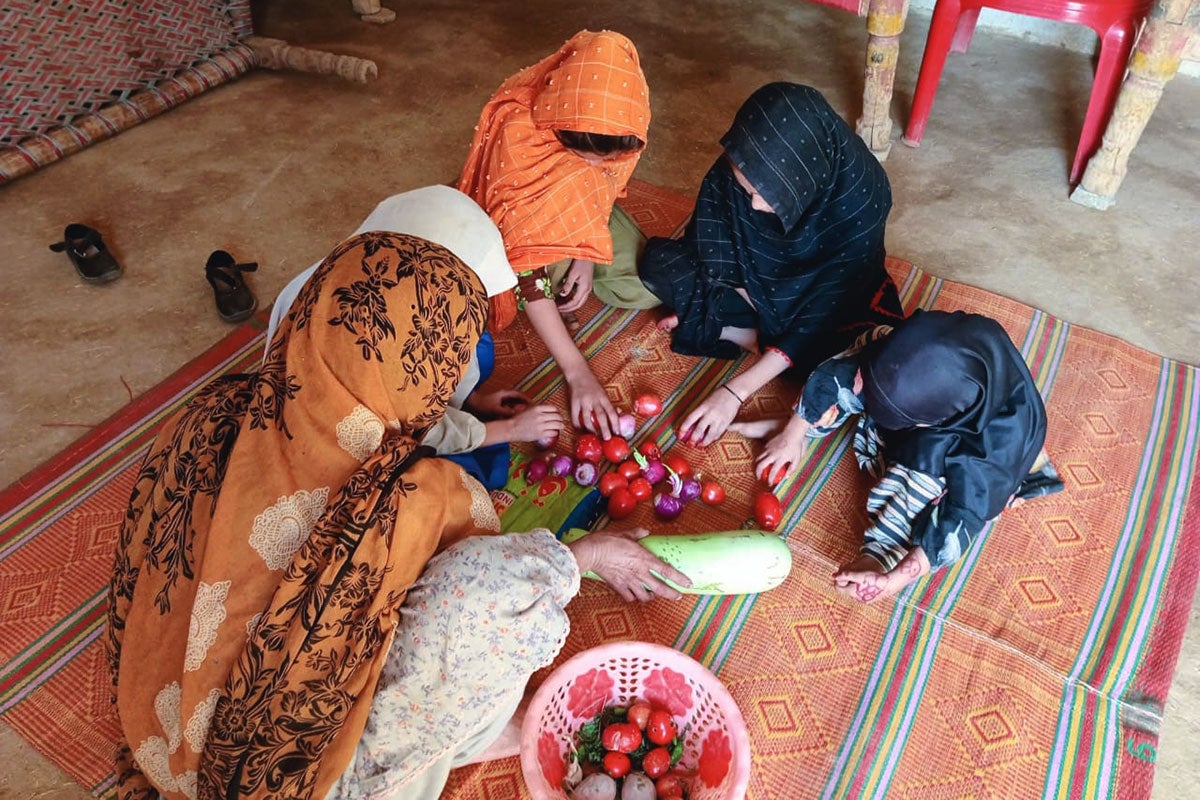
Yasmin Gul is photographed with her daughters and granddaughter, doing chores at home.
Yasmin Gul is photographed with her daughters and granddaughter, doing chores at home. Photo credit: UN Women

Empowering change through education and awareness among mothers

In Mohmand, change came slowly. In September 2024, Gul attended an awareness session about the adverse effects of child marriage, organized by UN Women and FAO. That day, Gul returned home with the full realization of the burden she had placed on her daughters by marrying them off early.

With her husband’s support, who also attended an awareness session organized for men, Gul decided that her youngest daughter, Ayesha, would not be married before the age of 18. The decision defied the traditions that had shaped her own life and sent ripples through their small community.

“I couldn’t change the past,” said Gul. “But I could change the future. Ayesha would be allowed to grow, learn, be free of the burdens I had placed on Meena and Fatima.”

With that decision, Gul set change in motion and became a beacon of hope and strength for others who wanted better futures for their daughters.

The series of awareness-raising sessions and dialogues on women’s rights and inclusion in agriculture and decision-making have reached 1,732 villagers through the programme. More girls who were once kept at home are now attending the village school.

The year 2025 marks the 30th anniversary of the Beijing Declaration and Platform for Action —a visionary women’s rights agreement endorsed in 1995 by 189 governments. It provided a blueprint of actions to end discrimination and violence against women and girls that hold them back from education and opportunities. It was also the first global policy document on women that included a specific focus on girls’ rights. These actions remain relevant and urgent today, as women like Gul and her daughters continue to fight for basic rights.

*Names of the protagonists have been changed to protect their identity and privacy.

Topics

  • Ending violence against women and girls
  • Child marriage
  • Asia and the Pacific
  • Pakistan

Related content

Image
UNWomen_Placeholder
Statement

A year since Afghan women staff barred from entering United Nations premises across the country

7 September 2026
A year since Afghan women staff barred from entering United Nations premises across the country
Image
UNWomen_Placeholder
Press briefing

Nepal floods: 43,000 women and girls need immediate humanitarian assistance

1 September 2026
Nepal floods: 43,000 women and girls need immediate humanitarian assistance
Image
A village is devastated by floods, thick with mud and debris
Press release

Nearly 160,000 women and girls impacted by Nepal flash floods

28 August 2026
Nearly 160,000 women and girls impacted by Nepal flash floods

Footer menu-HQ

  • News and stories
  • Resources
  • What we do
  • How we work
  • Where we are
  • Partnerships
  • Employment
  • Procurement
  • Contact us
  • Executive Board
  • Commission on the Status of Women

Donate button menu [Footer tablet]

  • Donate

Donate button menu [Footer]

  • Donate

Social media menu

  • Facebook
  • Twitter
  • LinkedIn
  • Flickr
  • YouTube
  • Instagram
UN Women - For all women and girls

Footer bottom [Menu]

  • Copyright
  • Information security
  • Privacy notice
  • Report wrongdoing
  • Terms of use
Share this page
  • Share to Facebook
  • Share to Twitter
  • Share to LinkedIn
  • Share to E-mail

Or copy link