
Universal menu

  • Global
  • Regions
    • Africa
    • Americas and the Caribbean
    • Arab States
    • Asia and the Pacific
    • Europe and Central Asia
  • Knowledge
  • Data
  • Training
  • Transparency
UN Women - For all women and girls

Main Navigation-HQ

  • Who we are
    • About us
      • About UN Women
      • Business model
      • Guiding documents
      • Worldwide presence
    • Leadership
      • Governance structure
      • Executive leadership
      • Executive Board
      • Accountability
    • Work with us
      • Employment
      • Procurement
      • Calls for proposals
      • Contact us
      • UN Women Strategic Plan 2026–2029
      • UN Women Strategic Plan 2026–2029 - social media image
        UN Women Strategic Plan 2026–2029
  • What we do
    • Focus areas
      • Ending violence against women
      • Peace and security
      • Humanitarian action
      • Leadership and governance
      • Economic empowerment
      • Innovation and technology
      • Women with disabilities
      • Youth
      • HIV and AIDS
    • How we work
      • 2030 Agenda for Sustainable Development
      • Commission on the Status of Women
      • Gender parity in the UN system
      • Intergovernmental support
      • Partnerships
      • Research and data
      • Training Centre
      • Trust funds
      • UN system coordination
      • Gender Equality Accelerators
      • Gender Equality Accelerators artwork
        Gender Equality Accelerators
  • News and stories
    • Latest
      • News
      • Articles and explainers
      • In focus
    • Media center
      • Press materials
      • Media contacts
      • Explainer: Why are women so exhausted? Care work and the mental load
      • Two adults stand at a table changing diapers on baby dolls, with laundry hanging on a clothesline behind them in a home setting.
        Explainer: Why are women so exhausted? Care work and the mental load
      • Press release: Aid cuts dismantle women’s organizations working in humanitarian crises
      • A young Ugandan woman sits with another local woman to talk
        Press release: Aid cuts dismantle women’s organizations working in humanitarian crises
  • Digital library
    • Resources
      • Publications
      • Annual reports
      • Progress of the world’s women
      • World survey on the role of women in development
      • The gender snapshot
    • GenderTerm
      • GenderTerm
      • Reprint permissions
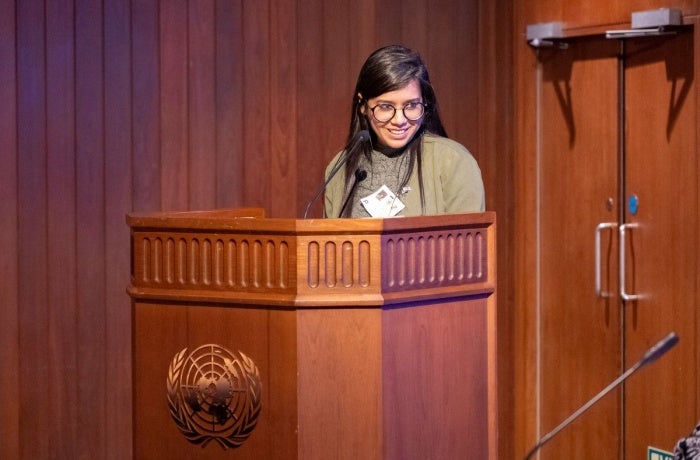
      • UN Women Highlights 2025–2026
      • A smiling woman.
        UN Women Highlights 2025–2026
      • The gender snapshot 2025
      • gender snapshot thumbnail transparent
        The gender snapshot 2025
  • Get involved
    • How to get involved
      • For ALL Women and Girls
      • International Women's Day
      • 16 Days of Activism to End Violence against Women and Girls
      • UNiTE! Campaign to End Violence against Women
      • Generation Equality
      • He for She
Ask AI
https://84e5cfacd5c7e99f9825edf344450c.1b.environment.api.powerplatform.com/powervirtualagents/botsbyschema/crad4_websiteQA/directline/token?api-version=2022-03-01-preview
1
-
Ask your question here
AI website assistant

Hello, how can I assist you?

AI chatbot responses may be incorrect. Always verify important information.

Donate button menu

Donate

Breadcrumb

  1. Home
  2. Explore Our Latest News
  3. Explore Our Latest News

Website survey

We want to know how we can improve your experience on this website. Completing this survey takes less than 5 minutes.

TAKE THE SURVEY
Feature

‘We deserve to be safe’ – With better access to gender-based violence services, women in the Solomon Islands are speaking up

13 November 2024
  • Share to Facebook
  • Share to Twitter
  • Share to LinkedIn
  • Share to E-mail

“Women run to us crying, saying [perpetrators] are coming to get them. But in Neo Island, where we live, there is no police presence; there is no hospital,” says Sophie Rolyn, who lives in the eastern Solomon Islands.
Image
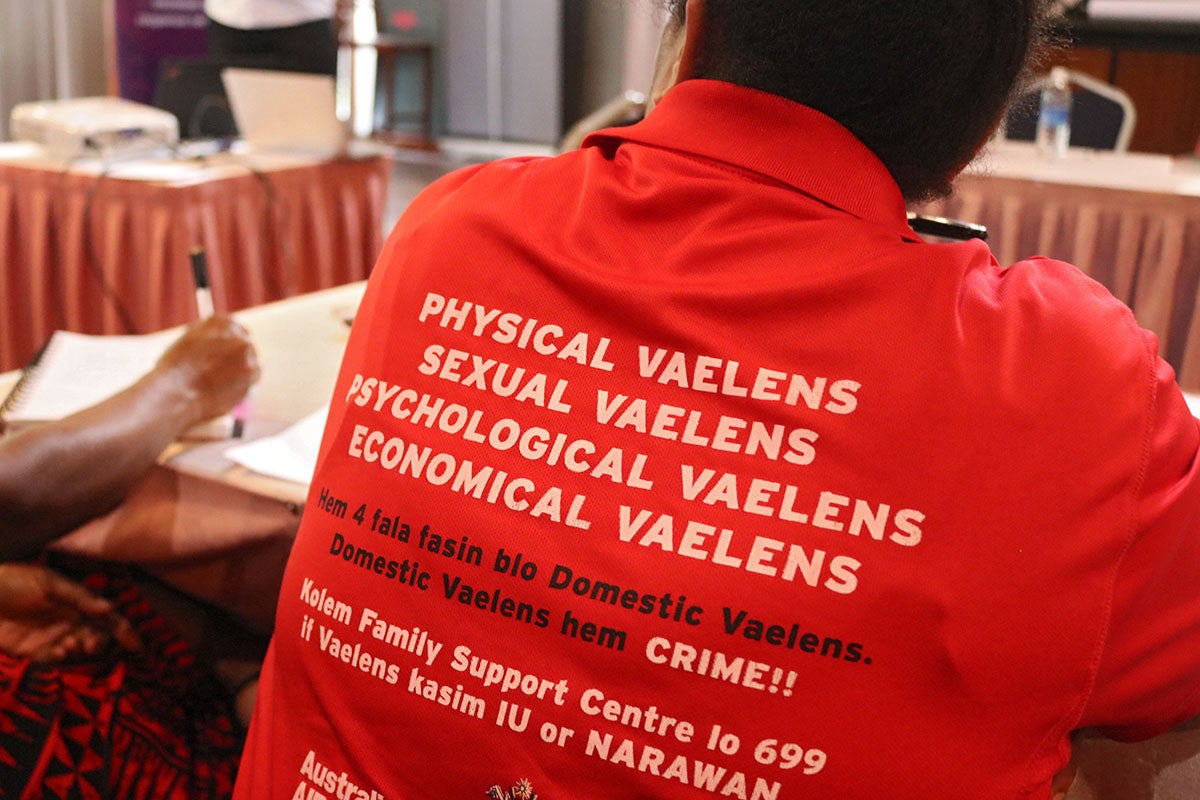
Gender-based violence is not only physical, and includes sexual, psychological, emotional and economic violence. SAFENET provides coordinated response services to all gender-based survivors.
Gender-based violence is not only physical, and includes sexual, psychological, emotional and economic violence. SAFENET provides coordinated response services to all gender-based survivors. Photo: UN Women/Shazia Usmanman

Rolyn works as a team leader at the local Family Support Center, a crisis centre for women and girls facing gender-based violence.

Some days, she sets off from Neo Island at 6 a.m., bringing women on an hour-long boat journey to the island of Santa Cruz, where they can access police and a hospital, and counselling services at the crisis centre.

Globally, one in three women experience violence in their lifetime. In Soloman Islands, a national study in 2009 revealed a higher prevalence of violence against women, with nearly two in three women aged 15 to 49 reporting physical or sexual violence—or both—by an intimate partner. Most women suffered in silence, with few seeking help from public services; and when they did, it was typically after the abuse had caused serious injuries.

To curb this epidemic of violence, seven government and nongovernmental service providers—including the police, hospitals, and crisis centres—joined forces to establish SAFENET.
Image
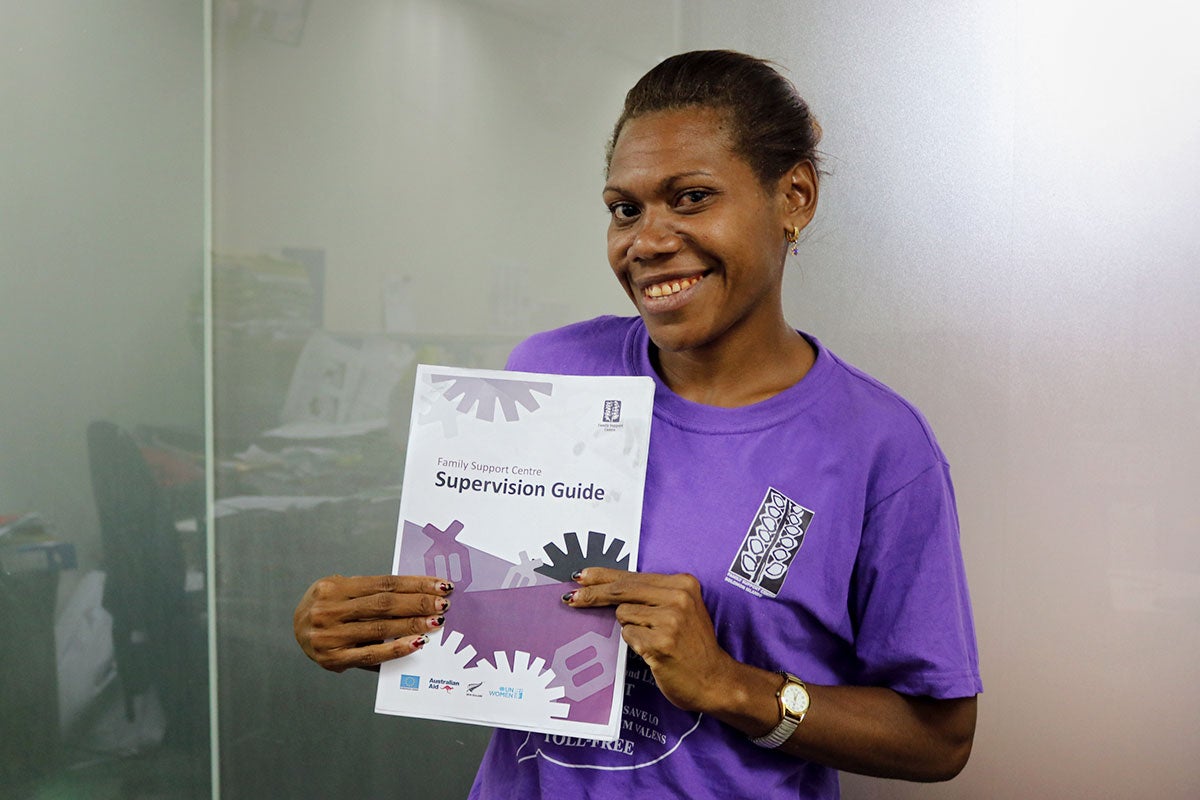
Sophie Rolyn, a team leader at the Neo Provincial Committee of the Family Support Center (FSC), with the Counselling Supervision Guide developed for FSC by UN Women.
Sophie Rolyn, a team leader at the Neo Provincial Committee of the Family Support Center (FSC), with the Counselling Supervision Guide developed for FSC by UN Women. Photo: UN Women/ Shazia Usman

Expanding services to meet women’s needs

“When service providers fail to respond appropriately [to gender-based violence], I report it to the SAFENET Committee,” said Rolyn.

UN Women has supported the SAFENET network under the Solomon Islands’ Ministry of Women, Youth, Children, and Family Affairs. In 2019, SAFENET expanded to the country’s outer provinces, including Temotu—which includes Neo Island. In the two years that followed, the number of gender-based violence cases received by SAFENET’s health providers tripled.

“When there are more trained healthcare providers, there is a higher reporting of violence, because women are more likely to seek services when they know quality services are available,” said Nashly Votozo, a gender-based violence officer at the Ministry of Health and Medical Services.

Votozo trains nurses across the country on how to respond to sexual and gender-based violence.

“While all healthcare providers know how to treat patients, the approach is quite different when it comes to gender-based violence,” she said. “You need techniques to identify gender-based violence from other cases, build trust with survivors to disclose, interpret their body language, conduct medical examination and write accurate reports. It has to be ethical and survivor-centred.”
Image
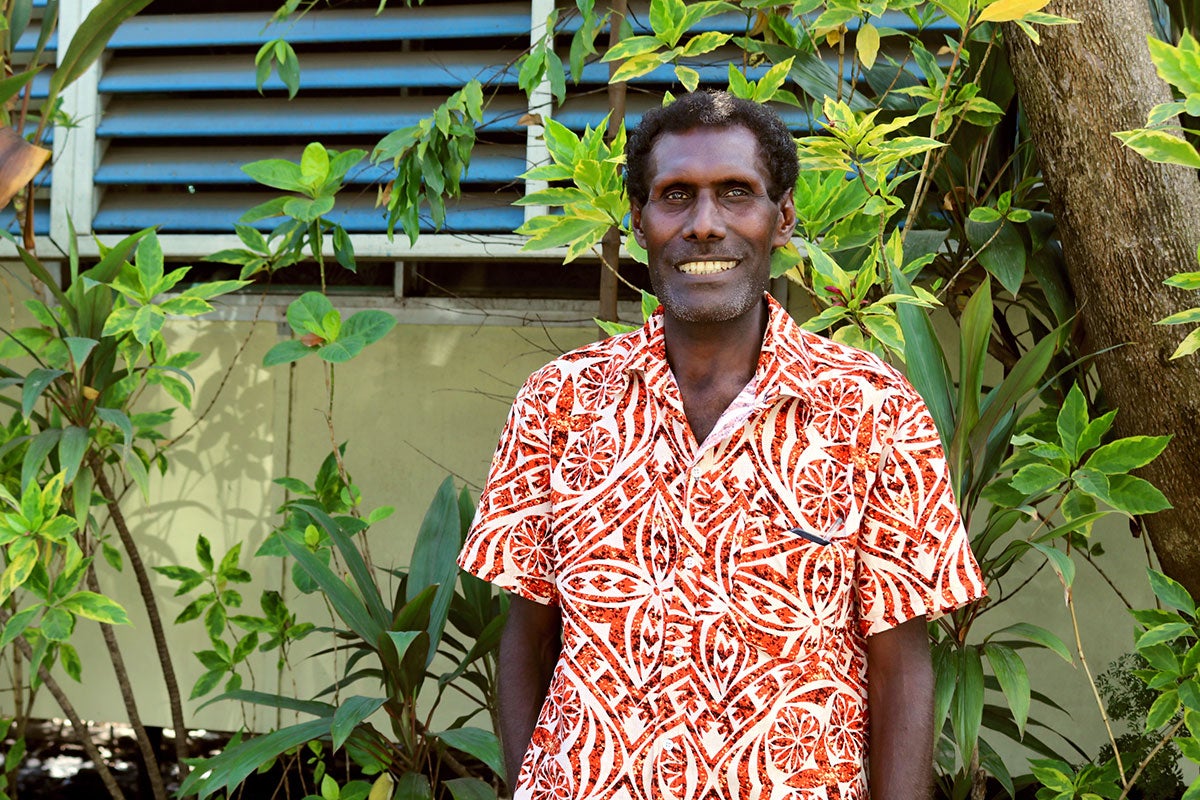
Nashly Vozoto, a trained nurse, and national gender-based violence programme officer with the Ministry of Health and Medical Services, was SAFENET’s first coordinator in 2013, and is now the chairperson of their board called CARECOM.
Nashly Vozoto, a trained nurse, and national gender-based violence programme officer with the Ministry of Health and Medical Services, was SAFENET’s first coordinator in 2013, and is now the chairperson of their board called CARECOM. Photo: UN Women/Shazia Usman

Acting quickly to help women in need

Mary (a pseudonym) is one survivor who sought help from SAFENET after her husband’s abuse during her pregnancy resulted in the loss of their baby.

“I realized that if I continued to stay with him, he would eventually kill me too,” Mary said. “I remained silent for many years, but stories of women who had received services from SAFENET encouraged me to finally seek help.”

Upon her arrival at a local SAFENET facility, a police officer promptly issued a protection order and escorted Mary to a local hospital for treatment. She also received counselling at a crisis centre and, with the assistance of a lawyer, initiated legal proceedings against her husband.

“I don't know what I would have done without this support. I am thankful to the government for assisting women and girls who may be going through what I experienced,” she said. “We deserve to survive. We deserve to be safe. And now, I finally feel safe. When I walk out, I will share my story with my friends, so they too feel inspired to seek help.”

Stopping violence before it starts

“UN Women's strength lies in connecting prevention and response work,” said Doris Puiahi, UN Women’s Ending Violence Against Women Girls Coordinator who oversees the Pacific Partnership to End Violence Against Women and Girls (Pacific Partnership) programme in Solomon Islands. This programme is primarily funded by the Government of Australia, the European Union, and is jointly coordinated by UN Women and the Pacific Community (SPC), in collaboration with the Pacific Islands Forum (PIF)

In addition to gender-based violence counseling and support services, SAFENET’s provincial committees also support outreach efforts through churches, schools, and other institutions to reject discriminatory attitudes and prevent violence against women. .

"I've seen big changes in our community," says Rolyn. "Previously, men made all decisions at home, in public meetings, and in churches. Women sat at the back and listened to what men decided. But now, people recognize women as good decision-makers, and the status of women is rising.”

“We now have three women chiefs on our island,” she said. “When women are abused or sexually harassed, they come and see us. Women and girls are gaining confidence to speak up.”

Topics

  • Ending violence against women and girls
  • Domestic violence/interpersonal violence
  • Access to basic services
  • Asia and the Pacific
  • Solomon Islands

Related content

Image
UNWomen_Placeholder
Press briefing

Nepal floods: 43,000 women and girls need immediate humanitarian assistance

1 September 2026
Nepal floods: 43,000 women and girls need immediate humanitarian assistance
Image
A village is devastated by floods, thick with mud and debris
Press release

Nearly 160,000 women and girls impacted by Nepal flash floods

28 August 2026
Nearly 160,000 women and girls impacted by Nepal flash floods
Image
Sidi Haidara speaks into a microphone
Feature

One man’s quest to end female genital mutilation (FGM) in Mali

27 August 2026
One man’s quest to end female genital mutilation (FGM) in Mali

Footer menu-HQ

  • News and stories
  • Resources
  • What we do
  • How we work
  • Where we are
  • Partnerships
  • Employment
  • Procurement
  • Contact us
  • Executive Board
  • Commission on the Status of Women

Donate button menu [Footer tablet]

  • Donate

Donate button menu [Footer]

  • Donate

Social media menu

  • Facebook
  • Twitter
  • LinkedIn
  • Flickr
  • YouTube
  • Instagram
UN Women - For all women and girls

Footer bottom [Menu]

  • Copyright
  • Information security
  • Privacy notice
  • Report wrongdoing
  • Terms of use
Share this page
  • Share to Facebook
  • Share to Twitter
  • Share to LinkedIn
  • Share to E-mail

Or copy link