
Universal menu

  • Global
  • Regions
    • Africa
    • Americas and the Caribbean
    • Arab States
    • Asia and the Pacific
    • Europe and Central Asia
  • Knowledge
  • Data
  • Training
  • Transparency
UN Women - For all women and girls

Main Navigation-HQ

  • Who we are
    • About us
      • About UN Women
      • Business model
      • Guiding documents
      • Worldwide presence
    • Leadership
      • Governance structure
      • Executive leadership
      • Executive Board
      • Accountability
    • Work with us
      • Employment
      • Procurement
      • Calls for proposals
      • Contact us
      • UN Women Strategic Plan 2026–2029
      • UN Women Strategic Plan 2026–2029 - social media image
        UN Women Strategic Plan 2026–2029
  • What we do
    • Focus areas
      • Ending violence against women
      • Peace and security
      • Humanitarian action
      • Leadership and governance
      • Economic empowerment
      • Innovation and technology
      • Women with disabilities
      • Youth
      • HIV and AIDS
    • How we work
      • 2030 Agenda for Sustainable Development
      • Commission on the Status of Women
      • Gender parity in the UN system
      • Intergovernmental support
      • Partnerships
      • Research and data
      • Training Centre
      • Trust funds
      • UN system coordination
      • Gender Equality Accelerators
      • Gender Equality Accelerators artwork
        Gender Equality Accelerators
  • News and stories
    • Latest
      • News
      • Articles and explainers
      • In focus
    • Media center
      • Press materials
      • Media contacts
      • Explainer: Why are women so exhausted? Care work and the mental load
      • Two adults stand at a table changing diapers on baby dolls, with laundry hanging on a clothesline behind them in a home setting.
        Explainer: Why are women so exhausted? Care work and the mental load
      • Press release: Aid cuts dismantle women’s organizations working in humanitarian crises
      • A young Ugandan woman sits with another local woman to talk
        Press release: Aid cuts dismantle women’s organizations working in humanitarian crises
  • Digital library
    • Resources
      • Publications
      • Annual reports
      • Progress of the world’s women
      • World survey on the role of women in development
      • The gender snapshot
    • GenderTerm
      • GenderTerm
      • Reprint permissions
      • UN Women Highlights 2025–2026
      • A smiling woman.
        UN Women Highlights 2025–2026
      • The gender snapshot 2025
      • gender snapshot thumbnail transparent
        The gender snapshot 2025
  • Get involved
    • How to get involved
      • For ALL Women and Girls
      • International Women's Day
      • 16 Days of Activism to End Violence against Women and Girls
      • UNiTE! Campaign to End Violence against Women
      • Generation Equality
      • He for She
Ask AI
https://84e5cfacd5c7e99f9825edf344450c.1b.environment.api.powerplatform.com/powervirtualagents/botsbyschema/crad4_websiteQA/directline/token?api-version=2022-03-01-preview
1
-
Ask your question here
AI website assistant

Hello, how can I assist you?

AI chatbot responses may be incorrect. Always verify important information.

Donate button menu

Donate

Breadcrumb

  1. Home
  2. Explore Our Latest News
  3. Explore Our Latest News

Website survey

We want to know how we can improve your experience on this website. Completing this survey takes less than 5 minutes.

TAKE THE SURVEY
Interview

‘Access to information is the basis of democracy’ – Interview with environmental journalist Miriam Jemio on World Press Freedom Day

On World Press Freedom Day, UN Women spoke with Miriam Jemio, an environmental journalist from Bolivia, on pressing issues and safety of journalists.

1 May 2024
  • Share to Facebook
  • Share to Twitter
  • Share to LinkedIn
  • Share to E-mail

The climate crisis is the most pressing issue of our times, impacting our lives and entire ecosystems. It threatens progress on gender equality, human rights, and sustainable development. By 2050, climate change will push up to 158 million more women and girls into poverty.

Exposing the climate and biodiversity crisis is the first step towards beginning to find solutions. Yet, dis- and misinformation campaigns continue to challenge scientific knowledge and information about the unfolding crisis, clouding people’s understanding and risking our future. Against this backdrop, the freedom and safety of journalists reporting from the front lines of the climate crisis is critical.  This year, World Press Freedom Day (3 May) is focusing on the importance of journalism and freedom of expression in the face of the environmental crisis.

On this occasion, UN Women interviewed Miriam Jemio, an independent environmental journalist from La Paz, Bolivia. Jemio was among 163 Bolivian journalists who received training in design thinking and reporting on gender-based violence through a Media Lab project by UN Women and the Foundation for Journalism in December 2023.
Image
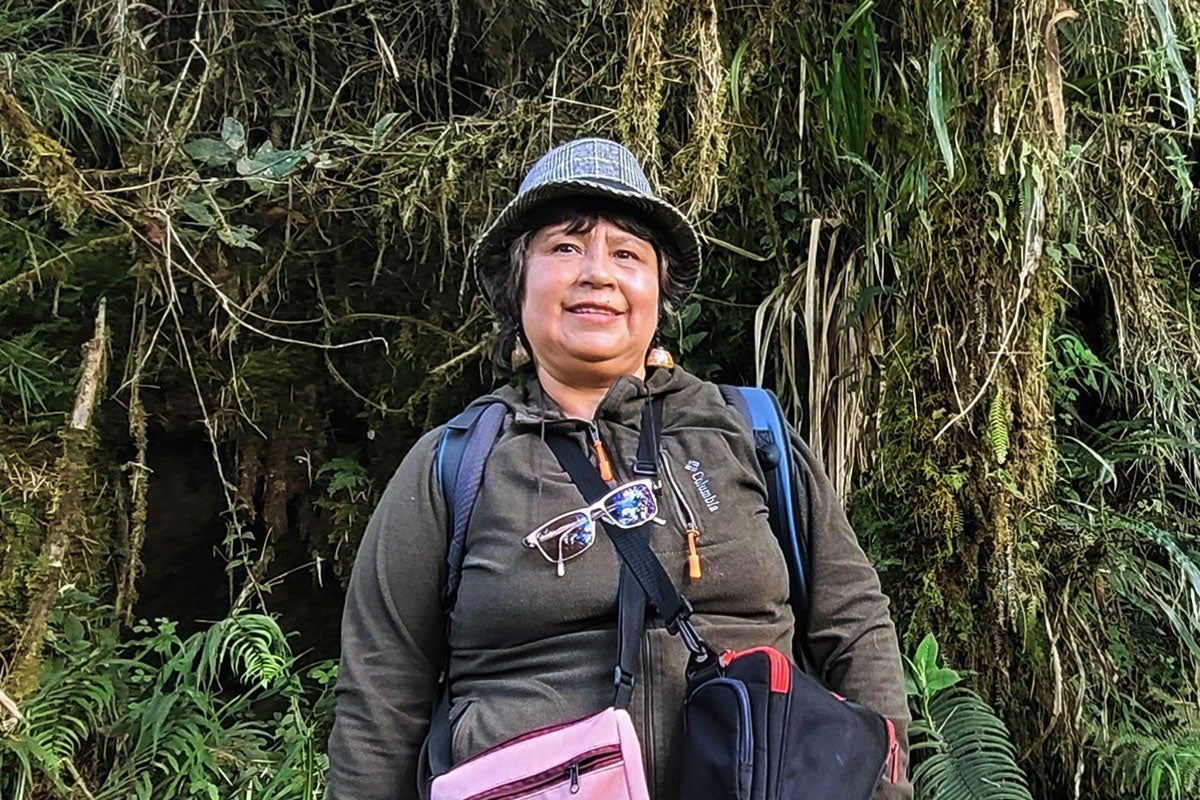
Miriam Jemio, photographed in the forest of San Jose de Uchupiamona in Bolivia.
Miriam Jemio, Bolivian environmental journalist, photographed in the forest of San Jose de Uchupiamona. Photo courtesy: Miriam Jemio

The importance of environmental journalism in the face of dis- and misinformation

Miriam Jemio has been a journalist for nearly three decades. For most of her career, she has almost exclusively covered environmental issues, because she considers them to be as important as political or economic issues.

For Jemio, it is incredibly important to reflect the socio-environmental crises that indigenous and rural women are facing, with empathy and sensitivity. “It is essential to cover indigenous issues, because they are a vulnerable population”, she said. “Two decades ago, I had the opportunity to visit many rural municipalities and when I compare their condition today with what I had seen then, there have been very few changes.”

“Therefore, it is necessary to make their needs visible, to show where the State is not fulfilling its duty, and to show the specific ways that the indigenous peoples face social and environmental problems.”

Jemio reported from COP 15 events in 2009, highlighting the stories of indigenous peoples from the Amazon who were facing the impacts of climate change.

“Coverage of environmental issues is essential in the face of the crises we face as humanity, and to combat the disinformation that preys on the public”, she said. “We have to show who is behind the disinformation, expose their interests, and provide verified information to the public so that they can make informed decisions, and we can protect the planet that houses all of us.”

But there is another challenge that haunts her: “how to motivate our audience to take action. We are now turning to "solutions journalism" to inspire action”, she said.
Image
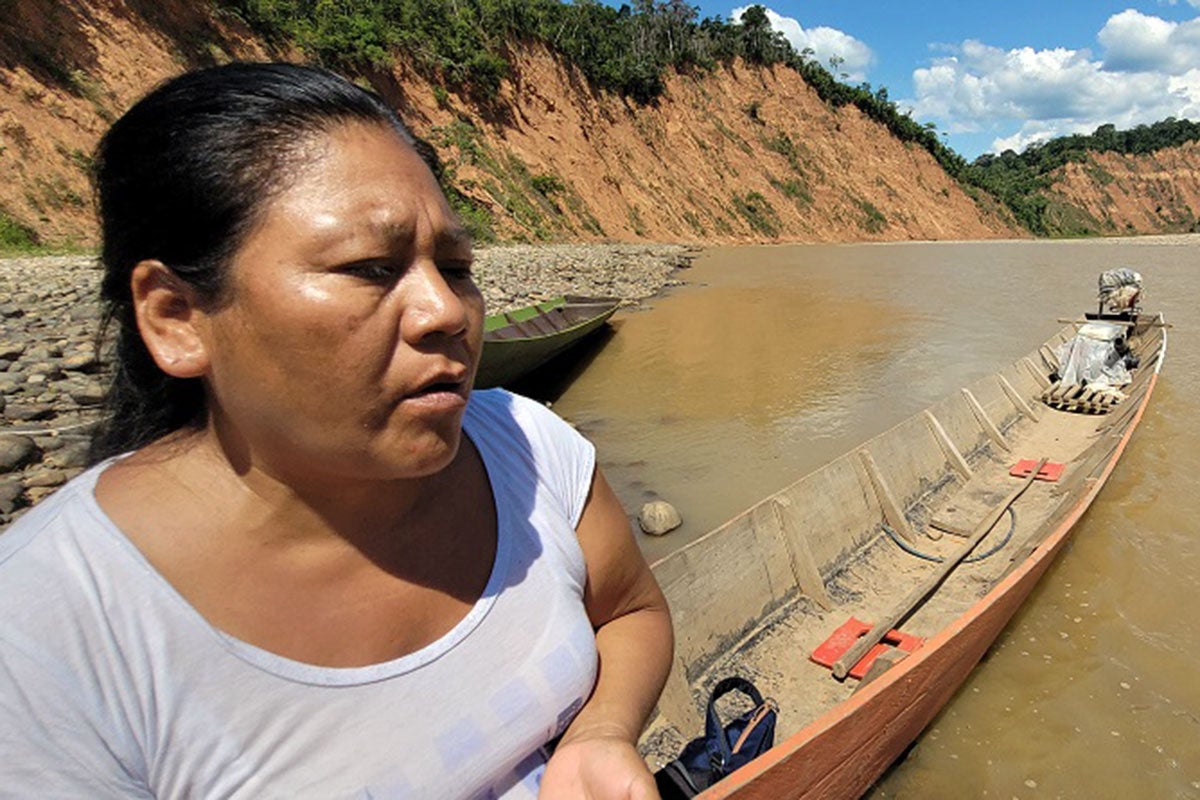
Miriam Pariamo lives the San José de Uchupiamona community, located inside Madidi National Park, which is currently affected by mining activity. She is photographed by the Tuichi river.
Miriam Pariamo lives the San José de Uchupiamona community, located inside Madidi National Park, which is currently affected by mining activity. She is photographed by the Tuichi river. Photo: Miriam Jemio

The climate crisis impacts women differently

“Extractivism and the climate crisis have profound socio-environmental impact on indigenous populations, but these impacts affect women differently (than men),” said Jemio. “Women are the ones to face and respond to the effects of climate change, but their role is not understood, much less made visible.”

She gives the example of indigenous women in the Chiquitanía (a region in eastern Bolivia), whose traditional care responsibilities for their families include fetching water. “Water is increasingly scarce, making it more difficult for them to access it. In the Chiquitanía, there are seasons when women have to travel to another community or even to the nearest city to bring water to their homes.”

“And when excessive rainfall causes flooding, women are the first to respond to save their children and animals. In many communities, indigenous women grow kitchen gardens to cover their nutritional needs. When they lose their crops (because of lack of water or during floods) they do not have enough to cook and feed their families.”
Image
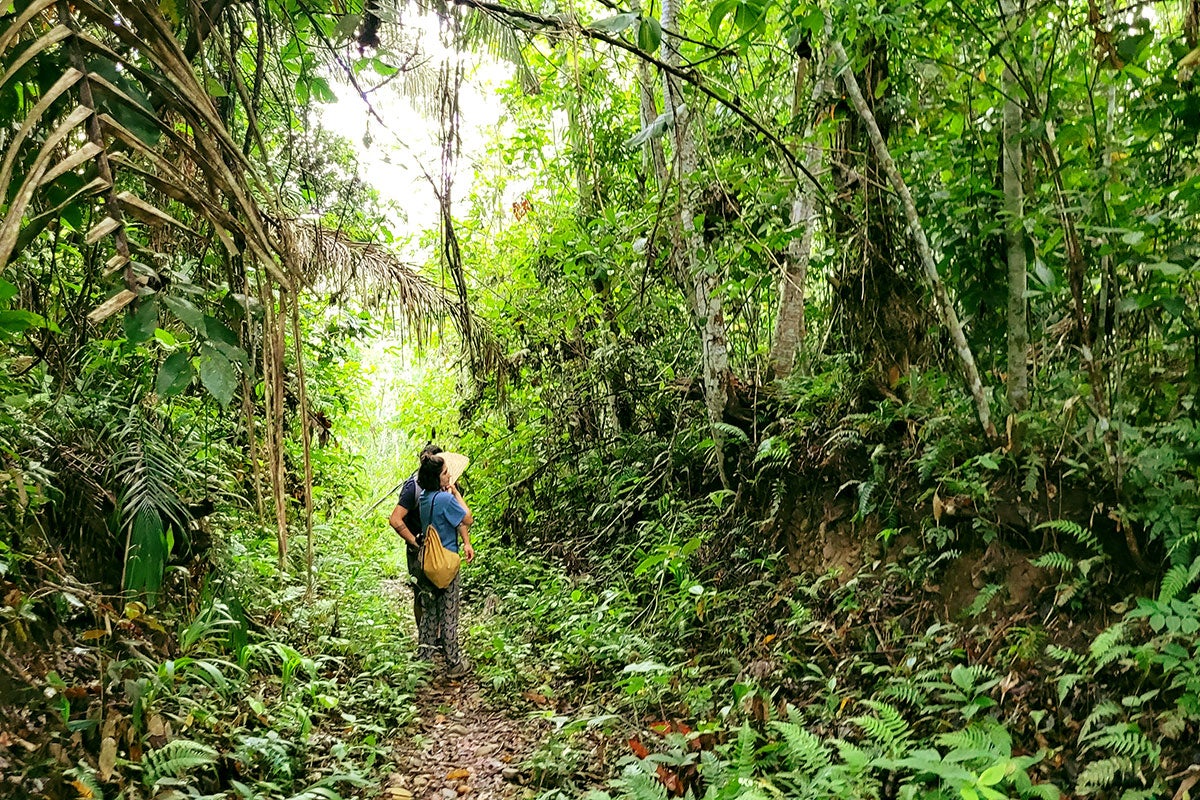
The forest of San Jose de Uchupiamona in Bolivia, where an indigenous community lives. Miriam Jemio recently covered a story about mercury contamination in the area due to mining activities.
The forest of San Jose de Uchupiamona in Bolivia, where an indigenous community lives. Miriam Jemio recently covered a story about mercury contamination in the area due to mining activities. Photo courtesy of Miriam Jemio

Safety of journalists and press freedom

“In Bolivia, due to the polarization in the country, several journalists have been verbally and physically attacked in recent years. Environmental journalists are in the crosshairs of the mining actors and journalists are often labeled as being "with" or "against" the government”, shared Jemio.

In 2019, while doing a live broadcast, Jemio was verbally and physically assaulted by a group of protesters. “I felt very vulnerable, it was a mixture of rage and helplessness, because I could not defend myself and I had to flee”, she recalled.

“The security to do our work must be provided by the State”, Jemio stressed. Her message on World Press Freedom Day is clear: “Access to information is the basis of democracy. That is what we are losing if journalists cannot safely cover issues such as the climate crisis, deforestation, biodiversity loss, extractive activities… the public will not have the information they need to take action on issues that affect their lives.”

Topics

  • Sustainable Development Goals (SDGs)
  • Climate change
  • Environmental protection
  • Communications and media
  • Indigenous women
  • Latin America and the Caribbean
  • Bolivia, Plurinational State of

Related content

Image
A woman stands amid a crowd of people and motorcycles on a busy street.
Feature

How aid cuts are threatening women’s organizations responding to Haiti’s gang violence

6 August 2026
How aid cuts are threatening women’s organizations responding to Haiti’s gang violence
Image
UNWomen_Placeholder
Statement

UN Women statement: Drone attacks by day and sexual violence by night leave no safe window for women and girls to collect water amidst rainy season in Sudan’s El Obeid

24 July 2026
UN Women statement: Drone attacks by day and sexual violence by night leave no safe window for women and girls to collect water amidst rainy season in Sudan’s El Obeid
Image
Nepal is part of a growing global movement to transform care systems that work better for women, families, and communities. UN Women’s Transform Care Investment Initiative Asia-Pacific calls for catalytic investments to benefit at least 100 million women and girls and create 125 million new employment opportunities in the care economy by 2035, and reduce women’s unpaid care work. In this photo, a woman assists an older woman walking on the street. Photo: UN Women/Srijana Bhatta
Feature

Kathmandu is a caring city – here’s what that means for women

17 July 2026
Kathmandu is a caring city – here’s what that means for women

Footer menu-HQ

  • News and stories
  • Resources
  • What we do
  • How we work
  • Where we are
  • Partnerships
  • Employment
  • Procurement
  • Contact us
  • Executive Board
  • Commission on the Status of Women

Donate button menu [Footer tablet]

  • Donate

Donate button menu [Footer]

  • Donate

Social media menu

  • Facebook
  • Twitter
  • LinkedIn
  • Flickr
  • YouTube
  • Instagram
UN Women - For all women and girls

Footer bottom [Menu]

  • Copyright
  • Information security
  • Privacy notice
  • Report wrongdoing
  • Terms of use
Share this page
  • Share to Facebook
  • Share to Twitter
  • Share to LinkedIn
  • Share to E-mail

Or copy link