
Universal menu

  • Global
  • Regions
    • Africa
    • Americas and the Caribbean
    • Arab States
    • Asia and the Pacific
    • Europe and Central Asia
  • Knowledge
  • Data
  • Training
  • Transparency
UN Women - For all women and girls

Main Navigation-HQ

  • Who we are
    • About us
      • About UN Women
      • Business model
      • Guiding documents
      • Worldwide presence
    • Leadership
      • Governance structure
      • Executive leadership
      • Executive Board
      • Accountability
    • Work with us
      • Employment
      • Procurement
      • Calls for proposals
      • Contact us
      • UN Women Strategic Plan 2026–2029
      • UN Women Strategic Plan 2026–2029 - social media image
        UN Women Strategic Plan 2026–2029
  • What we do
    • Focus areas
      • Ending violence against women
      • Peace and security
      • Humanitarian action
      • Leadership and governance
      • Economic empowerment
      • Innovation and technology
      • Women with disabilities
      • Youth
      • HIV and AIDS
    • How we work
      • 2030 Agenda for Sustainable Development
      • Commission on the Status of Women
      • Gender parity in the UN system
      • Intergovernmental support
      • Partnerships
      • Research and data
      • Training Centre
      • Trust funds
      • UN system coordination
      • Gender Equality Accelerators
      • Gender Equality Accelerators artwork
        Gender Equality Accelerators
  • News and stories
    • Latest
      • News
      • Articles and explainers
      • In focus
    • Media center
      • Press materials
      • Media contacts
      • Explainer: Why are women so exhausted? Care work and the mental load
      • Two adults stand at a table changing diapers on baby dolls, with laundry hanging on a clothesline behind them in a home setting.
        Explainer: Why are women so exhausted? Care work and the mental load
      • Press release: Aid cuts dismantle women’s organizations working in humanitarian crises
      • A young Ugandan woman sits with another local woman to talk
        Press release: Aid cuts dismantle women’s organizations working in humanitarian crises
  • Digital library
    • Resources
      • Publications
      • Annual reports
      • Progress of the world’s women
      • World survey on the role of women in development
      • The gender snapshot
    • GenderTerm
      • GenderTerm
      • Reprint permissions
      • UN Women Highlights 2025–2026
      • A smiling woman.
        UN Women Highlights 2025–2026
      • The gender snapshot 2025
      • gender snapshot thumbnail transparent
        The gender snapshot 2025
  • Get involved
    • How to get involved
      • For ALL Women and Girls
      • International Women's Day
      • 16 Days of Activism to End Violence against Women and Girls
      • UNiTE! Campaign to End Violence against Women
      • Generation Equality
      • He for She
Ask AI
https://84e5cfacd5c7e99f9825edf344450c.1b.environment.api.powerplatform.com/powervirtualagents/botsbyschema/crad4_websiteQA/directline/token?api-version=2022-03-01-preview
1
-
Ask your question here
AI website assistant

Hello, how can I assist you?

AI chatbot responses may be incorrect. Always verify important information.

Donate button menu

Donate

Breadcrumb

  1. Home
  2. Explore Our Latest News
  3. Explore Our Latest News

Website survey

We want to know how we can improve your experience on this website. Completing this survey takes less than 5 minutes.

TAKE THE SURVEY
Interview

One too many – how a femicide case sparked activism and change in Kazakhstan

22 November 2024
  • Share to Facebook
  • Share to Twitter
  • Share to LinkedIn
  • Share to E-mail

One year ago, the femicide of Saltanat Nukenova shook Kazakhstan. The case received unprecedented national attention when her husband, a former minister, was accused. Aitbek Amangeldi, 37, an activist and human rights defender from Kazakhstan, shared with UN Women how the murder of his sister Saltanat changed his life. He founded the Saltanat Nukenova Memorial Foundation and a volunteers’ network to help survivors of gender-based violence, uniting activists, bloggers and influencers across Central Asia.
Image
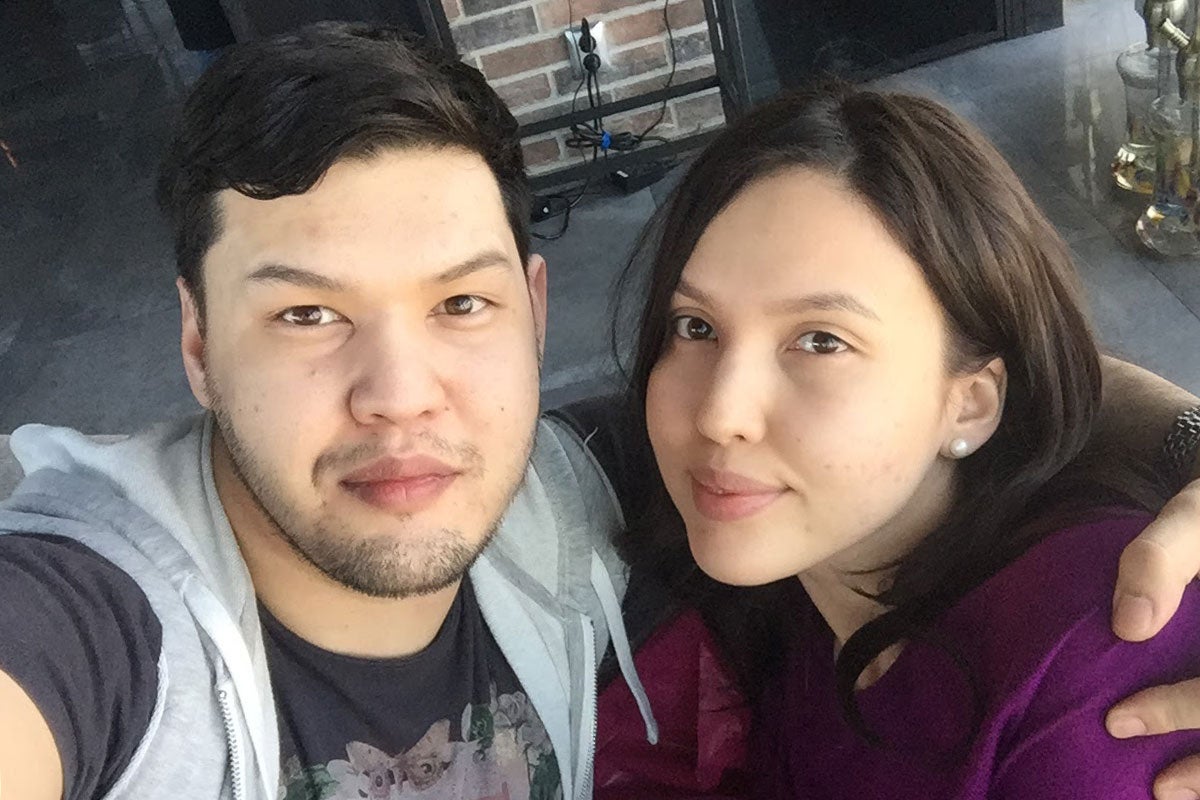
Siblings Saltanat Nukenova (at right) and Aitbek Amangeldi take a photo together in 2017.  Photo: Courtesy of Aitbek Amangeldi
Siblings Saltanat Nukenova (at right) and Aitbek Amangeldi take a photo together in 2017.
Photo: Courtesy of Aitbek Amangeldi
Siblings Saltanat Nukenova (at right) and Aitbek Amangeldi take a photo together in 2017. Photo: Courtesy of Aitbek Amangeldi

“My sister and I grew up surrounded by love and trust. I believed, perhaps naively, that all families were like mine,” reflected Aitbek Amangeldi. “But over the past year, I have come to realize the depth [of the problem]. Most cases of gender-based violence remain unreported because of stigma, gender roles, fear of retribution, and inadequate support systems. In our region, a concept called “Uyat” (Kazakh for “shame”) discourages women and girls from reporting violence, silencing survivors, normalizing abuse, and perpetuating cycles of violence that reinforce gender inequality.”

The murder of Saltanat Nukenova by her husband exposed the brutal reality of domestic violence and femicide in Kazakhstan and neighboring countries. The trial was broadcast online by all media outlets – a first for the country – and followed by over 3.5 million people each day. The silence that allowed rampant abuse of women to continue, and be normalized, was shattered.

Aitbek Amangeldi’s journey from personal loss to activism

“Saltanat was a bright, kind person, the real soul of our family. Losing her was an irreparable shock, but it also became a call to action for me,” said Amangeldi, who not only pursued justice for his sister, but went on to create and lead a network of volunteers to support victims and survivors of domestic violence by providing emergency accommodation, facilitating legal assistance, helping them move to secure locations and find jobs, and much more. He is also trying to create and register a foundation to continue supporting survivors.

It started with one call for help, followed by many others, from women fearing for their lives. At the same time, there was an outpouring of support from the public for Saltanat’s family. Amangeldi saw the opportunity to unite people in need with those who were ready to help.

“I still remember the first case, when a woman was being stalked and receiving death threats from her ex-husband. I paid for her bodyguard for three days,” recalled Amangeldi. With the help of volunteers, he helped the woman pursue legal action that led to the abuser’s arrest.

Amangeldi’s first social media post asking for volunteers received responses from 500 people within the first few days. Today, the volunteer network has more than 3,000 active members and they have worked on 1,200 cases of domestic violence and femicide already.

Turning the tide of domestic violence and femicide in Kazakhstan

Globally, every 10 minutes, a woman is killed by her intimate partner or family. According to official statistics, at least 80 women are killed every year in Kazakhstan by partners. The police receive around 300 domestic violence reports daily.

Yet, domestic violence was decriminalized in 2017, reinforcing the normalization of domestic abuse.

Following Saltanat’s trial, thousands of people protested online and in peaceful demonstrations around the world, demanding justice and calling for Kazakhstan to criminalize domestic violence.

“The public response to our trial showed me how powerful public opinion is,” said Amangeldi. “Nearly all bloggers spoke out to support our family and denounced the violence, creating an unprecedented wave of societal response to gender-based violence in the country. This united movement is capable of influencing laws, policies, and official responses.”

On 15 April 2024, Kazakhstan’s president signed a law reinstating criminal penalties for domestic violence, which came into effect in June.
Image
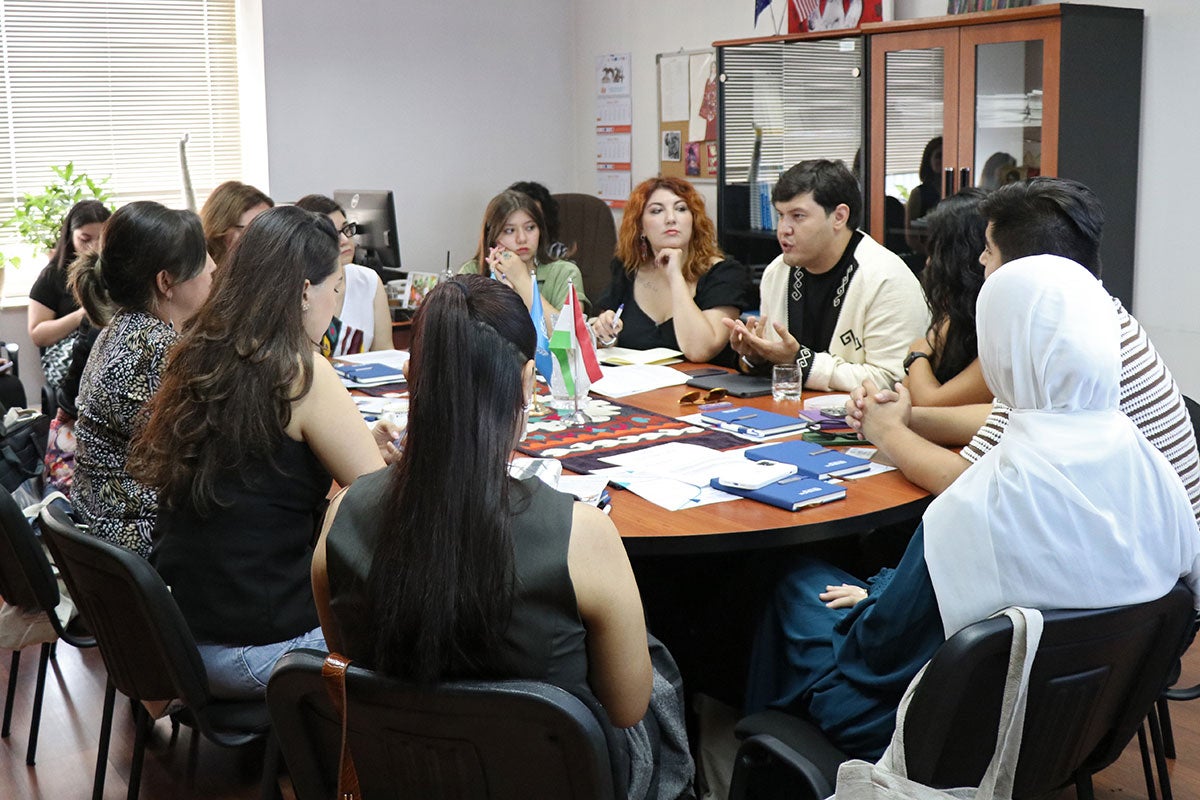
Aitbek Amangeldi meets with influencers in Dushanbe, Tajikistan. 2024. Photo: UN Women/Davroni Davronzoda
Aitbek Amangeldi meets with influencers in Dushanbe, Tajikistan. 2024.
Photo: UN Women/Davroni Davronzoda
Aitbek Amangeldi meets with influencers in Dushanbe, Tajikistan. 2024. Photo: UN Women/Davroni Davronzoda

The power of media and activism in curbing violence against women

In Kazakhstan, 16.5 per cent of women aged 18-75 report experiencing physical and/or sexual violence perpetrated by intimate partners. However, since domestic violence is still underreported, the real scale of violence is likely to be much higher, says Amangeldi.

“This is why I support the UN Women Regional Office for Europe and Central Asia’s #HearHerStory campaign, aimed at breaking stereotypes, eliminating victim-blaming, and amplifying women’s voices. I call on influencers to share these stories, whether about a friend, a sister, or an acquaintance, to show the true scale and forms of violence.”

The #HearHerStory campaign is aiming to create a network of influencers committed to fighting violence against women and girls and promoting gender equality. With UN Women’s support, Amangeldi has organized meetings with influencers from Tajikistan and Uzbekistan to share experiences.

“Change starts with the first step, and together, we can transform society,” says Amangeldi. “I urge influencers, active citizens, and anyone who cares—don’t remain indifferent. Support survivors, speak out, and fight for justice. Together, we can make sure that our children grow up in a society free from violence.”

Topics

  • Ending violence against women and girls
  • Feminicide/femicide
  • Europe and Central Asia
  • Kazakhstan

Related content

Image
UNWomen_Placeholder
Statement

A year since Afghan women staff barred from entering United Nations premises across the country

7 September 2026
A year since Afghan women staff barred from entering United Nations premises across the country
Image
Sidi Haidara speaks into a microphone
Feature

One man’s quest to end female genital mutilation (FGM) in Mali

27 August 2026
One man’s quest to end female genital mutilation (FGM) in Mali
Image
A young woman poses for a portrait while wearing a UN Women vest
Feature

Serving through crisis: UN Women’s humanitarian workers on what keeps them going

17 August 2026
Serving through crisis: UN Women’s humanitarian workers on what keeps them going

Footer menu-HQ

  • News and stories
  • Resources
  • What we do
  • How we work
  • Where we are
  • Partnerships
  • Employment
  • Procurement
  • Contact us
  • Executive Board
  • Commission on the Status of Women

Donate button menu [Footer tablet]

  • Donate

Donate button menu [Footer]

  • Donate

Social media menu

  • Facebook
  • Twitter
  • LinkedIn
  • Flickr
  • YouTube
  • Instagram
UN Women - For all women and girls

Footer bottom [Menu]

  • Copyright
  • Information security
  • Privacy notice
  • Report wrongdoing
  • Terms of use
Share this page
  • Share to Facebook
  • Share to Twitter
  • Share to LinkedIn
  • Share to E-mail

Or copy link