
Press briefing at the United Nations Headquarters by UN Women Country Representative in Afghanistan, Alison Davidian, on the three-year mark of the Taliban takeover
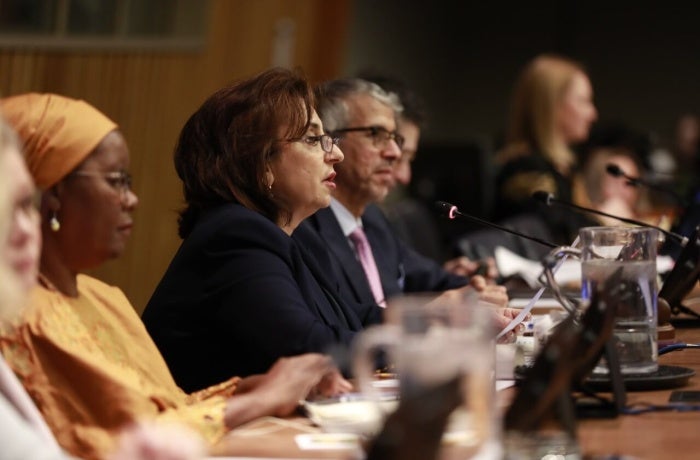
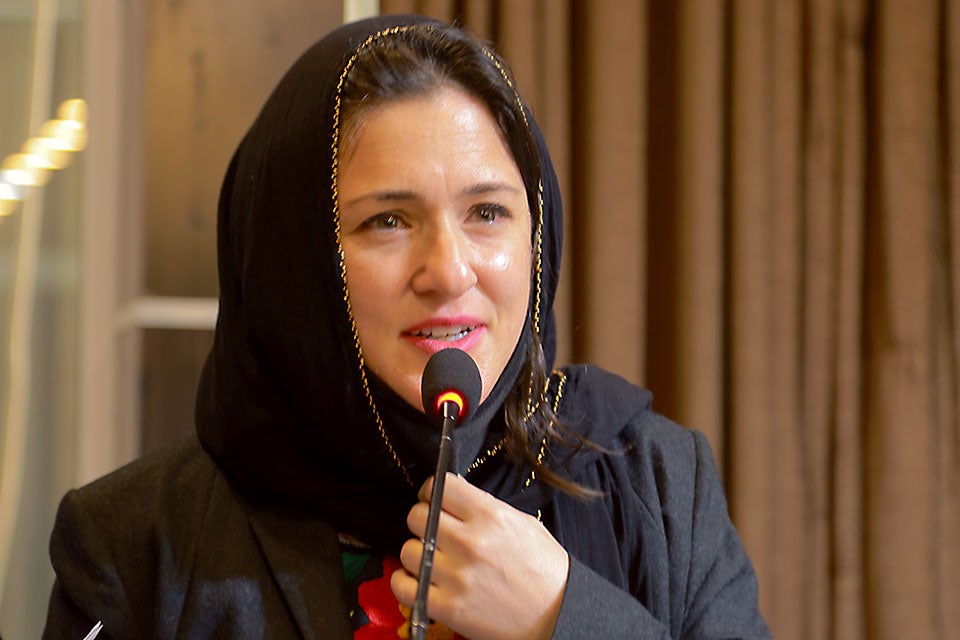
UN Women Country Representative in Afghanistan, Alison Davidian, spoke at the noon briefing at the UN Headquarters about the state of women and girls three years since the Taliban takeover
I’ve just come back from the north of Afghanistan. I asked the women I met what they want the world to know about their lives.
One woman, Nasima told me this: “I was married at 16. I couldn’t finish school. My hope was that my daughter’s life would be better. Now I’m worried her life is going to be worse. To those who are still listening to our voices, please help us fight for our freedom.”
This week marks three years since the Taliban takeover of Afghanistan.
Three years’ worth of countless decrees, directives, and statements targeting women and girls – stripping them of their fundamental rights. Eviscerating their autonomy.
"We cannot leave Afghan women to fight alone. If we do, we have no moral ground to fight for women’s rights anywhere."
— UN Women (@UN_Women) August 13, 2024
Our Country Representative @DavidianAli urges the world to support Afghan women's fight for freedom.
Full remarks: https://t.co/RMqUw6sUzg
#Afghanistan pic.twitter.com/mrNSDCaJmn
Our latest publication, launched today, shows trends based on rounds of consultations we’ve done with thousands of Afghan women, from the provincial capitals to the most rural areas since August 2021.
One of the first, most striking, trends is the erasure of Afghan women from public life.
To date, no woman in Afghanistan is in a leadership position anywhere that has influence politically, at the national or provincial level. When Afghan women are engaged in the Taliban’s structures, their roles are largely about monitoring compliance of other women with their discriminatory decrees.
This political erasure is mirrored at the social level. Our data shows that when you take away basic rights, it impacts every area of life. Of the women we surveyed, 98 per cent felt they had limited or zero influence on decision-making in their communities.
It is also reflected in the home. Our data shows that the percentage of women who feel they can influence decision-making at the household level has dropped by nearly 60 per cent over the last year. To give some context, three years ago an Afghan women could technically decide to run for President. Now, she may not even be able to decide when to go and buy groceries.
It wasn’t perfect three years ago. But it wasn’t this.
Linked to the loss of rights, our data points to an escalating mental health crisis. Sixty-eight per cent of the women we consulted report “bad” or “very bad” mental health. And 8 per cent indicated knowing at least one women or girl who had attempted suicide.
What is also clear three years in, is that the Taliban’s restrictions on the rights of women and girls will affect generations to come.
Our analysis shows that by 2026, the impact of leaving 1.1 million girls out of school and over 100,000 women out of university is correlated with an increase in the rate of early childbearing by 45 per cent; and an increased risk of maternal mortality by at least 50 per cent.
In the face of this deepening women’s rights crisis, I am often asked: what can we do to support Afghan women and girls?
My answer is always this one key thing.
We must continue to invest in women. Nothing undermines the Taliban’s vision for society more than empowering the very part of the population they seek to oppress.
Practically, based on UN Women’s work over the past three years, investing in women translates into three main strategies:
- Allocate flexible and long-term funding to grassroots women’s organizations. This is one of the most effective ways to reach women and girls, respond to their needs, and invest in one of the few sectors where women can still influence decision-making. It’s hard, but it’s possible.
- Design programmes dedicated to countering the erasure of women and girls, investing directly in their resilience, empowerment, and leadership. Initiatives particularly for education, livelihoods, and entrepreneurship are crucial ways to meaningfully address structural drivers of gender inequality.
- Finally, it is essential to facilitate spaces where Afghan women can express their concerns and priorities directly.Our data shows that Afghan women want to represent themselves. But one meeting and one participation option will not do. Across any engagement, we need to ask: How can we consult and include Afghan women? What can we do differently to break the pattern of women’s exclusion?
Three years ago, the whole world was watching a takeover that was livestreaming horror after horror.
Three years later, while the world’s attention may have turned elsewhere, the horrors have not stopped for Afghan women and girls, nor has their conviction to stand against the oppression.
When it comes to the fight for women’s rights, we are at an inflection point in Afghanistan, but also globally. The world is watching what happens to women and girls in Afghanistan. In some places, it watches to condemn; in others, it watches to emulate the Taliban’s structural oppression.
We cannot leave Afghan women to fight alone. If we do, we have no moral ground to fight for women’s rights anywhere.
Their fate determines the fate of women everywhere.
What we do – or fail to do – for Nasima, her daughter, and all Afghan women and girls, is the ultimate test of who we are as a global community and what we stand for.
[Check against delivery.]
Related content
For ALL Women and Girls: Sushmita S. Preetha on elevating and protecting women journalists

Interview: Gender equality is key to a just renewable energy future