Universal menu

  • Global
  • Regions
    • Africa
    • Americas and the Caribbean
    • Arab States
    • Asia and the Pacific
    • Europe and Central Asia
  • Knowledge
  • Data
  • Training
  • Transparency
UN Women - For all women and girls

Main Navigation-HQ

  • Who we are
    • About us
      • About UN Women
      • Business model
      • Guiding documents
      • Worldwide presence
    • Leadership
      • Governance structure
      • Executive leadership
      • Executive Board
      • Accountability
    • Work with us
      • Employment
      • Procurement
      • Calls for proposals
      • Contact us
      • UN Women Strategic Plan 2026–2029
      • UN Women Strategic Plan 2026–2029 - social media image
        UN Women Strategic Plan 2026–2029
  • What we do
    • Focus areas
      • Ending violence against women
      • Peace and security
      • Humanitarian action
      • Leadership and governance
      • Economic empowerment
      • Innovation and technology
      • Women with disabilities
      • Youth
      • HIV and AIDS
    • How we work
      • 2030 Agenda for Sustainable Development
      • Commission on the Status of Women
      • Gender parity in the UN system
      • Intergovernmental support
      • Partnerships
      • Research and data
      • Training Centre
      • Trust funds
      • UN system coordination
      • Gender Equality Accelerators
      • Gender Equality Accelerators artwork
        Gender Equality Accelerators
  • News and stories
    • Latest
      • News
      • Articles and explainers
      • In focus
    • Media center
      • Press materials
      • Media contacts
      • Explainer: Why are women so exhausted? Care work and the mental load
      • Two adults stand at a table changing diapers on baby dolls, with laundry hanging on a clothesline behind them in a home setting.
        Explainer: Why are women so exhausted? Care work and the mental load
      • Press release: Aid cuts dismantle women’s organizations working in humanitarian crises
      • A young Ugandan woman sits with another local woman to talk
        Press release: Aid cuts dismantle women’s organizations working in humanitarian crises
  • Digital library
    • Resources
      • Publications
      • Annual reports
      • Progress of the world’s women
      • World survey on the role of women in development
      • The gender snapshot
    • GenderTerm
      • GenderTerm
      • Reprint permissions
      • UN Women Highlights 2025–2026
      • A smiling woman.
        UN Women Highlights 2025–2026
      • The gender snapshot 2025
      • gender snapshot thumbnail transparent
        The gender snapshot 2025
  • Get involved
    • How to get involved
      • For ALL Women and Girls
      • International Women's Day
      • 16 Days of Activism to End Violence against Women and Girls
      • UNiTE! Campaign to End Violence against Women
      • Generation Equality
      • He for She
Ask AI
https://84e5cfacd5c7e99f9825edf344450c.1b.environment.api.powerplatform.com/powervirtualagents/botsbyschema/crad4_websiteQA/directline/token?api-version=2022-03-01-preview
1
-
Ask your question here
AI website assistant

Hello, how can I assist you?

AI chatbot responses may be incorrect. Always verify important information.

Donate button menu

Donate

Breadcrumb

  1. Home
  2. Explore Our Latest News
  3. Explore Our Latest News

Website survey

We want to know how we can improve your experience on this website. Completing this survey takes less than 5 minutes.

TAKE THE SURVEY
Press release

IOM and UN Women scale-up efforts to advance women's rights, protection, and empowerment in migration policies and humanitarian responses

2 October 2024
  • Share to Facebook
  • Share to Twitter
  • Share to LinkedIn
  • Share to E-mail

Migration has long been a crucial driver of global development, with millions of people seeking better opportunities, safety, and stability across borders. Every aspect of migration is influenced by a person’s gender: from the reasons for migrating, the information received before leaving, and the journeys embarked on, to integration in countries of destination and return, the work performed, and access to services.

Yet, international migration governance has been largely gender-blind, therefore reproducing or reinforcing existing gender and race inequalities, exposing women and girls to a greater risk of discrimination and human rights violations, including gender-based violence and trafficking. Women, who represent 48.1 per cent of international migrants, are more likely than men to face gender-specific barriers in accessing safe and regular migration pathways.

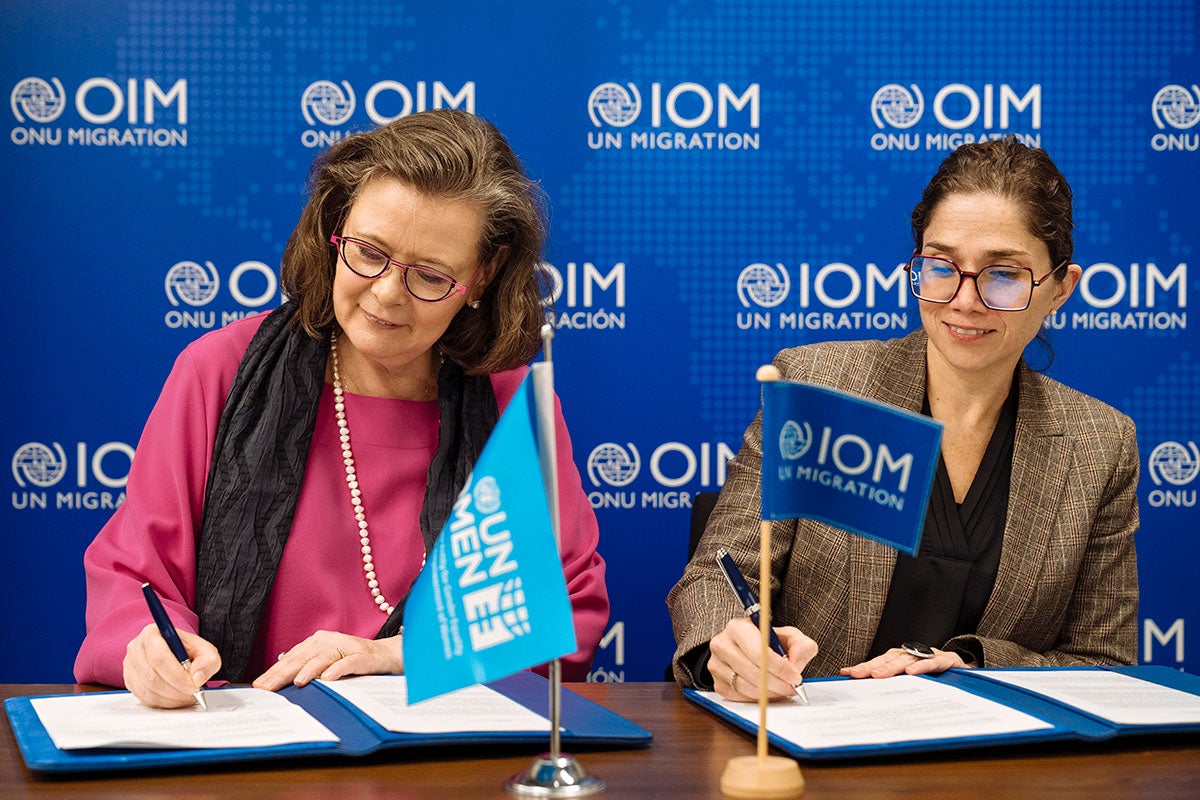
This is why the International Organization for Migration (IOM) and UN Women signed a new Strategic Collaboration Agreement solidifying the organizations’ united commitment to advancing gender equality and the empowerment of women and girls in migration and displacement contexts.


“Although global statistics on migration are increasingly available, they often fail to capture the gendered dimensions of migration, including the specific experiences of women and girls,” said Catalina Devandas IOM’s Representative of the Director General Office of Partnerships, Advocacy, and Communication. “This partnership with UN Women aims to strengthening our relationship and ensure the rights of women and girls is at the heart of all we do.”

Women are overrepresented in informal and low-wage sectors, such as domestic work, agriculture, and care services, and are likely to face precarious working conditions and limited access to social protection. Migrant women face additional barriers when it comes to financial inclusion. Many struggle to access banking services, loans, and digital financial tools due to a combination of legal restrictions, mobility challenges, and gender-based discrimination. In times of conflict and displacement, women and girls are disproportionately affected by the breakdown of services, such as healthcare and education, which are critical to their well-being and empowerment. Furthermore, women and girls are also disproportionately affected by climate-related disasters.

“UN Women and IOM’s renewed partnership—founded on ongoing collaboration across several countries—will contribute to gender-responsive migration governance, labor mobility, and humanitarian responses and advance our joint commitments to women’s leadership and protection in crises,” said UN Women Deputy Executive Director Kirsi Madi.

As climate change intensifies, the number of women and girls displaced by environmental factors is expected to rise, exacerbating existing inequalities. Yet, women are powerful agents of change, driving development in their countries of origin and in their host communities. Women’s remittances are often invested in education, healthcare, and local investments, playing a crucial role in poverty reduction and community development.

It is, therefore, imperative that migration governance and humanitarian responses adopt a gender-responsive approach, one that accounts for the diverse experiences of women and girls, as well as the organizations that represent them. This involves recognizing their agency, leadership, and capacity to drive positive change. Investing in gender equality in migration is not only a matter of human rights; it is a cornerstone for building stronger, more resilient communities. Humanitarian responses that centre the leadership of women and girls ensure more equitable outcomes. Policies must prioritize safe and regular migration pathways, ensure access to decent work and social protection, and combat gender-based violence and trafficking.

Signed at the IOM office in Geneva, the new agreement brings stronger gender-responsive migration policies and humanitarian responses; enhances gender data collection and analysis to drive policies and responses; and helps with the implementation of joint programs in humanitarian and development contexts. Through their partnership, IOM and UN Women will not only address the immediate needs of migrants, internally displaced women, and those in host communities; but will also contribute to their rights and empowerment as agents of change.
Image
UN Women Deputy Executive Director Kirsi Madi (left) signs a new partnership with Catalina Devandas, IOM Representative of the Director General Office of Partnerships, Advocacy, and Communication.
UN Women Deputy Executive Director Kirsi Madi (left) signs a new partnership with Catalina Devandas, IOM Representative of the Director General Office of Partnerships, Advocacy, and Communication. Photo: IOM/Mohammed Muse

Topics

  • Economic empowerment
  • Migration

Related content

Image
Nepal is part of a growing global movement to transform care systems that work better for women, families, and communities. UN Women’s Transform Care Investment Initiative Asia-Pacific calls for catalytic investments to benefit at least 100 million women and girls and create 125 million new employment opportunities in the care economy by 2035, and reduce women’s unpaid care work. In this photo, a woman assists an older woman walking on the street. Photo: UN Women/Srijana Bhatta
Feature

Kathmandu is a caring city – here’s what that means for women

17 July 2026
Kathmandu is a caring city – here’s what that means for women
Image
Women sit together on the floor inside an indoor space, with a woman wearing a purple headscarf seated in the foreground.
Feature

Aid cuts, employment bans, movement restrictions: The triple threat to Afghan women

16 July 2026
Aid cuts, employment bans, movement restrictions: The triple threat to Afghan women
Image
A photo of a happy and affectionate family, seated on the floor next to fresh food they are sharing
Press release

Media fact sheet: Five reasons why the care economy is one of the most transformative investments of our time

24 June 2026
Media fact sheet: Five reasons why the care economy is one of the most transformative investments of our time

Footer menu-HQ

  • News and stories
  • Resources
  • What we do
  • How we work
  • Where we are
  • Partnerships
  • Employment
  • Procurement
  • Contact us
  • Executive Board
  • Commission on the Status of Women

Donate button menu [Footer tablet]

  • Donate

Donate button menu [Footer]

  • Donate

Social media menu

  • Facebook
  • Twitter
  • LinkedIn
  • Flickr
  • YouTube
  • Instagram
UN Women - For all women and girls

Footer bottom [Menu]

  • Copyright
  • Information security
  • Privacy notice
  • Report wrongdoing
  • Terms of use
Share this page
  • Share to Facebook
  • Share to Twitter
  • Share to LinkedIn
  • Share to E-mail

Or copy link