
Universal menu

  • Global
  • Regions
    • Africa
    • Americas and the Caribbean
    • Arab States
    • Asia and the Pacific
    • Europe and Central Asia
  • Knowledge
  • Data
  • Training
  • Transparency
UN Women - For all women and girls

Main Navigation-HQ

  • Who we are
    • About us
      • About UN Women
      • Business model
      • Guiding documents
      • Worldwide presence
    • Leadership
      • Governance structure
      • Executive leadership
      • Executive Board
      • Accountability
    • Work with us
      • Employment
      • Procurement
      • Calls for proposals
      • Contact us
      • UN Women Strategic Plan 2026–2029
      • UN Women Strategic Plan 2026–2029 - social media image
        UN Women Strategic Plan 2026–2029
  • What we do
    • Focus areas
      • Ending violence against women
      • Peace and security
      • Humanitarian action
      • Leadership and governance
      • Economic empowerment
      • Innovation and technology
      • Women with disabilities
      • Youth
      • HIV and AIDS
    • How we work
      • 2030 Agenda for Sustainable Development
      • Commission on the Status of Women
      • Gender parity in the UN system
      • Intergovernmental support
      • Partnerships
      • Research and data
      • Training Centre
      • Trust funds
      • UN system coordination
      • Gender Equality Accelerators
      • Gender Equality Accelerators artwork
        Gender Equality Accelerators
  • News and stories
    • Latest
      • News
      • Articles and explainers
      • In focus
    • Media center
      • Press materials
      • Media contacts
      • Explainer: Why are women so exhausted? Care work and the mental load
      • Two adults stand at a table changing diapers on baby dolls, with laundry hanging on a clothesline behind them in a home setting.
        Explainer: Why are women so exhausted? Care work and the mental load
      • Press release: Aid cuts dismantle women’s organizations working in humanitarian crises
      • A young Ugandan woman sits with another local woman to talk
        Press release: Aid cuts dismantle women’s organizations working in humanitarian crises
  • Digital library
    • Resources
      • Publications
      • Annual reports
      • Progress of the world’s women
      • World survey on the role of women in development
      • The gender snapshot
    • GenderTerm
      • GenderTerm
      • Reprint permissions
      • UN Women Highlights 2025–2026
      • A smiling woman.
        UN Women Highlights 2025–2026
      • The gender snapshot 2025
      • gender snapshot thumbnail transparent
        The gender snapshot 2025
  • Get involved
    • How to get involved
      • For ALL Women and Girls
      • International Women's Day
      • 16 Days of Activism to End Violence against Women and Girls
      • UNiTE! Campaign to End Violence against Women
      • Generation Equality
      • He for She
Ask AI
https://84e5cfacd5c7e99f9825edf344450c.1b.environment.api.powerplatform.com/powervirtualagents/botsbyschema/crad4_websiteQA/directline/token?api-version=2022-03-01-preview
1
-
Ask your question here
AI website assistant

Hello, how can I assist you?

AI chatbot responses may be incorrect. Always verify important information.

Donate button menu

Donate

Breadcrumb

  1. Home
  2. Explore Our Latest News
  3. Explore Our Latest News

Website survey

We want to know how we can improve your experience on this website. Completing this survey takes less than 5 minutes.

TAKE THE SURVEY
Speech

Speech: Ambitiously proactive – Generation Equality brings hope to stalled progress and financing

Opening remarks by UN Women Executive Director Sima Bahous to the Generation Equality side event at the 68th session of the Commission on the Status of Women, at UN Headquarters, on 14 March 2024.

14 March 2024
UN Women Executive Director Sima Bahous
  • Share to Facebook
  • Share to Twitter
  • Share to LinkedIn
  • Share to E-mail

[As delivered.]

It is an honour to welcome you to UN Women’s Generation Equality side event on the margins of the 68th session of the Commission on the Status of Women to discuss feminist financing and accountability for women’s economic justice and eradicating women’s poverty.

Despite some progress, we remain far from achieving gender equality, especially when it comes to women’s economic empowerment. Globally, one out of ten women and girls lives in poverty. If current trends continue, more than 340 million women and girls will still live in extreme poverty by 2030. These inequalities are entrenched in systems and institutions that perpetuate unequal access to decent jobs and sectors like science and technology. They restrict women’s land ownership and capital and perpetuate norms that create barriers for women.
Image
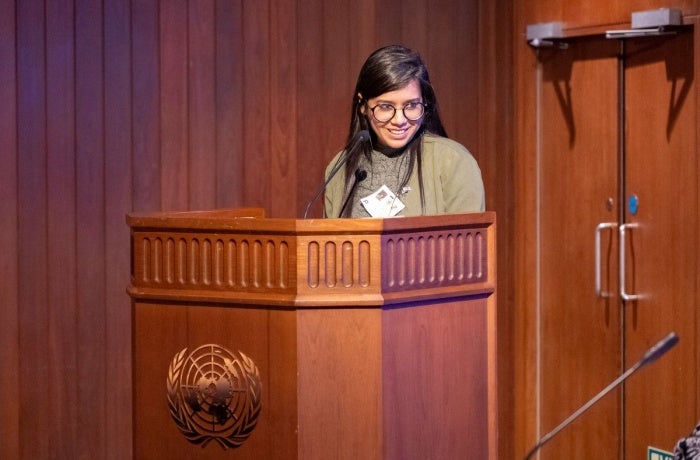
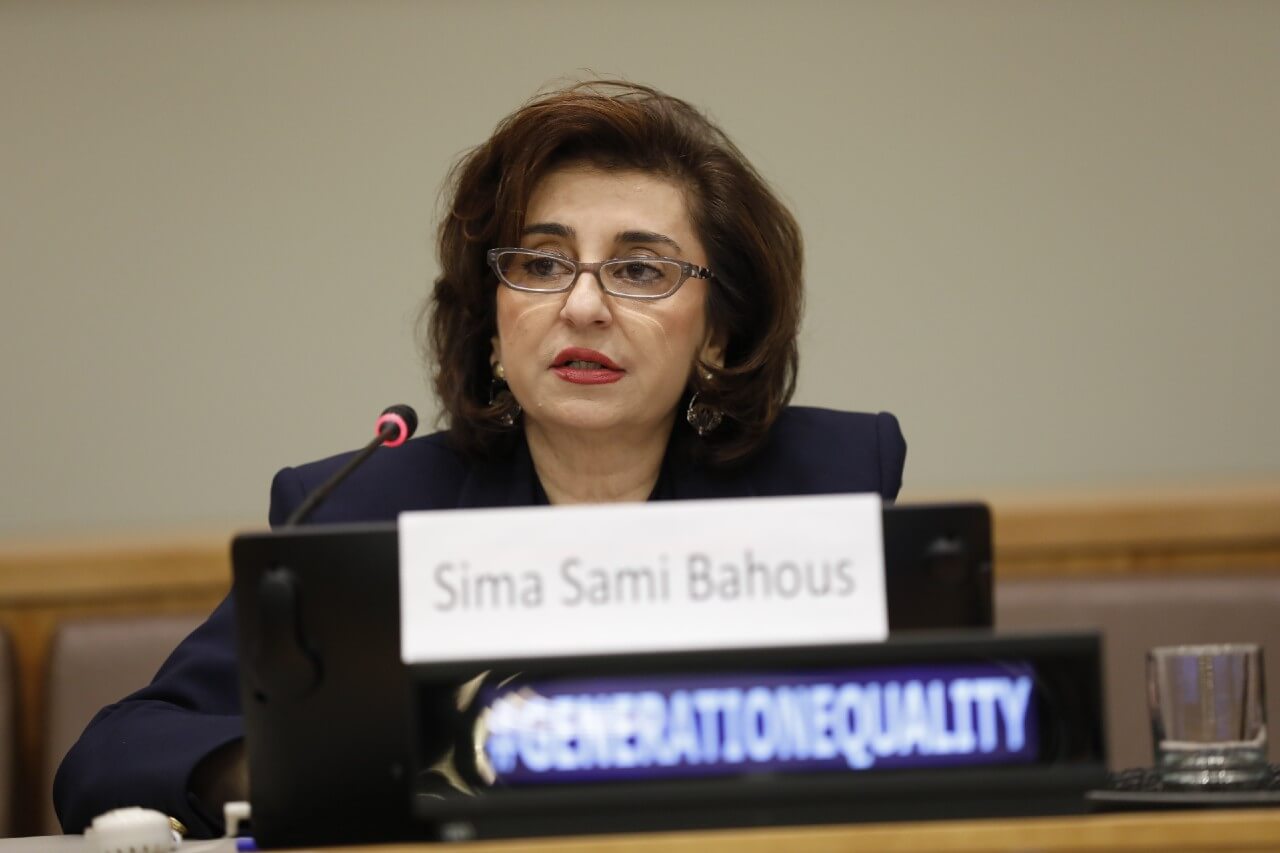
UN Women Executive Director Sima Bahous delivers opening remarks to the Generation Equality side event at the 68th session of the Commission on the Status of Women, UN headquarters, 14 March 2024. Photo: UN Women/Ryan Brown.

And yet, we know women continue to contribute enormously to the economy, directly and indirectly. One out of three businesses are owned by women. Women provide the bulk of unpaid care work, spending 2.8 hours more a day than men do.

If we are not ambitiously proactive, women’s economic empowerment and autonomy will be continuously stalled.

To be ambitiously proactive, governments must prioritize gender-responsive financing and gender equality. ODA [official development assistance] to support women’s rights organizations and movements, already far below what is needed, recently fell by almost a third.

As data from our 2023 Gender Snapshot report has shown, an additional USD 360 billion per year is needed to achieve gender equality across key Sustainable Development Goals, including ending poverty, as is being discussed here at CSW68. My colleagues tell me that the additional USD 360 billion that are needed per year to achieve gender equality across key Sustainable Development Goals is just as much as the world spends on coffee per year, so I think we can spare that money to push for gender equality. It is also a fraction of what the world spends on weapons every year, so also, I think it is a call from here for our agenda on women, peace, and security. We can use this money for women and girls instead of putting it into wars that women rarely or never start.

Generation Equality brings hope to this reality of stalled progress and financing. It brings hope to get the Sustainable Development Goals back on track by unlocking political will and accelerating investment through its six Action Coalitions and the Compact on Women Peace and Security and Humanitarian Action.

We have demonstrated and documented that the multi-stakeholder model adopted by Generation Equality is working: it is driving resources to gender equality and facilitating new opportunities for collaboration, partnerships, sharing of experiences, and good practices.

Commitment makers have collectively reported USD 47 billion in financial commitments, and have supported the implementation of 850 policies, more than 2,300 programmes, and more than 3,600 advocacy initiatives. This concretely and positively impacts the lives of millions of women and girls, while building and forging new and innovative partnerships for gender equality.

But I am sure you all agree with me that we must do more. To get back on track towards achieving gender equality and the Sustainable Development Goals, we need the mobilization of stable and long-term financing, at scale, and to hold stakeholders to account to deliver.

The upcoming Summit of the Future in September provides an opportunity to once again model multi-stakeholder engagement. As the Pact of the Future is being finalized, I urge all of you to contribute to it, in whatever form you can. I urge you to be bold in your ambitions because gender equality can no longer wait.

Today, I am proud to launch UN Women’s newest accountability report focusing on the Economic Justice and Rights Action Coalition. The report showcases data and concrete examples on how, through collective action and bold commitments, the Action Coalition is transforming the care economy, ensuring decent work, securing women’s access to and control of productive resources, and promoting gender-responsive economies.

The report shows that commitments to economic justice and rights make up close to 70 per cent of financial pledges to Generation Equality. The commitments challenge power dynamics and foster feminist leadership for achieving women’s economic autonomy.

The report shares good examples that range from Germany’s implementation of a 2021 Act that mandates that enterprises respect human rights in their supply chains, to grassroots efforts in Cameroon to build the capacities of women entrepreneurs through the use of digital technologies. What these commitments demonstrate is that we have the collective power to achieve gender equality and to advance the rights of all women and girls, everywhere.

I end by calling on you to join us in Generation Equality to promote, as we are discussing here at CSW, feminist funding and financing for gender equality. I am confident that, together, we can make it happen. So, let’s push forward together.

I wish you all a successful session here today; I wish us all a successful CSW68, and I thank you.

Topics

  • 2030 Agenda for Sustainable Development
  • Sustainable Development Goals (SDGs)
  • Campaigns
  • Generation Equality
  • Economic empowerment
  • Employment
  • Unpaid work
  • Poverty
  • Governance and national planning
  • Financing for gender equality
  • Intergovernmental processes
  • Commission on the Status of Women
  • Partnerships
  • UN Women administration
  • Executive Director

Related content

Image
Image placeholder with UN Women logo (English) - 3:2 aspect ratio
Announcement

UN Women Executive Board to convene second regular session 2026

12 August 2026
UN Women Executive Board to convene second regular session 2026
Image
UNWomen_Placeholder
Statement

UN Women statement: Drone attacks by day and sexual violence by night leave no safe window for women and girls to collect water amidst rainy season in Sudan’s El Obeid

24 July 2026
UN Women statement: Drone attacks by day and sexual violence by night leave no safe window for women and girls to collect water amidst rainy season in Sudan’s El Obeid
Image
Nepal is part of a growing global movement to transform care systems that work better for women, families, and communities. UN Women’s Transform Care Investment Initiative Asia-Pacific calls for catalytic investments to benefit at least 100 million women and girls and create 125 million new employment opportunities in the care economy by 2035, and reduce women’s unpaid care work. In this photo, a woman assists an older woman walking on the street. Photo: UN Women/Srijana Bhatta
Feature

Kathmandu is a caring city – here’s what that means for women

17 July 2026
Kathmandu is a caring city – here’s what that means for women

Footer menu-HQ

  • News and stories
  • Resources
  • What we do
  • How we work
  • Where we are
  • Partnerships
  • Employment
  • Procurement
  • Contact us
  • Executive Board
  • Commission on the Status of Women

Donate button menu [Footer tablet]

  • Donate

Donate button menu [Footer]

  • Donate

Social media menu

  • Facebook
  • Twitter
  • LinkedIn
  • Flickr
  • YouTube
  • Instagram
UN Women - For all women and girls

Footer bottom [Menu]

  • Copyright
  • Information security
  • Privacy notice
  • Report wrongdoing
  • Terms of use
Share this page
  • Share to Facebook
  • Share to Twitter
  • Share to LinkedIn
  • Share to E-mail

Or copy link