
Universal menu

  • Global
  • Regions
    • Africa
    • Americas and the Caribbean
    • Arab States
    • Asia and the Pacific
    • Europe and Central Asia
  • Knowledge
  • Data
  • Training
  • Transparency
UN Women - For all women and girls

Main Navigation-HQ

  • Who we are
    • About us
      • About UN Women
      • Business model
      • Guiding documents
      • Worldwide presence
    • Leadership
      • Governance structure
      • Executive leadership
      • Executive Board
      • Accountability
    • Work with us
      • Employment
      • Procurement
      • Calls for proposals
      • Contact us
      • UN Women Strategic Plan 2026–2029
      • UN Women Strategic Plan 2026–2029 - social media image
        UN Women Strategic Plan 2026–2029
  • What we do
    • Focus areas
      • Ending violence against women
      • Peace and security
      • Humanitarian action
      • Leadership and governance
      • Economic empowerment
      • Innovation and technology
      • Women with disabilities
      • Youth
      • HIV and AIDS
    • How we work
      • 2030 Agenda for Sustainable Development
      • Commission on the Status of Women
      • Gender parity in the UN system
      • Intergovernmental support
      • Partnerships
      • Research and data
      • Training Centre
      • Trust funds
      • UN system coordination
      • Gender Equality Accelerators
      • Gender Equality Accelerators artwork
        Gender Equality Accelerators
  • News and stories
    • Latest
      • News
      • Articles and explainers
      • In focus
    • Media center
      • Press materials
      • Media contacts
      • Explainer: Why are women so exhausted? Care work and the mental load
      • Two adults stand at a table changing diapers on baby dolls, with laundry hanging on a clothesline behind them in a home setting.
        Explainer: Why are women so exhausted? Care work and the mental load
      • Press release: Aid cuts dismantle women’s organizations working in humanitarian crises
      • A young Ugandan woman sits with another local woman to talk
        Press release: Aid cuts dismantle women’s organizations working in humanitarian crises
  • Digital library
    • Resources
      • Publications
      • Annual reports
      • Progress of the world’s women
      • World survey on the role of women in development
      • The gender snapshot
    • GenderTerm
      • GenderTerm
      • Reprint permissions
      • UN Women Highlights 2025–2026
      • A smiling woman.
        UN Women Highlights 2025–2026
      • The gender snapshot 2025
      • gender snapshot thumbnail transparent
        The gender snapshot 2025
  • Get involved
    • How to get involved
      • For ALL Women and Girls
      • International Women's Day
      • 16 Days of Activism to End Violence against Women and Girls
      • UNiTE! Campaign to End Violence against Women
      • Generation Equality
      • He for She
Ask AI
https://84e5cfacd5c7e99f9825edf344450c.1b.environment.api.powerplatform.com/powervirtualagents/botsbyschema/crad4_websiteQA/directline/token?api-version=2022-03-01-preview
1
-
Ask your question here
AI website assistant

Hello, how can I assist you?

AI chatbot responses may be incorrect. Always verify important information.

Donate button menu

Donate

Breadcrumb

  1. Home
  2. Explore Our Latest News
  3. Explore Our Latest News

Website survey

We want to know how we can improve your experience on this website. Completing this survey takes less than 5 minutes.

TAKE THE SURVEY
Speech

Speech: Sport to unite, inspire and transform progress for women and girls

Remarks by UN Women Executive Director Sima Bahous at the International Day of Sport for Development and Peace, on 7 April 2025.

7 April 2025
UN Women Executive Director Sima Bahous
  • Share to Facebook
  • Share to Twitter
  • Share to LinkedIn
  • Share to E-mail

[As delivered.]

The world is at an inflection point. Conflict, inequality, and the lingering effects of crises have left many struggling around the world. Women and girls, in particular, bear the brunt of these challenges. Yet, amid uncertainty, sport remains a powerful tool and a powerful force; one that unites, that inspires, and that transforms. 

We have seen the power of sport, from the first ever gender-parity Olympics in Paris last year to the record-breaking 2023 FIFA Women’s World Cup, watched by 2 billion people, to the historic election of the first woman to lead the International Olympic Committee just last month. These milestones prove that progress is possible.

But barriers persist. Women and girls face systemic discrimination in sport—harassment, unequal pay, lack of representation, and ingrained stereotypes that limit their potential.

Image
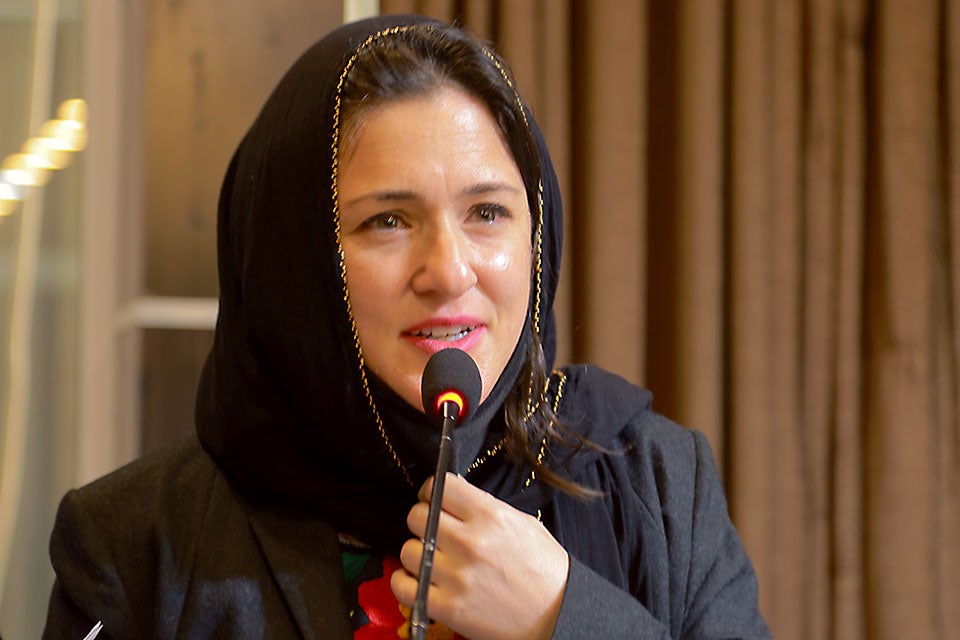
UN Women Executive Director Sima Bahous delivers remarks at a side event to mark the International Day of Sport for Development and Peace, UN Headquarters, 7 April 2025. Photo: UN Women/Ryan Brown.

The Political Declaration that was adopted in March at CSW69 by consensus, recognizes that sport has many barriers for women and girls. It also recognizes that sport is important for the empowerment not only of women and girls but of society as well. The Political Declaration that all countries signed by consensus, affirms that women and girls deserve equal access to sports as a vital tool for empowerment.  This recognition should not be taken for granted and the fight to strengthen it reminds us that progress is not a given; you have to win it to get it.

At UN Women, we are further advancing this fight. Our new Sport Strategy harnesses sport to dismantle discriminatory social norms, to amplify women’s voices, and to create safe spaces for girls to see themselves; not just as athletes, but as leaders and agents of change.

This is not a new arena for UN Women. In Brazil and Argentina for example, the “One Win Leads to Another” programme fosters young girls’ leadership and confidence through sport. The UN Women-IOC Bridging Project strengthens capacity across Latin America, the Caribbean, and Asia and the Pacific. And our Safe Cities and Safe Public Spaces initiatives in Bolivia, in Guatemala, and in Egypt as examples, increase participation in sports by addressing gender-based violence and engaging boys to prevent violence against women and girls.

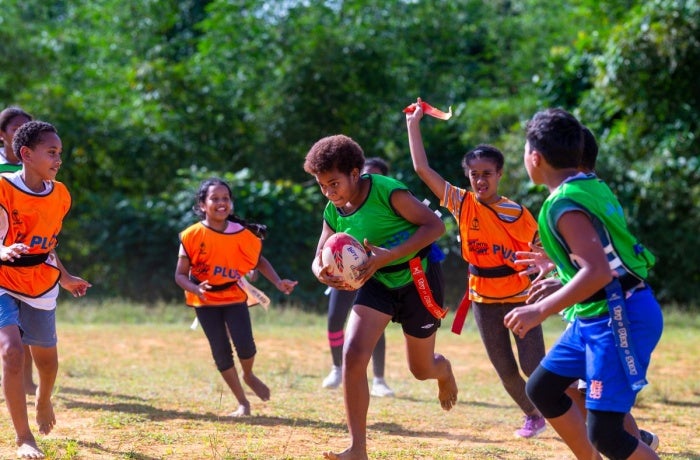
In the Pacific, “Project Golkipa” is engaging parents, educators, and faith leaders to create safer environments for girls in sport. “Get into Rugby PLUS” challenges harmful gender norms with striking results. In Samoa, for example,  92 per cent of boys who participated rejected the idea that men are better leaders than women. We are all equal.  

In Fiji, the number of female players who “strongly disagreed” that harassment was sometimes a girl’s fault jumped from 44 per cent to 70 per cent after participating in these projects.

Together, we are changing the game. Through initiatives such as Sport for Generation Equality and partnerships with the IOC and FIFA, UN Women is building a global movement. We are integrating women’s empowerment into national sports policies, and that is important, like we have done in Fiji’s pioneering strategy to use sport for gender equality and violence prevention.

This year marks 30 years since the Beijing Declaration and Platform for Action—a landmark commitment to gender equality. Three decades on, we know this: sport is not just a part of the conversation on equality. It is on the playing field where equality is won. We look forward to the upcoming social summit in Qatar this November to ensure that we continue to push forward for all women and girls and for sports to enhance social and economic development and progress. 

On this International Day of Sport for Development and Peace, let us recommit to more investment in women’s and girls’ sport, let us recommit to stronger policies for inclusion, and for a global shift in how we value women and girls in sport.  

Let us empower them to claim their places, not only in sports, but also in coaching roles, in boardrooms, and also in leadership. 

Sport is not just about playing and winning. It is about transforming lives. And when we level the playing field, we all win. 

Thank you.

Related content
Image
Football players and children hold hands and celebrate on a football field.
Media advisory

Why the Men’s World Cup 2026 is a gender equality opportunity

9 June 2026
Why the Men’s World Cup 2026 is a gender equality opportunity
Image
Two women sign a document together
Press release

Global Push for Gender Equality in Sport Gains Momentum with New Partnership

8 October 2025
Global Push for Gender Equality in Sport Gains Momentum with New Partnership
Image
Janeth Jepkosgei
Interview

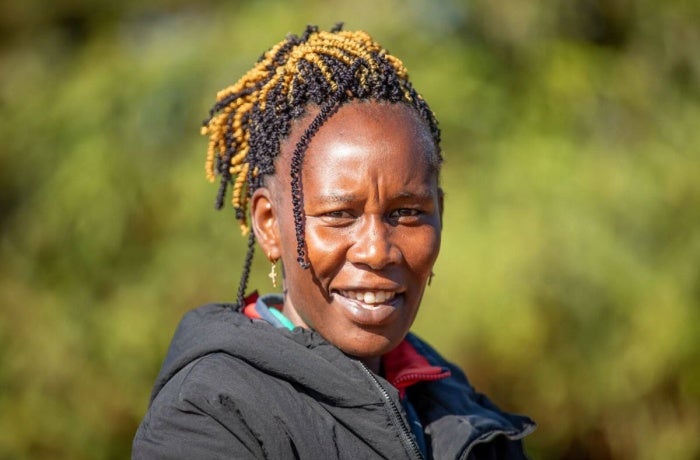
From World Champion to leading the way for female track coaches in the Paris 2024 Olympics – Interview with Janeth Jepkosgei
1 August 2024
From World Champion to leading the way for female track coaches in the Paris 2024 Olympics – Interview with Janeth Jepkosgei

Footer menu-HQ

  • News and stories
  • Resources
  • What we do
  • How we work
  • Where we are
  • Partnerships
  • Employment
  • Procurement
  • Contact us
  • Executive Board
  • Commission on the Status of Women

Donate button menu [Footer tablet]

  • Donate

Donate button menu [Footer]

  • Donate

Social media menu

  • Facebook
  • Twitter
  • LinkedIn
  • Flickr
  • YouTube
  • Instagram
UN Women - For all women and girls

Footer bottom [Menu]

  • Copyright
  • Information security
  • Privacy notice
  • Report wrongdoing
  • Terms of use
Share this page
  • Share to Facebook
  • Share to Twitter
  • Share to LinkedIn
  • Share to E-mail

Or copy link