
Universal menu

  • Global
  • Regions
    • Africa
    • Americas and the Caribbean
    • Arab States
    • Asia and the Pacific
    • Europe and Central Asia
  • Knowledge
  • Data
  • Training
  • Transparency
UN Women - For all women and girls

Main Navigation-HQ

  • Who we are
    • About us
      • About UN Women
      • Business model
      • Guiding documents
      • Worldwide presence
    • Leadership
      • Governance structure
      • Executive leadership
      • Executive Board
      • Accountability
    • Work with us
      • Employment
      • Procurement
      • Calls for proposals
      • Contact us
      • UN Women Strategic Plan 2026–2029
      • UN Women Strategic Plan 2026–2029 - social media image
        UN Women Strategic Plan 2026–2029
  • What we do
    • Focus areas
      • Ending violence against women
      • Peace and security
      • Humanitarian action
      • Leadership and governance
      • Economic empowerment
      • Innovation and technology
      • Women with disabilities
      • Youth
      • HIV and AIDS
    • How we work
      • 2030 Agenda for Sustainable Development
      • Commission on the Status of Women
      • Gender parity in the UN system
      • Intergovernmental support
      • Partnerships
      • Research and data
      • Training Centre
      • Trust funds
      • UN system coordination
      • Gender Equality Accelerators
      • Gender Equality Accelerators artwork
        Gender Equality Accelerators
  • News and stories
    • Latest
      • News
      • Articles and explainers
      • In focus
    • Media center
      • Press materials
      • Media contacts
      • Explainer: Why are women so exhausted? Care work and the mental load
      • Two adults stand at a table changing diapers on baby dolls, with laundry hanging on a clothesline behind them in a home setting.
        Explainer: Why are women so exhausted? Care work and the mental load
      • Press release: Aid cuts dismantle women’s organizations working in humanitarian crises
      • A young Ugandan woman sits with another local woman to talk
        Press release: Aid cuts dismantle women’s organizations working in humanitarian crises
  • Digital library
    • Resources
      • Publications
      • Annual reports
      • Progress of the world’s women
      • World survey on the role of women in development
      • The gender snapshot
    • GenderTerm
      • GenderTerm
      • Reprint permissions
      • UN Women Highlights 2025–2026
      • A smiling woman.
        UN Women Highlights 2025–2026
      • The gender snapshot 2025
      • gender snapshot thumbnail transparent
        The gender snapshot 2025
  • Get involved
    • How to get involved
      • For ALL Women and Girls
      • International Women's Day
      • 16 Days of Activism to End Violence against Women and Girls
      • UNiTE! Campaign to End Violence against Women
      • Generation Equality
      • He for She
Ask AI
https://84e5cfacd5c7e99f9825edf344450c.1b.environment.api.powerplatform.com/powervirtualagents/botsbyschema/crad4_websiteQA/directline/token?api-version=2022-03-01-preview
1
-
Ask your question here
AI website assistant

Hello, how can I assist you?

AI chatbot responses may be incorrect. Always verify important information.

Donate button menu

Donate

Breadcrumb

  1. Home
  2. Articles
  3. In Focus

Website survey

We want to know how we can improve your experience on this website. Completing this survey takes less than 5 minutes.

TAKE THE SURVEY
In focus

Five years since the Taliban takeover: The state of women’s rights in Afghanistan

12 August 2026
  • Share to Facebook
  • Share to Twitter
  • Share to LinkedIn
  • Share to E-mail
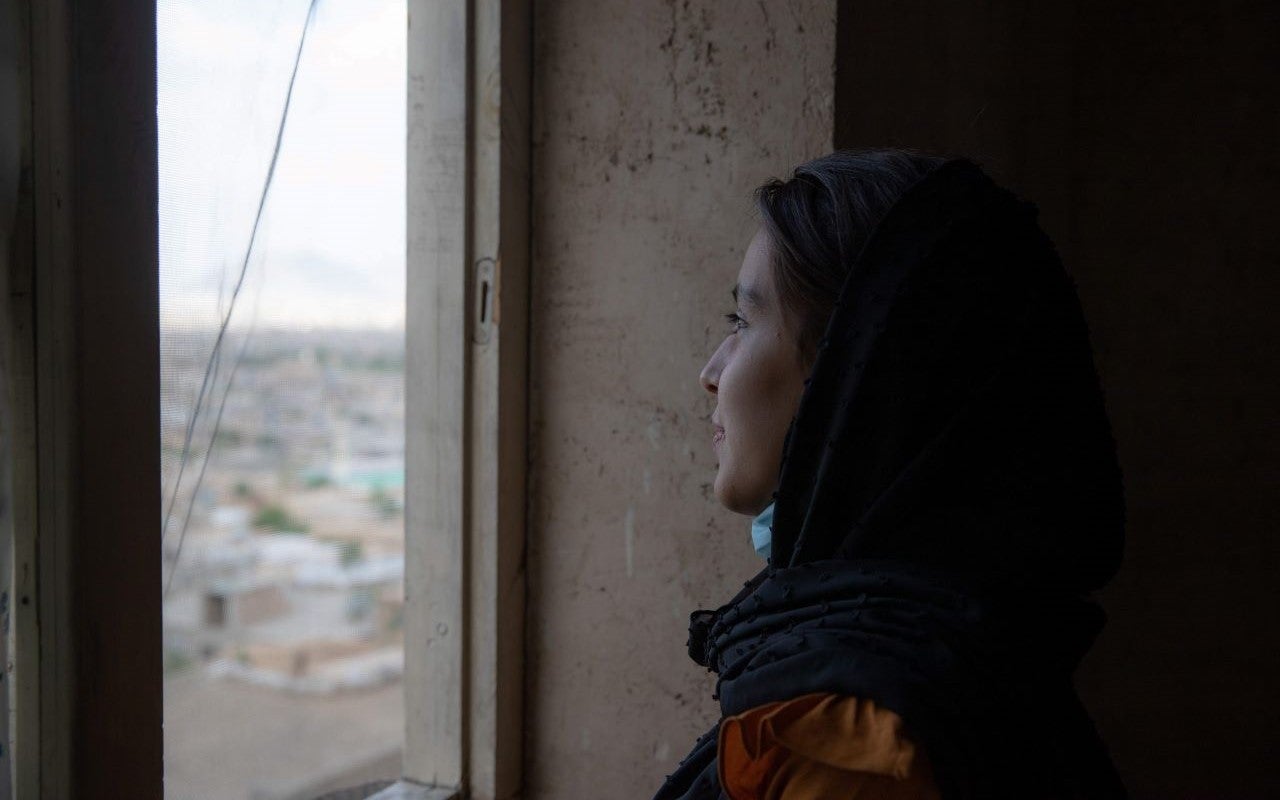
Zahra* is a mother of five, including four daughters, living in central Afghanistan. (*Name changed to protect her identity.) After her husband left – leaving Zahra to care for their children with limited financial support, in an increasingly restrictive environment – she turned to a local women-led organization which is supported by UN Women. Photo: UN Women/Sayed Habib Bidell

Basic Hero Banner

Five years after the Taliban takeover in Afghanistan, the de facto authorities have issued more than 100 decrees affecting Afghan women and girls and stripping them of their rights, freedoms, and dignity.

No other country has dismantled the rights of half its population through law, policy, and practice to the same extent.

Half a decade in, the most severe women’s rights crisis in the world is being normalized.

From around the age of 13, girls are banned from school. Women are barred from most jobs, universities, and political life and, in many parts of the country, can’t walk on the streets unaccompanied by men. Many are no longer able to make decisions even within their own households.

Growing shortages of women health workers, limited access to essential medicines, and restrictions that, in some communities, prevent women from being treated by male doctors mean that many women are unable to access the health care they need.

The results are devastating. Many women are living shorter, less healthy lives. The risks of maternal death, child marriage, and violence against women are growing.

More women are reporting feeling unsafe leaving home without a male guardian. At the same time, being confined to the home – combined with the loss of education, work, community, and physical activity – has triggered a mental health crisis.

Overlapping humanitarian crises, climate shocks, and deepening poverty are also having a disproportionate impact on women and girls.

International funding cuts are worsening the already dire situation. More than half of women-led organizations in Afghanistan expect to suspend or close within the next year because of these cuts, threatening one of the last remaining lifelines for women and girls.

Despite everything, Afghan women and girls continue to show extraordinary strength and courage. But they should not have to face these challenges alone.

Five years on, the international community cannot accept this situation as normal. The world must act now – not only to meet urgent needs, but to stand with Afghan women as they fight to build a future with equal rights for all women and girls.

Listen. Fund. Share. For ALL Women and Girls in Afghanistan.

Key facts on women’s rights in Afghanistan

Image
Women learn to read and write through a literacy initiative supported by UN Women, in Nuristan province, eastern Afghanistan
8 in 10 8 in 10

young women are not in education, jobs, or training

young women are not in education, jobs, or training

Image
An Afghan woman, who returned from Pakistan earlier that day, rests with her son inside a tent erected to give returnees some shade from the burning sun at Takhta Pul, near the Pakistan border. UN Women: Sayed Habib Bidell.
10.7 million 10.7 million

women and girls need humanitarian assistance this year

women and girls need humanitarian assistance this year

Image
Afghan women are being pushed out of nearly every sphere of life, despite their resilience and refusal to be silenced, and falling significantly behind global standards for human development. Photo: UN Women/Sayed Habib Bidell
50% 50%

of women leave home only once or twice a month due to severe restrictions on their movement and access to public spaces

of women leave home only once or twice a month due to severe restrictions on their movement and access to public spaces

Read more about Afghan women

4
6
Women sit together on the floor inside an indoor space, with a woman wearing a purple headscarf seated in the foreground.
Feature story

Aid cuts, employment bans, movement restrictions: The triple threat to Afghan women

16 July 2026
Close-up portrait of a woman in a dark green veil, with her hand resting against her face.
Feature story

Women displaced in eastern Afghanistan face hunger, insecurity, and trauma amid renewed conflict

1 June 2026
Image
A woman in a wheelchair sits outdoors beside a girl washing dishes, with a child standing nearby.
FAQs

How war impacts women and girls: A simple explainer on gender and conflict

20 May 2026
Image
An Afghan woman, who returned from Pakistan earlier that day, rests with her son inside a tent erected to give returnees some shade from the burning sun at Takhta Pul, near the Pakistan border. UN Women: Sayed Habib Bidell.
FAQs

FAQs: What it’s like to be a woman in Afghanistan today

12 August 2026
Many of the women and girls returning to Afghanistan each day - many forcibly - were born in Iran, or have lived there for years. Some have no roots in Afghanistan, no family and no safety net to help them rebuild their lives. They need immediate humanitarian assistance and sustained support as they start again in communities already under severe economic and environmental pressure. Photo: UN Women/Sayed Habib Bidell
Feature story

Many forced to return, Afghan women expelled from Iran and Pakistan fighting to rebuild their lives

8 August 2025
Women learn to read and write through a literacy initiative supported by UN Women, in Nuristan province, eastern Afghanistan. As part of the initiative, 130 Village Literacy Committees were also established, to help reach vulnerable women and girls in remote communities. Photo: UN Women/Sayed Habib Bidell
Feature story

Afghanistan’s women are still fighting: Inside the fight for rights under Taliban

27 June 2025

Media centre

4
13
A portrait of an Afghan woman in silhouette
Press release

Five years after the Taliban takeover: the normalization of the exclusion of women and girls in Afghanistan

12 August 2026
A young Ugandan woman sits with another local woman to talk
Press release

At least one million women and girls lose access to critical support as aid cuts dismantle women’s organizations working in humanitarian crises

10 July 2026
UNWomen_Placeholder
Press briefing

Aid cuts decimate services for women and girls as women’s organizations struggle to stay afloat

10 July 2026
Image placeholder with UN Women logo (English) - 3:2 aspect ratio
Statement

UN Women Afghanistan statement on Decree No. 18 issued by the de facto authorities

26 May 2026
UNWomen_Placeholder
Press briefing

Press briefing by UN Women on the impact of recent hostilities, Decree No. 12 and the widening justice gap for women and girls in Afghanistan

17 March 2026
Image placeholder with UN Women logo (English) - 3:2 aspect ratio
Statement

UN Women Afghanistan statement on Decree No. 12 issued by the de facto authorities

25 February 2026
A young woman walks among the stone rubble of a house
Press briefing

Press briefing by UN Women on urgent aid for Afghan women

19 September 2025
A group of people walk through the crumbled remains of buildings after an earthquake
Statement

Statement on the earthquake in eastern Afghanistan

2 September 2025
Afghan women sit on a classroom floor and listen closely to a teacher
Press release

Four years after Taliban takeover, Afghans overwhelmingly back girls’ education

29 August 2025
Afghan women gathered together and washing cookware
Press briefing

Press briefing by UN Women on the new Afghanistan Gender Alert

29 August 2025
Image placeholder with UN Women logo (English) - 3:2 aspect ratio
Press briefing

Press briefing by UN Women, four years since the Taliban takeover of Afghanistan

14 August 2025
An Afghan mother holds her daughter, staring at the light from behind her obscured window. Photo: UN Women/Sayed Habib Bidell.
Press release

Afghanistan: Ten facts about the world’s most severe women’s rights crisis

14 August 2025
Women and young girls carry bags after crossing the border
Press briefing

Afghan women and girls face increased risks of poverty, early marriage, harassment and exploitation amid a surge in returns to the country

7 August 2025

Afghan women deserve a future

Despite everything, Afghan women and girls continue to show strength, resilience, and courage. But they should not have to face those challenges alone. 

The world must act now – not just to meet urgent needs, but to protect a generation’s future. Silence is not an option. Solidarity is not optional. 

Let’s listen. Let’s fund. Let’s fight for ALL women and girls in Afghanistan – together.

DONATE NOW
Afghan woman resting with her child. Photo: UN Women/Sayed Habib Bidell

Key publications

3
Fve Years On: Afghan Women's Futures at a Crossroads

Five Years On: Afghan Women’s Futures at a Crossroads

12 August 2026
Publication cover

Beyond the breaking point: The continuing impact of funding cuts on women’s organizations in humanitarian settings

10 July 2026
Gender Index 2024: Afghanistan

Gender Index 2024: Afghanistan

17 June 2025

Data cards sources: Afghanistan Gender Index 2024, UN Women; June 2026 Afghanistan Humanitarian Update, UN OCHA; Five Years On: Afghan Women’s Futures at a Crossroads, UN Women.

Topics

  • Human rights
  • Women’s rights
  • Peace and security
  • Conflict, war
  • Asia and the Pacific
  • Afghanistan

Footer menu-HQ

  • News and stories
  • Resources
  • What we do
  • How we work
  • Where we are
  • Partnerships
  • Employment
  • Procurement
  • Contact us
  • Executive Board
  • Commission on the Status of Women

Donate button menu [Footer tablet]

  • Donate

Donate button menu [Footer]

  • Donate

Social media menu

  • Facebook
  • Twitter
  • LinkedIn
  • Flickr
  • YouTube
  • Instagram
UN Women - For all women and girls

Footer bottom [Menu]

  • Copyright
  • Information security
  • Privacy notice
  • Report wrongdoing
  • Terms of use
Share this page
  • Share to Facebook
  • Share to Twitter
  • Share to LinkedIn
  • Share to E-mail

Or copy link