
Universal menu

  • Global
  • Regions
    • Africa
    • Americas and the Caribbean
    • Arab States
    • Asia and the Pacific
    • Europe and Central Asia
  • Knowledge
  • Data
  • Training
  • Transparency
UN Women - For all women and girls

Main Navigation-HQ

  • Who we are
    • About us
      • About UN Women
      • Business model
      • Guiding documents
      • Worldwide presence
    • Leadership
      • Governance structure
      • Executive leadership
      • Executive Board
      • Accountability
    • Work with us
      • Employment
      • Procurement
      • Calls for proposals
      • Contact us
      • UN Women Strategic Plan 2026–2029
      • UN Women Strategic Plan 2026–2029 - social media image
        UN Women Strategic Plan 2026–2029
  • What we do
    • Focus areas
      • Ending violence against women
      • Peace and security
      • Humanitarian action
      • Leadership and governance
      • Economic empowerment
      • Innovation and technology
      • Women with disabilities
      • Youth
      • HIV and AIDS
    • How we work
      • 2030 Agenda for Sustainable Development
      • Commission on the Status of Women
      • Gender parity in the UN system
      • Intergovernmental support
      • Partnerships
      • Research and data
      • Training Centre
      • Trust funds
      • UN system coordination
      • Gender Equality Accelerators
      • Gender Equality Accelerators artwork
        Gender Equality Accelerators
  • News and stories
    • Latest
      • News
      • Articles and explainers
      • In focus
    • Media center
      • Press materials
      • Media contacts
      • Explainer: Why are women so exhausted? Care work and the mental load
      • Two adults stand at a table changing diapers on baby dolls, with laundry hanging on a clothesline behind them in a home setting.
        Explainer: Why are women so exhausted? Care work and the mental load
      • Press release: Aid cuts dismantle women’s organizations working in humanitarian crises
      • A young Ugandan woman sits with another local woman to talk
        Press release: Aid cuts dismantle women’s organizations working in humanitarian crises
  • Digital library
    • Resources
      • Publications
      • Annual reports
      • Progress of the world’s women
      • World survey on the role of women in development
      • The gender snapshot
    • GenderTerm
      • GenderTerm
      • Reprint permissions
      • UN Women Highlights 2025–2026
      • A smiling woman.
        UN Women Highlights 2025–2026
      • The gender snapshot 2025
      • gender snapshot thumbnail transparent
        The gender snapshot 2025
  • Get involved
    • How to get involved
      • For ALL Women and Girls
      • International Women's Day
      • 16 Days of Activism to End Violence against Women and Girls
      • UNiTE! Campaign to End Violence against Women
      • Generation Equality
      • He for She
Ask AI
https://84e5cfacd5c7e99f9825edf344450c.1b.environment.api.powerplatform.com/powervirtualagents/botsbyschema/crad4_websiteQA/directline/token?api-version=2022-03-01-preview
1
-
Ask your question here
AI website assistant

Hello, how can I assist you?

AI chatbot responses may be incorrect. Always verify important information.

Donate button menu

Donate

Breadcrumb

  1. Home
  2. Explore Our Latest News
  3. Explore Our Latest News

Website survey

We want to know how we can improve your experience on this website. Completing this survey takes less than 5 minutes.

TAKE THE SURVEY
Feature

Period poverty costs too much, take action to end it

On World Menstrual Hygiene Day, 28 May, the movement against period poverty celebrates 10 years of collective action by women and girls worldwide. Today and every day, make talking about periods a normal part of life and take action to end period poverty.

24 May 2024
  • Share to Facebook
  • Share to Twitter
  • Share to LinkedIn
  • Share to E-mail

Every month, more than two billion people[1] around the world menstruate. Although a natural and healthy process, menstruation – or period – interrupts lives, rights and freedoms of millions of women and girls, because they cannot afford or access menstrual products, sanitation, and hygiene facilities, and lack education and awareness to manage their menstrual health and hygiene. Read more about the causes of period poverty and who’s affected in this explainer.

Period poverty has serious consequences.
Image
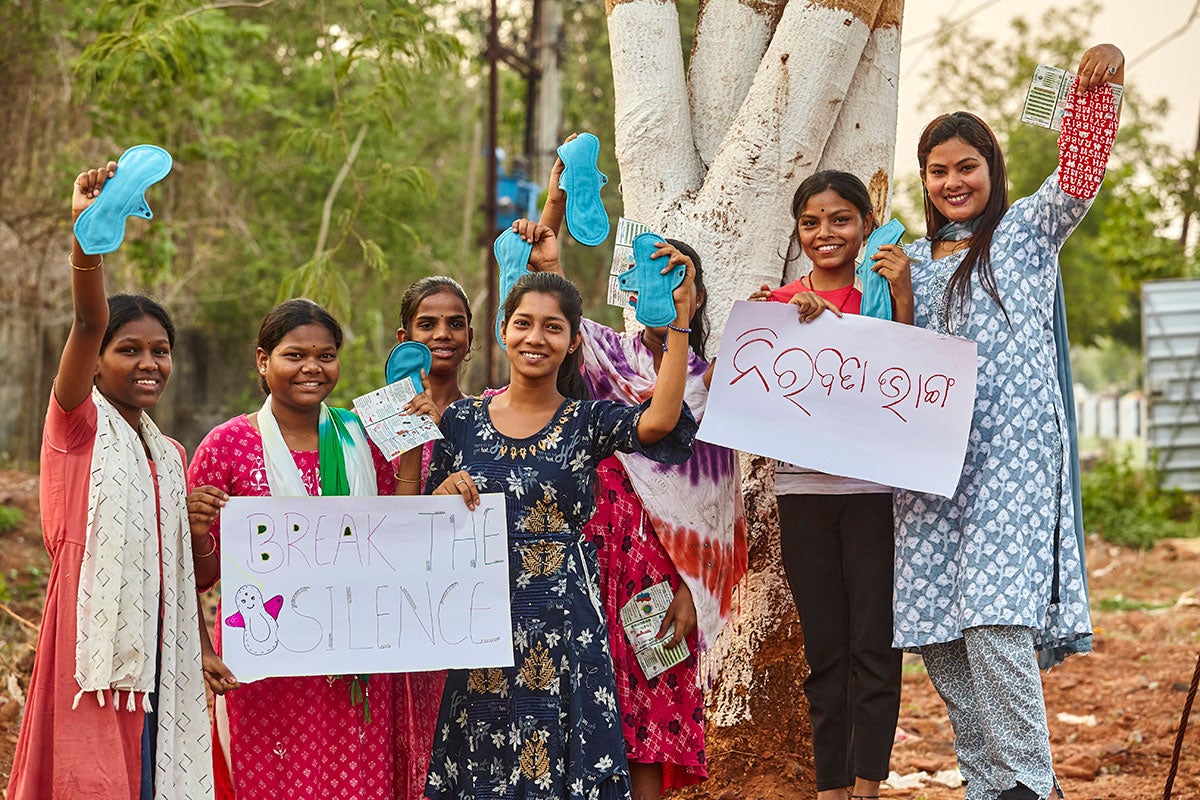
MHH Champion Payal Patel (pictured at right) is known as the Pad girl of Odisha. She has developed a basket of affordable and sustainable menstrual products for women. She has also lead the "Chuppi Todi" campaign to help create awareness, remove taboos and create open and healthy discussions regarding MH. Payal has created her own IEC material for sharing with adolescents at such meetings.
MHH Champion Payal Patel (pictured at right) is known as the Pad girl of Odisha, India. She has developed a basket of affordable and sustainable menstrual products for women. She has also lead the "Chuppi Todi" campaign to help create awareness, remove taboos and create open and healthy discussions regarding MH. Payal has created her own IEC material for sharing with adolescents at such meetings. Photo: UNICEF/Soumi Das

Period poverty undermines education of girls and young women

Period poverty has steep opportunity costs. Girls and young women around the world are missing school days, because they lack the resources to adequately manage their menstrual health and hygiene.

Nearly two million girls aged 14-21 in the United Kingdom have missed a part day or full day of school per term because of their period – missing more school days because of their period than any other reason. In the Gambia, some girls skip school for five days every month because they cannot afford or access menstrual products and sanitary facilities – this equals to missing out on a month and a half of learning every year. In many countries, girls fall so far behind in schoolwork that they drop out of school entirely.

When girls and women lose their chance at education, they lose life-long opportunities for employment, to fulfill their potential and to contribute to our world on an equal footing to men.

Period poverty also has dangerous and immediate health consequences for girls and young women, pushing them into early and forced marriages, sexual abuse, or female genital mutilation (FGM) – because their period is seen as their “coming of age”.  Studies in Kenya have shown that some schoolgirls engaged in transactional sex to pay for menstrual products, increasing their risk of HIV infection.

Ending period poverty is possible – and urgent

Period poverty is a policy and budget issue. By making menstrual products free or affordable, ensuring wider access to safe sanitation facilities in schools and workplaces, and changing social norms to reverse stigma, we can put a stop to period poverty.

In Niger, UN Women and partners supported the Government in integrating menstrual hygiene management in the National Gender Policy and Sectoral Programme for Water, Hygiene and Sanitation. Since then, 14 local water, hygiene and sanitation plans have been adopted and 500 million XOF (over USD 82,000) was allocated for addressing menstrual hygiene in the national budget. These policies and actions have finally broken the silence around menstrual health in Niger.

Advocacy to end period poverty, led by women and girls themselves, is showing promising results in many parts of the world. In 2020, Scotland became the first country to provide period products free of charge, including reusable options. Kenya began removing taxes on menstrual products as well as on the raw materials for their production in 2004, and by 2017 started distributing free sanitary pads in public schools. South Africa has delivered free disposable sanitary pads to poor women and girls since 2019, and Botswana has made free sanitary pads available in public and private schools.

Other countries like Australia, Canada, Colombia, India, Jamaica, Lebanon, Malaysia, Nicaragua, Nigeria, Trinidad and Tobago and Uganda have also lowered or scrapped taxes on menstrual products.
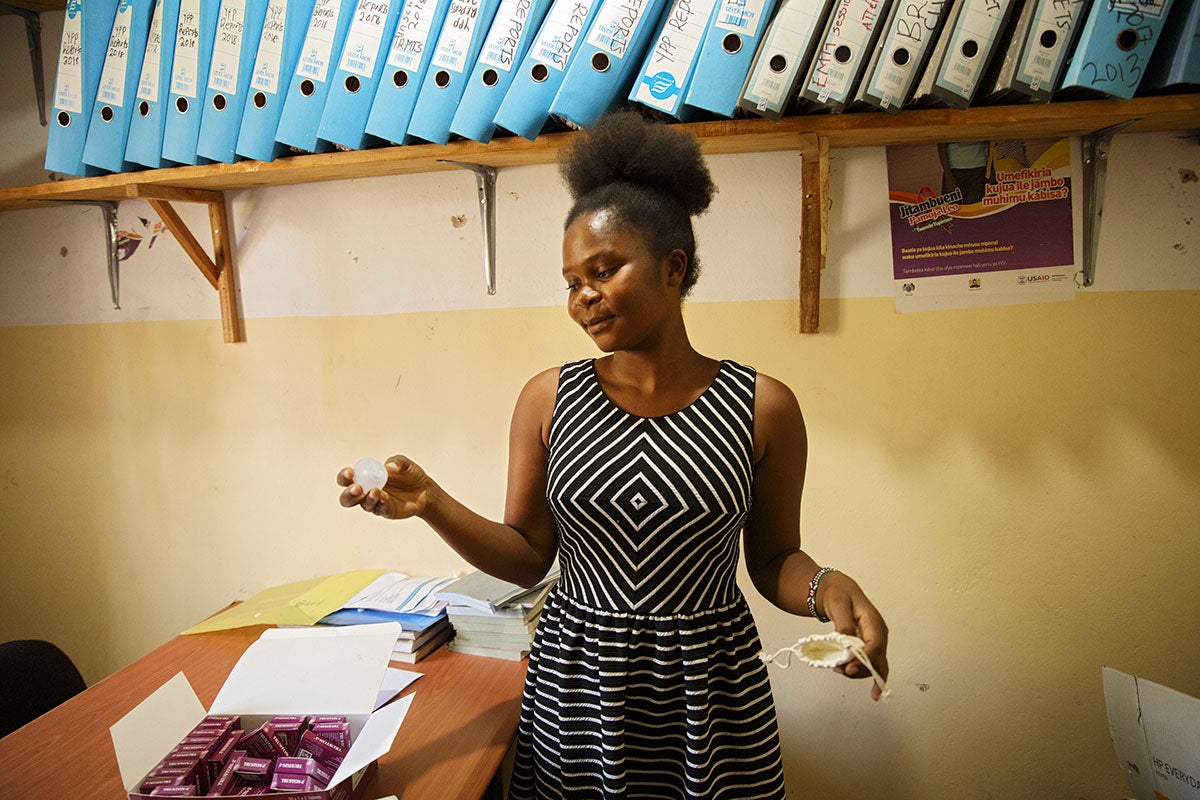
Image
Moving the Goalposts in Kilifi, Kenya, a woman-led NGO that does sport-based programming with young people and includes hygiene and sexual and reproductive health in its programming.
Moving the Goalposts in Kilifi, Kenya, a woman-led NGO that does sport-based programming with young people and includes hygiene and sexual and reproductive health in its programming. Photo: UN Women/Ryan Brown

Five actions to end period poverty

  • Support advocacy efforts in your country and community to remove the taxation on menstrual products and to increase access to menstrual products.
  • Fund feminist women and girl-led movements and organizations fighting period poverty.
  • Invest in improving data on menstrual health and hygiene.
  • Make menstrual health and hygiene education compulsory in school curriculums, for example, through comprehensive sexuality education.
  • Join the conversation online using #PeriodFriendlyWorld, and in community spaces, schools and places of work, to raise awareness, bust the myths and erase the stigma. Check out the campaign resources available at https://www.menstrualhygieneday.org


[1] Note: Existing menstrual health data typically refer to adolescent girls and women aged 15–49. Globally, this age group comprised nearly 2 billion females in 2022. However, non-binary and trans people also experience menstruation.

Topics

  • Health
  • Sexual and reproductive health and rights

Related content

Image
Women sit together on the floor inside an indoor space, with a woman wearing a purple headscarf seated in the foreground.
Feature

Aid cuts, employment bans, movement restrictions: The triple threat to Afghan women

16 July 2026
Aid cuts, employment bans, movement restrictions: The triple threat to Afghan women
Image
Image placeholder with UN Women logo (English) - 3:2 aspect ratio
Statement

UN Women statement: Women and girls account for the majority of laboratory-confirmed Ebola cases in the Democratic Republic of the Congo and Uganda

12 June 2026
UN Women statement: Women and girls account for the majority of laboratory-confirmed Ebola cases in the Democratic Republic of the Congo and Uganda
Image
Image placeholder with UN Women logo (English) - 3:2 aspect ratio
Statement

For 50 years, women have been overrepresented in Ebola deaths – UN Women fears the current outbreak will follow the same pattern

22 May 2026
For 50 years, women have been overrepresented in Ebola deaths – UN Women fears the current outbreak will follow the same pattern

Footer menu-HQ

  • News and stories
  • Resources
  • What we do
  • How we work
  • Where we are
  • Partnerships
  • Employment
  • Procurement
  • Contact us
  • Executive Board
  • Commission on the Status of Women

Donate button menu [Footer tablet]

  • Donate

Donate button menu [Footer]

  • Donate

Social media menu

  • Facebook
  • Twitter
  • LinkedIn
  • Flickr
  • YouTube
  • Instagram
UN Women - For all women and girls

Footer bottom [Menu]

  • Copyright
  • Information security
  • Privacy notice
  • Report wrongdoing
  • Terms of use
Share this page
  • Share to Facebook
  • Share to Twitter
  • Share to LinkedIn
  • Share to E-mail

Or copy link