

Enhancing livelihoods and business skills for vulnerable women in Somalia
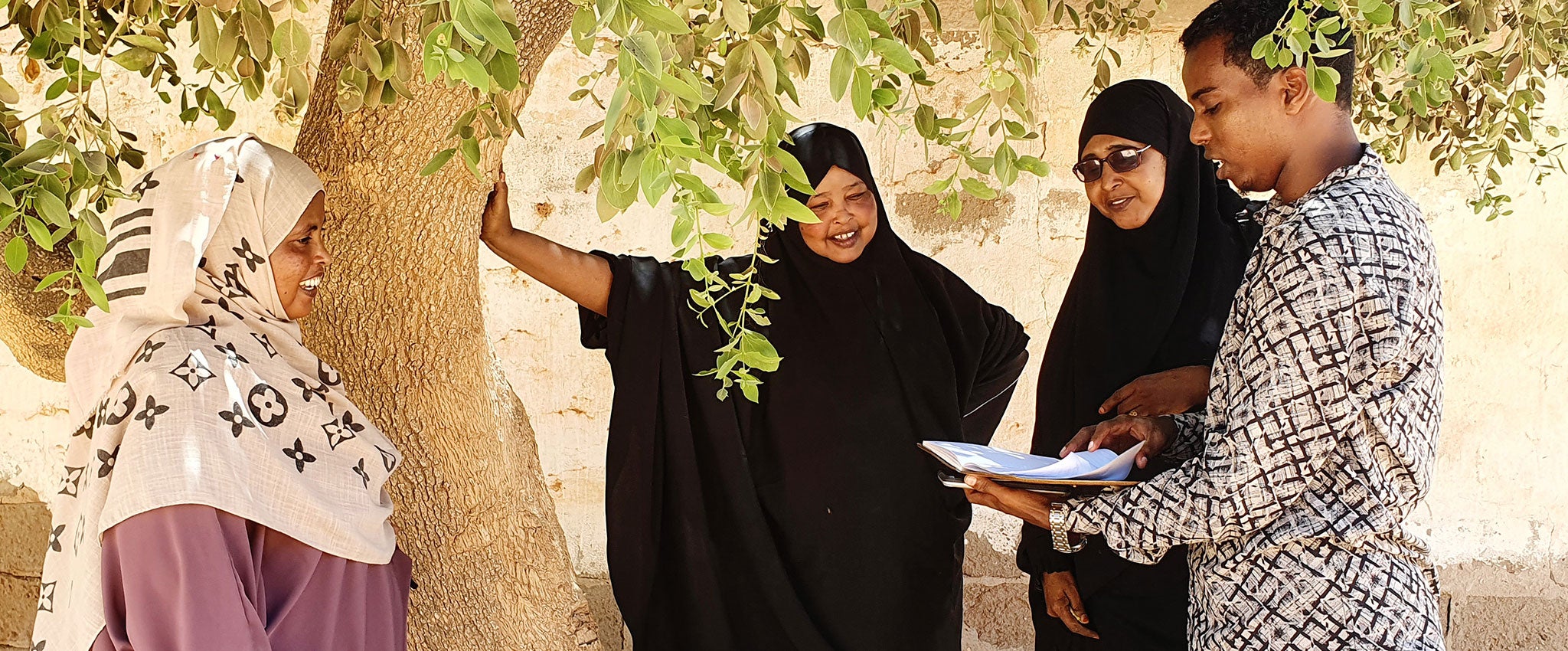
Ongoing armed conflict and insecurity in Somalia, unprecedented natural disasters – mainly prolonged droughts and locusts – leave women in Somalia with limited options. With support from the Government of Japan, UN Women is creating opportunities for climate security, climate-smart agriculture, livelihoods and business skills for women in Somalia. Overall, 7,400 internally displaced women and other marginalized women in Somalia were able to mitigate the impact of multiple crises on their livelihoods, protect themselves from exposure to gender-based violence, and participate in decision-making processes within their communities.
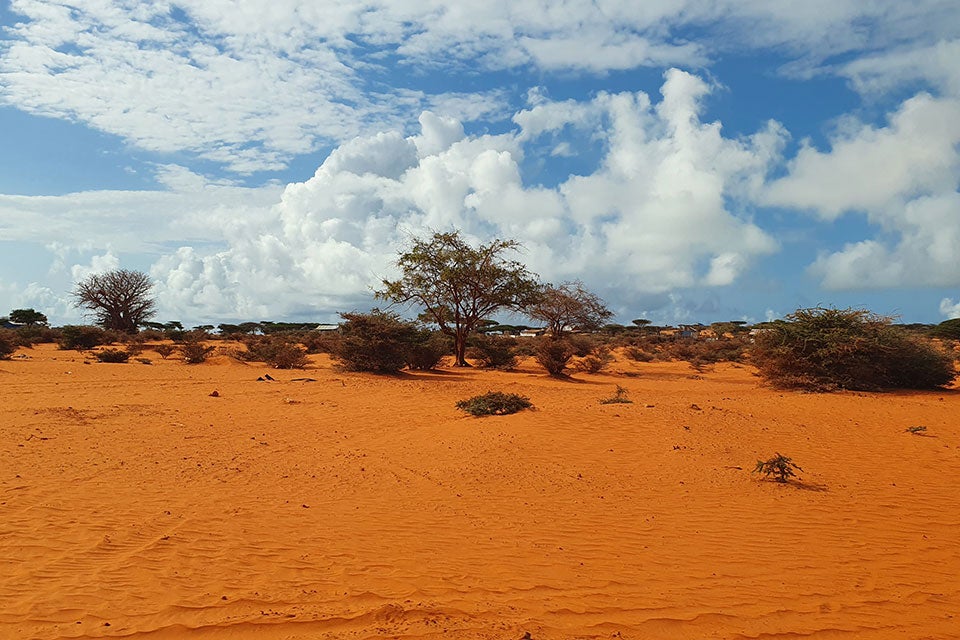
Landing at the airport of Kismayu, in the federal state of Jubaland in the south of Somalia, dry, red land stretches into the distance. Somalia is experiencing a drought emergency as declared by the UN in Somalia in April 2022. The prolonged drought continues to destroy lives and livelihoods. Women and girls are consistently more vulnerable to drought as it places a triple burden on them to survive the crisis while caring for their families and facing increased risks of sexual violence.
Somalia is home to one of the most complex and long-standing humanitarian crises in the world. Ongoing armed conflict and insecurity, drought and floods, locust invasion, socioeconomic vulnerability and the COVID-19 pandemic all negatively impact women in many ways.
The armed conflict and insecurity have displaced thousands of people, and human rights violations are endangering civilians, forcing many to flee their homes and exposing them to multiple risks. In recent years, climate-related shocks, mainly drought and flooding, have increased in frequency and intensity, exacerbating humanitarian needs and undermining resilience at the household and community levels. Collectively these shocks left over 6 million Somalis in need of humanitarian assistance and protection through December 2019 – a 36 per cent increase compared to late 2018. Many of them are women.
Amina, a mother of nine in Kismayo, says: “I have never seen such a drought in my life. Animals died, we could not grow anything…every year the situation is becoming worse and worse”.
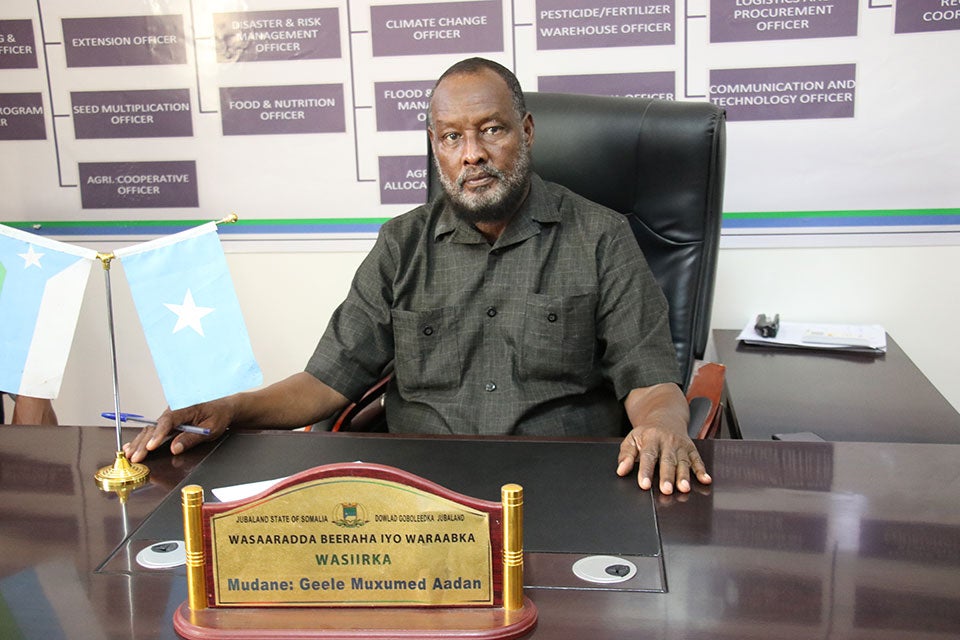
The Minister of Agriculture and Irrigation of Jubaland, Geele Mohamed Adan, notes that women are hit the hardest, as they are the ones who carry the burden of taking care of the family: “Women are the essential pillar of our society. They are mothers who need to feed their children, they are the ones who are looking after the family’s livelihoods, they are the core of the nation, and they struggle the most. They need to be prioritized and empowered for the community to survive and strive.”
To address this issue, with support from the Government of Japan, UN Women Somalia is implementing the project “Women's Leadership, Empowerment, Access and Protection (LEAP) in Somalia” to empower women and girl refugees, internally displaced persons (IDPs) and their communities to mitigate the impact of multiple crises on their livelihoods, exposure to gender-based violence and decision-making capacities. The project is being implemented in Kismayo (Jubaland) and Baidoa (South West).
UN Women’s LEAP programme in Somalia adopted Triple Nexus programming in promoting women’s leadership in humanitarian settings, access to livelihood opportunities, preventing violence against women and girls in target communities, and building and sustaining peace through gender-responsive stabilization and recovery of conflict-affected displaced women and men in Kismayo and Baidoa.
“UN Women’s integration of Triple Nexus into the LEAP programme helped adopt a holistic approach to economic empowerment through which economic initiatives are paired with enhancing leadership skills for women. Village savings and micro loans for establishing micro businesses are impacting women socially and economically and have increased their resilience and self-esteem,” says Sadiq Syed, Head of the UN Women Somalia Programme.
In addition to generating baseline evidence on gender, climate and conflict analysis in Somalia that points to opportunities for climate-smart agriculture and livelihood enhancement, as well as assessment of existing business opportunities for women in Jubaland and South West States to guide quality interventions and enhance successful micro businesses, the project has trained women on various topics to help them sustain their livelihoods.
UN Women and its partners – the Ministry of Agriculture and Irrigation, the Ministry of Women, Family Affairs, and Human Rights and CARE International Somalia – trained women on agriculture production, savings, supply chain and business development. The project trained 1,000 rural women farmers on post-harvest handling processes and management of community-based storage facilities for the food products produced locally. Six-hundred women entrepreneurs improved their knowledge on value chains, product development and branding. Three-hundred women and youth improved their vocational skills through second chance education initiatives. One-hundred women in Kismayo (and 100 women in Baidoa) were provided with important farming tools and 14 varieties of drought and soil resilient seeds to help them start off their much-needed farming.
The Village Saving and Loan Association (VSLA) concept is a method of collective financial development that is playing an increasingly major role in Kismayo and locations around the transitional city of Jubaland state.
‘’The LEAP programme and the small investment mobilized through the support among VSLA groups enabled me to open my own small kiosk to be run by my family and we started earning daily income, and we also received training on climate-smart agriculture and supply chains and post-harvest handling processes and management of community-based storage facilities, which transformed our lives and increased our ability to grow resilient crops in a short period of time,’’ says Nadifo Mohamed, a beneficiary of the LEAP programme and representative of the group of women who took part in the training.
Through 20 VSLA groups established in Kismayo and Baidoa, 1000 women were trained and supported.
“These groups allow women to pool funds and support each other. They have a Savings Fund, which allows women to pool funds collectively and each month one of them uses the money collected to start a small-scale business, and a Social Fund that allows women to support each other in times of need. We trained women how to run VSLAs, how to save money, borrow and start businesses. Members of each group wrote their own constitution and elected key leaders such as the chairperson, treasurer and secretary, and they will continue this arrangement even after completing on the project,” says Ahmed Ali, Acting Kismayo Office Manager, CARE Somalia.
Speaking about the impact of the project, Adar Ismail Abdullahi, Minister of Women, Family Affairs, and Human Rights of Jubaland said that only 20 per cent of selected women could read and write, while for 80 per cent of them these trainings were the first learning opportunity in their lives.
“It is a project that is very dear to my heart. I have worked on various projects supporting women, but I have not seen a project that benefitted women as much as this LEAP project. Women came to me crying, saying that their life will never be the same anymore, that they made friends, forgot past tensions, and learned valuable skills,” she said.
Women were brought together from various parts of Kismayo, and none of these women knew each other before. In addition to project’s main objectives, the project became a reconciliation tool, as many women came from various opposing tribes and had long-standing ethnic tensions and hatred towards each other.
‘’I urge UN Women and the Government of Japan to continue this important contribution to the livelihoods of Somali women and I hereby recommend expanding this programme as it is aligned to our priorities of climate-smart agriculture, drought resilience and building sustainable livelihoods for our women and girls,’’ says Geele Mohamed Adan, expressing his gratitude for UN Women and Government of Japan.
Related content
For All Women and Girls: Pendo Vestine on closing the gender gap for girls in tech

Interview: Gender equality is key to a just renewable energy future
