
Universal menu

  • Global
  • Regions
    • Africa
    • Americas and the Caribbean
    • Arab States
    • Asia and the Pacific
    • Europe and Central Asia
  • Knowledge
  • Data
  • Training
  • Transparency
UN Women - For all women and girls

Main Navigation-HQ

  • Who we are
    • About us
      • About UN Women
      • Business model
      • Guiding documents
      • Worldwide presence
    • Leadership
      • Governance structure
      • Executive leadership
      • Executive Board
      • Accountability
    • Work with us
      • Employment
      • Procurement
      • Calls for proposals
      • Contact us
      • UN Women Strategic Plan 2026–2029
      • UN Women Strategic Plan 2026–2029 - social media image
        UN Women Strategic Plan 2026–2029
  • What we do
    • Focus areas
      • Ending violence against women
      • Peace and security
      • Humanitarian action
      • Leadership and governance
      • Economic empowerment
      • Innovation and technology
      • Women with disabilities
      • Youth
      • HIV and AIDS
    • How we work
      • 2030 Agenda for Sustainable Development
      • Commission on the Status of Women
      • Gender parity in the UN system
      • Intergovernmental support
      • Partnerships
      • Research and data
      • Training Centre
      • Trust funds
      • UN system coordination
      • Gender Equality Accelerators
      • Gender Equality Accelerators artwork
        Gender Equality Accelerators
  • News and stories
    • Latest
      • News
      • Articles and explainers
      • In focus
    • Media center
      • Press materials
      • Media contacts
      • Explainer: Why are women so exhausted? Care work and the mental load
      • Two adults stand at a table changing diapers on baby dolls, with laundry hanging on a clothesline behind them in a home setting.
        Explainer: Why are women so exhausted? Care work and the mental load
      • Press release: Aid cuts dismantle women’s organizations working in humanitarian crises
      • A young Ugandan woman sits with another local woman to talk
        Press release: Aid cuts dismantle women’s organizations working in humanitarian crises
  • Digital library
    • Resources
      • Publications
      • Annual reports
      • Progress of the world’s women
      • World survey on the role of women in development
      • The gender snapshot
    • GenderTerm
      • GenderTerm
      • Reprint permissions
      • UN Women Highlights 2025–2026
      • A smiling woman.
        UN Women Highlights 2025–2026
      • The gender snapshot 2025
      • gender snapshot thumbnail transparent
        The gender snapshot 2025
  • Get involved
    • How to get involved
      • For ALL Women and Girls
      • International Women's Day
      • 16 Days of Activism to End Violence against Women and Girls
      • UNiTE! Campaign to End Violence against Women
      • Generation Equality
      • He for She
Ask AI
https://84e5cfacd5c7e99f9825edf344450c.1b.environment.api.powerplatform.com/powervirtualagents/botsbyschema/crad4_websiteQA/directline/token?api-version=2022-03-01-preview
1
-
Ask your question here
AI website assistant

Hello, how can I assist you?

AI chatbot responses may be incorrect. Always verify important information.

Donate button menu

Donate

Breadcrumb

  1. Home
  2. Explore Our Latest News
  3. Explore Our Latest News

Website survey

We want to know how we can improve your experience on this website. Completing this survey takes less than 5 minutes.

TAKE THE SURVEY
Impact story

Driving data-based progress on violence response and prevention in Colombia

18 November 2022
  • Share to Facebook
  • Share to Twitter
  • Share to LinkedIn
  • Share to E-mail

In the rural municipality of Pasto, capital of the Colombian Department of Nariño, all streets now have lighting; a comprehensive care unit for victims of gender-based violence has been reactivated; more than 100 women are increasing their economic autonomy to prevent them from falling into cycles of violence; and the municipal budget for gender issues has tripled compared to before the pandemic.
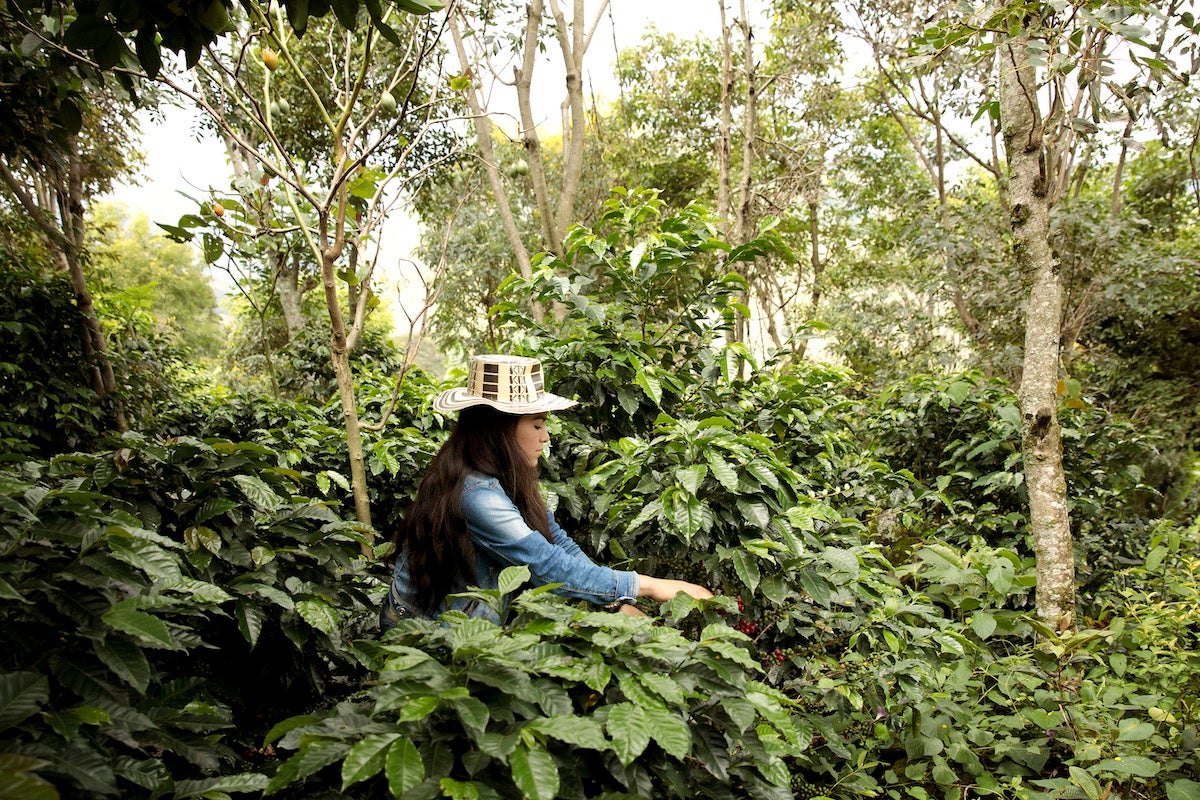
Image
A Colombian coffee grower in the of Nariño region of Colombia. Photo: UN Women/Ryan Brown

But none of this is accidental. They are achievements directly supported by gender statistics—including disaggregated and localized data on violence against women (VAW).

The rapid gender assessment on violence against women (VAW) during COVID-19, rolled out nationally by UN Women in 2021, found that 63 per cent of surveyed women said they or someone they know had experienced at least one form of VAW—almost double the 33 per cent estimated in a national demographic and health survey in 2016. In addition, the rapid survey found that 20 per cent of women thought domestic conflicts had increased during the pandemic; 36 per cent believed it was common for women to be harassed in public; and 43 per cent said domestic abuse had become more common since the pandemic.

These and other data from the rapid survey were released through a series of activities in November 2021, attended by Isabel Goyes, Co-director of the Nariño Gender Observatory.

“Clearly these reports were very important benchmarks. We commented in that meeting in Bogotá that these figures were useful, but that for the regions we needed disaggregated data,” explains Goyes. “We give regional context to national figures, and after that event, they gave us access to the disaggregated microdata, which gave us data specific to Nariño and enabled us to prepare an analysis.”

The Observatory prepared the localized report for the Department of Nariño and the Municipality of Pasto, whose findings were disseminated through radio and television programmes, at an event and shared directly with relevant institutions, authorities and entities.

Elena Pantoja, Secretary of Women, Sexual Orientations and Gender Identities for the Municipality of Pasto, was among them: “These figures allowed us to make our mayor understand the importance of the issue and include things in the Municipal Development Plan to obtain unassigned resources. This allowed us to access historic resources and develop an economic autonomy project with a real gender perspective, because it was understood that these levels of violence in households made it necessary to support economic autonomy to enable women to escape cycles of violence.”

According to Pantoja, under this 2022 project, 147 women have already benefited directly from individual and collective entrepreneurial ventures, while another 435 people (from their families) will benefit indirectly. In addition, the project is strengthening some 10 to 15 civil society organizations.

“With these figures, we gave visibility to the problems of our territory and managed to attract resources to attend to victims at family police stations, through Spanish cooperation,” explains Pantoja, adding that this has included a diploma and technological help for the Metropolitan Police, such that the closest quadrant can now reach a woman experiencing violence in less than 3 minutes. “They have helped us open doors, raise awareness and improve inter-institutional coordination with those who must guarantee care and protection.”

Pantoja asserts that having localized VAW data also helped increase related budget allocations. In fact, the budget allocated to gender issues in the Municipal Development Plan has tripled—from 400 million Colombian pesos (USD 83,000) a year before the pandemic, to 1.2 billion pesos (USD 250,000) in 2021.

“These surveys have allowed government councils, secretariats and decentralized entities to get onboard,” says Pantoja. “Many actions have been achieved. And there is an appreciation, because these figures are helping make the Gender Mechanism fundamental. […] These figures allow us to raise awareness from within, institutionally, so that resources aren’t simply assigned to meet goals or indicators but allocated in such a way that we put ourselves in the shoes of those who need these strategic actions.”

The Observatory also successfully used the VAW data to lobby the University of Nariño to reopen the Support Unit for Women Victims of Violence (UNAVI), which closed during the pandemic due to administrative issues. It reopened in May 2022, offering legal clinics and psychological support for an average of 20 survivors per month.

“Statistics have provided a lot of support, not only with the reopening of UNAVI as such, but they reveal a series of aggressions that occur in the public and private sphere that many women do not report,” indicates Henry Rosero, founder and advising professor of the UNAVI.

Rosero recounts that a few weeks ago a survivor of domestic violence who had to leave her home with her children during the pandemic finally managed to return home—and for her aggressor to leave—with the legal support of UNAVI.

Rolando Crespo, Coordinator of UN Women Colombia’s Women Count Project, highlights the importance of VAW data to bringing about necessary changes: “Timely evidence has the capacity to promote the social, economic and political transformations that are required for substantive equality between women and men.”

Despite its pervasiveness, violence against women is preventable. This 16 Days, we’re highlighting the programmes and initiatives making a difference in the lives of women and girls worldwide. Through education, advocacy, service provision and more, UN Women and partners are working to support survivors, bring perpetrators to justice and end gender-based violence once and for all. These impact stories prove that a better future is not only possible—it’s already being built.

UN Women’s strategy for change on gender data is Women Count. The programme seeks to bring about a radical shift in how gender statistics are used, created, and accessed. Women Count supports countries to improve the production and use of timely statistics to inform policies and programmes and effectively monitor the SDGs from a gender perspective.

Originally published on data.unwomen.org

Topics

  • Ending violence against women and girls
  • Anti-violence interventions
  • Gender data gaps
  • Gender data production and collection
  • COVID-19
  • Latin America and the Caribbean
  • Colombia

Related content

Image
UNWomen_Placeholder
Statement

A year since Afghan women staff barred from entering United Nations premises across the country

7 September 2026
A year since Afghan women staff barred from entering United Nations premises across the country
Image
Sidi Haidara speaks into a microphone
Feature

One man’s quest to end female genital mutilation (FGM) in Mali

27 August 2026
One man’s quest to end female genital mutilation (FGM) in Mali
Image
Image placeholder with UN Women logo (English) - 3:2 aspect ratio
Press briefing

Press briefing at the United Nations by UN Women Special Representative in Afghanistan, Susan Ferguson

14 August 2026
Press briefing at the United Nations by UN Women Special Representative in Afghanistan, Susan Ferguson

Footer menu-HQ

  • News and stories
  • Resources
  • What we do
  • How we work
  • Where we are
  • Partnerships
  • Employment
  • Procurement
  • Contact us
  • Executive Board
  • Commission on the Status of Women

Donate button menu [Footer tablet]

  • Donate

Donate button menu [Footer]

  • Donate

Social media menu

  • Facebook
  • Twitter
  • LinkedIn
  • Flickr
  • YouTube
  • Instagram
UN Women - For all women and girls

Footer bottom [Menu]

  • Copyright
  • Information security
  • Privacy notice
  • Report wrongdoing
  • Terms of use
Share this page
  • Share to Facebook
  • Share to Twitter
  • Share to LinkedIn
  • Share to E-mail

Or copy link