
Universal menu

  • Global
  • Regions
    • Africa
    • Americas and the Caribbean
    • Arab States
    • Asia and the Pacific
    • Europe and Central Asia
  • Knowledge
  • Data
  • Training
  • Transparency
UN Women - For all women and girls

Main Navigation-HQ

  • Who we are
    • About us
      • About UN Women
      • Business model
      • Guiding documents
      • Worldwide presence
    • Leadership
      • Governance structure
      • Executive leadership
      • Executive Board
      • Accountability
    • Work with us
      • Employment
      • Procurement
      • Calls for proposals
      • Contact us
      • UN Women Strategic Plan 2026–2029
      • UN Women Strategic Plan 2026–2029 - social media image
        UN Women Strategic Plan 2026–2029
  • What we do
    • Focus areas
      • Ending violence against women
      • Peace and security
      • Humanitarian action
      • Leadership and governance
      • Economic empowerment
      • Innovation and technology
      • Women with disabilities
      • Youth
      • HIV and AIDS
    • How we work
      • 2030 Agenda for Sustainable Development
      • Commission on the Status of Women
      • Gender parity in the UN system
      • Intergovernmental support
      • Partnerships
      • Research and data
      • Training Centre
      • Trust funds
      • UN system coordination
      • Gender Equality Accelerators
      • Gender Equality Accelerators artwork
        Gender Equality Accelerators
  • News and stories
    • Latest
      • News
      • Articles and explainers
      • In focus
    • Media center
      • Press materials
      • Media contacts
      • Explainer: Why are women so exhausted? Care work and the mental load
      • Two adults stand at a table changing diapers on baby dolls, with laundry hanging on a clothesline behind them in a home setting.
        Explainer: Why are women so exhausted? Care work and the mental load
      • Press release: Aid cuts dismantle women’s organizations working in humanitarian crises
      • A young Ugandan woman sits with another local woman to talk
        Press release: Aid cuts dismantle women’s organizations working in humanitarian crises
  • Digital library
    • Resources
      • Publications
      • Annual reports
      • Progress of the world’s women
      • World survey on the role of women in development
      • The gender snapshot
    • GenderTerm
      • GenderTerm
      • Reprint permissions
      • UN Women Highlights 2025–2026
      • A smiling woman.
        UN Women Highlights 2025–2026
      • The gender snapshot 2025
      • gender snapshot thumbnail transparent
        The gender snapshot 2025
  • Get involved
    • How to get involved
      • For ALL Women and Girls
      • International Women's Day
      • 16 Days of Activism to End Violence against Women and Girls
      • UNiTE! Campaign to End Violence against Women
      • Generation Equality
      • He for She
Ask AI
https://84e5cfacd5c7e99f9825edf344450c.1b.environment.api.powerplatform.com/powervirtualagents/botsbyschema/crad4_websiteQA/directline/token?api-version=2022-03-01-preview
1
-
Ask your question here
AI website assistant

Hello, how can I assist you?

AI chatbot responses may be incorrect. Always verify important information.

Donate button menu

Donate

Breadcrumb

  1. Home
  2. Explore Our Latest News
  3. Explore Our Latest News

Website survey

We want to know how we can improve your experience on this website. Completing this survey takes less than 5 minutes.

TAKE THE SURVEY
Interview

For ALL Women and Girls: Lúcia Xavier on feminism, racism, and Black women’s resistance in Brazil

#ForAllWomenandGirls is a rallying call for action on the 30th anniversary of the Beijing Declaration and Platform for Action. Feminist anti-racist activist Lúcia Xavier from Brazil talks about Black women's resilience and fight for equality.

24 February 2025
  • Share to Facebook
  • Share to Twitter
  • Share to LinkedIn
  • Share to E-mail

Lúcia Xavier is a Brazilian social worker and activist who founded the feminist and anti-racist NGO, Criola in Rio de Janeiro, which has worked with Black women since 1992. Her work intersects with women’s and children’s rights, grassroots movements for housing and healthcare, LGBTIQ+ issues and anti-racism. At 66 years of age, Xavier feels an “incredible sense of hope” in the collective action of women, particularly Black women.

“These women don’t change the world because they suffer,” she says. “They change it to create lives filled with more happiness, joy, and opportunities. That wisdom, that legacy, that way of thinking and living is incredibly inspiring.”
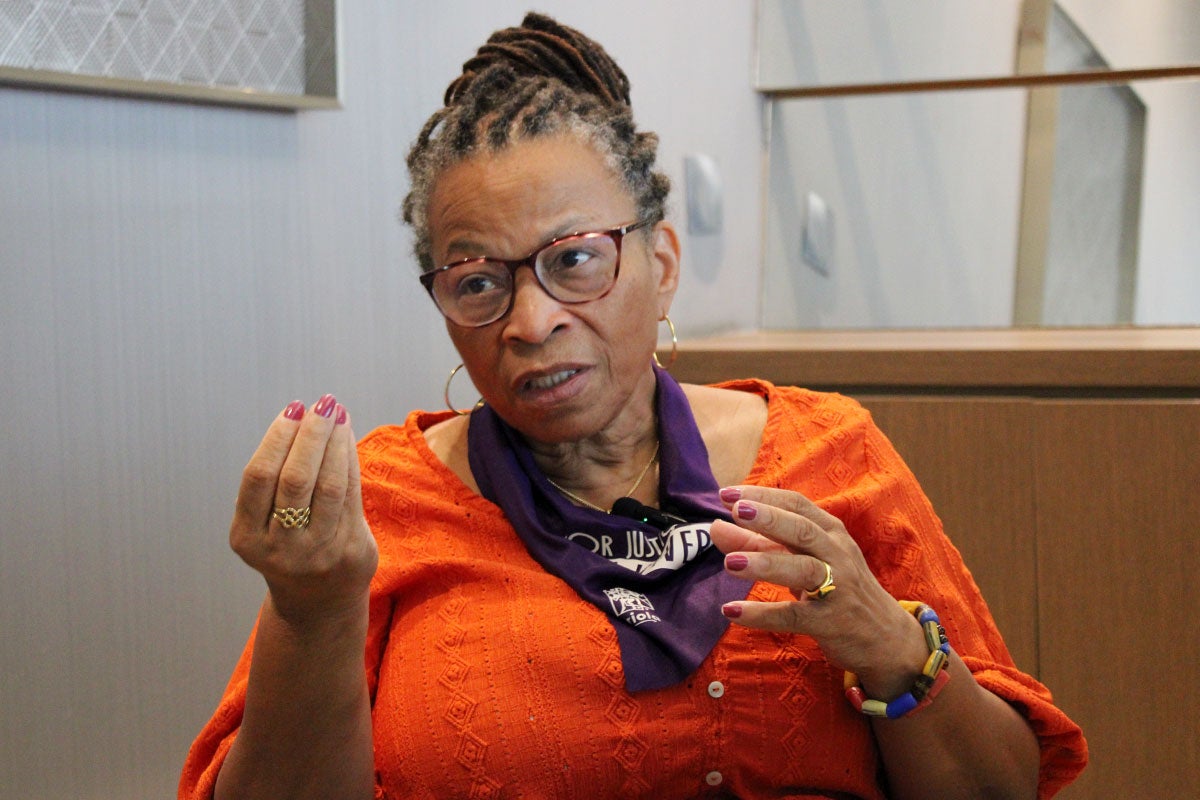
Image
Lucia Xavier, antiracist feminist activist, cofounder and general coordinator of the Brazilian NGO Criola pictured in an interview with UN Women in February 2025. Photo: UN Women/Pedro Nogueira

The biggest threat to Black women’s lives: Violence and systemic racism in Brazil

For Xavier, one of the biggest threats to women’s rights in Brazil is the pervasive violence against Black communities: “It’s not just the woman who dies. Her children, her family members, and her ability to survive and participate in society are also lost. Sometimes, so many people around her are killed that it feels like an endless war.”

Brazil’s Annual Public Security Report shows that 82.7 per cent of those killed by police are Black, and Black youth aged 12 to 29 make up 71.7 per cent of the victims. Over the past two decades, grassroots movements led by grieving mothers have emerged, seeing justice and reparations, particularly in São Paulo and Rio de Janeiro.

Xavier’s organization, NGO Criola has actively supported these movements and recently published a report on the impact of police violence against Black cis- and transgender women in Brazil.  

“These mothers want to expose the violence committed by the State and show that it is intrinsically linked to systemic racism in the country,” explains Xavier.

Black women’s leadership is key for an equal future

Despite immense challenges—or perhaps because of them— the Black women’s movement in Brazil is widely acknowledged for its resilience and strength. For Xavier, Black women’s representation is a key issue and a common thread running through decades of women’s movement. Black women have been attending public hearings, street demonstrations and running for public office.

“Black women [are] powerful political actors, capable of transforming society and reshaping the norms and standards of this country,” says Xavier.

“All of us have been doing [this] our entire lives—finding ways to resist. Many of these women say their pain has also driven them toward transforming society.”

From the 1995 Beijing Conference to today: Women’s rights in Brazil and the future of feminist leadership

Xavier recalls how conferences like the Fourth World Conference on Women in Beijing (1995) and the World Conference Against Racism, Racial Discrimination, Xenophobia and Related Intolerance in Durban (2011) helped shape new frameworks, policies, and higher-quality services for women, largely driven by the Brazilian feminist movements. These advances led to groundbreaking legislation, such as the Maria da Penha Law, which criminalized domestic violence.

While there have been undeniable advances over the past three decades, they have not reached all women, says Xavier, with Black and Indigenous women still facing the greatest disparities. “When it comes to sexual and reproductive rights, we still face serious challenges,” she adds.

She also highlights that sex work, forced migration, and human trafficking have intensified since the Beijing Conference.

On this landmark year, when States are assessing progress in implementing the Beijing Platform for Action and renewing their commitments, Xavier sees the future of the feminist, anti-racist movement in young people.

“Life can be imagined and lived differently; and only young people can do that. Only young people can create new expectations and possibilities.”

“So, be brave”, she sums up.

Topics

  • Anti-violence interventions
  • Gender equality and women’s empowerment
  • Beijing Platform for Action
  • Latin America and the Caribbean
  • Brazil

Related content

Image
A portrait of an Afghan woman in silhouette
Press release

Five years after the Taliban takeover: the normalization of the exclusion of women and girls in Afghanistan

12 August 2026
Five years after the Taliban takeover: the normalization of the exclusion of women and girls in Afghanistan
Image
Women pose in front of a bus with the Born Perfect campaign banner
Feature

Inside Liberia’s campaign to end female genital mutilation (FGM)

10 August 2026
Inside Liberia’s campaign to end female genital mutilation (FGM)
Image
A woman stands amid a crowd of people and motorcycles on a busy street.
Feature

How aid cuts are threatening women’s organizations responding to Haiti’s gang violence

6 August 2026
How aid cuts are threatening women’s organizations responding to Haiti’s gang violence

Footer menu-HQ

  • News and stories
  • Resources
  • What we do
  • How we work
  • Where we are
  • Partnerships
  • Employment
  • Procurement
  • Contact us
  • Executive Board
  • Commission on the Status of Women

Donate button menu [Footer tablet]

  • Donate

Donate button menu [Footer]

  • Donate

Social media menu

  • Facebook
  • Twitter
  • LinkedIn
  • Flickr
  • YouTube
  • Instagram
UN Women - For all women and girls

Footer bottom [Menu]

  • Copyright
  • Information security
  • Privacy notice
  • Report wrongdoing
  • Terms of use
Share this page
  • Share to Facebook
  • Share to Twitter
  • Share to LinkedIn
  • Share to E-mail

Or copy link