Universal menu

  • Global
  • Regions
    • Africa
    • Americas and the Caribbean
    • Arab States
    • Asia and the Pacific
    • Europe and Central Asia
  • Knowledge
  • Data
  • Training
  • Transparency
UN Women - For all women and girls

Main Navigation-HQ

  • Who we are
    • About us
      • About UN Women
      • Business model
      • Guiding documents
      • Worldwide presence
    • Leadership
      • Governance structure
      • Executive leadership
      • Executive Board
      • Accountability
    • Work with us
      • Employment
      • Procurement
      • Calls for proposals
      • Contact us
      • UN Women Strategic Plan 2026–2029
      • UN Women Strategic Plan 2026–2029 - social media image
        UN Women Strategic Plan 2026–2029
  • What we do
    • Focus areas
      • Ending violence against women
      • Peace and security
      • Humanitarian action
      • Leadership and governance
      • Economic empowerment
      • Innovation and technology
      • Women with disabilities
      • Youth
      • HIV and AIDS
    • How we work
      • 2030 Agenda for Sustainable Development
      • Commission on the Status of Women
      • Gender parity in the UN system
      • Intergovernmental support
      • Partnerships
      • Research and data
      • Training Centre
      • Trust funds
      • UN system coordination
      • Gender Equality Accelerators
      • Gender Equality Accelerators artwork
        Gender Equality Accelerators
  • News and stories
    • Latest
      • News
      • Articles and explainers
      • In focus
    • Media center
      • Press materials
      • Media contacts
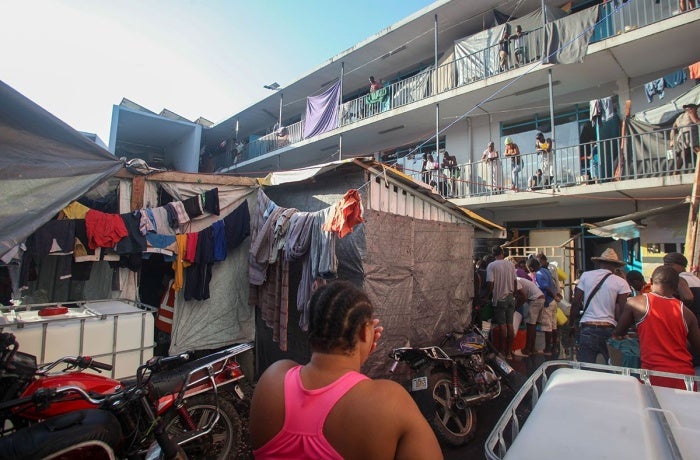
      • Explainer: Why are women so exhausted? Care work and the mental load
      • Two adults stand at a table changing diapers on baby dolls, with laundry hanging on a clothesline behind them in a home setting.
        Explainer: Why are women so exhausted? Care work and the mental load
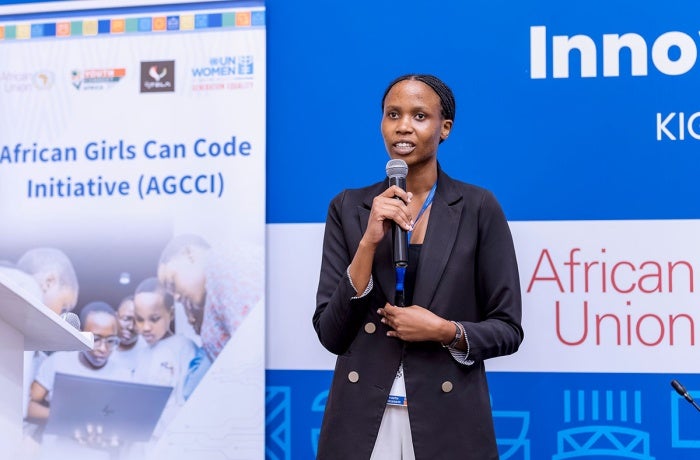
      • Press release: Aid cuts dismantle women’s organizations working in humanitarian crises
      • A young Ugandan woman sits with another local woman to talk
        Press release: Aid cuts dismantle women’s organizations working in humanitarian crises
  • Digital library
    • Resources
      • Publications
      • Annual reports
      • Progress of the world’s women
      • World survey on the role of women in development
      • The gender snapshot
    • GenderTerm
      • GenderTerm
      • Reprint permissions
      • UN Women Highlights 2025–2026
      • A smiling woman.
        UN Women Highlights 2025–2026
      • The gender snapshot 2025
      • gender snapshot thumbnail transparent
        The gender snapshot 2025
  • Get involved
    • How to get involved
      • For ALL Women and Girls
      • International Women's Day
      • 16 Days of Activism to End Violence against Women and Girls
      • UNiTE! Campaign to End Violence against Women
      • Generation Equality
      • He for She
Ask AI
https://84e5cfacd5c7e99f9825edf344450c.1b.environment.api.powerplatform.com/powervirtualagents/botsbyschema/crad4_websiteQA/directline/token?api-version=2022-03-01-preview
1
-
Ask your question here
AI website assistant

Hello, how can I assist you?

AI chatbot responses may be incorrect. Always verify important information.

Donate button menu

Donate

Breadcrumb

  1. Home
  2. Explore Our Latest News
  3. Explore Our Latest News

Website survey

We want to know how we can improve your experience on this website. Completing this survey takes less than 5 minutes.

TAKE THE SURVEY
Feature

Pushing forward: Countering anti-feminist backlash in Ethiopia

18 November 2022
  • Share to Facebook
  • Share to Twitter
  • Share to LinkedIn
  • Share to E-mail

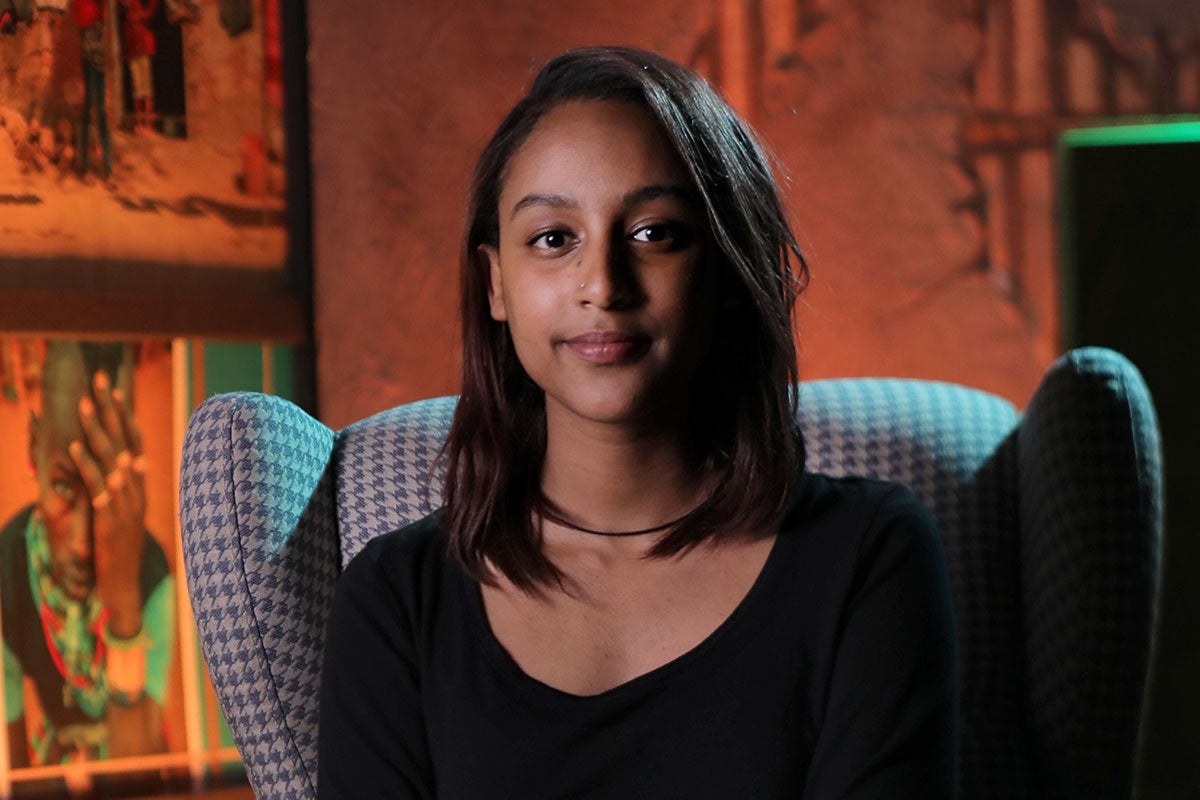
Hanna Lemma is a women’s rights advocate and feminist researcher from Ethiopia. She is also the founder and director of Addis Powerhouse, a young women-led feminist knowledge production platform that conducts gender research and works to ensure young women’s meaningful representation in Ethiopian politics and society. In the wake of civil war, Hanna is fighting hard to prevent progress on women’s rights from becoming a casualty.
Image
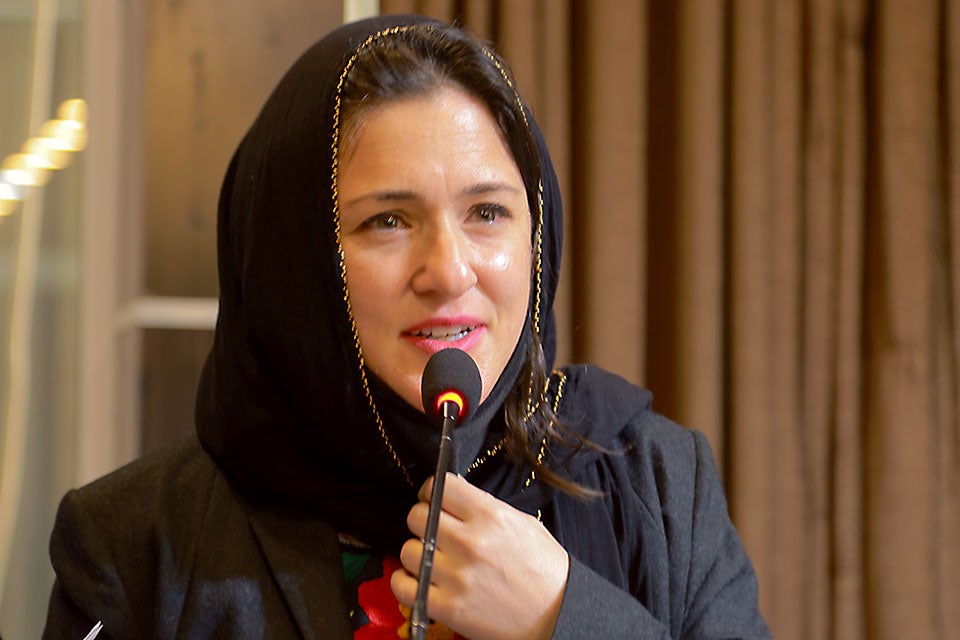
Portrait of activist Hanna Lemma.
Hanna Lemma is an Ethiopian women’s rights advocate, feminist researcher, and founder and director of Addis Powerhouse. Photo courtesy of Hanna Lemma

Paying the price

Gender-based violence in Ethiopia was already endemic before the outbreak of war in 2020. But the conflict has exacerbated the problem—and reduced the political will to address it.

“Women have paid the utmost price of the war,” says Hanna. Facing heightened gender-based and sexual violence, they’re also being deprived of crucial services—including reporting mechanisms and proper healthcare for survivors. Though more critical than ever, women’s rights have been deprioritized amidst the fighting.

Women also face exclusion from peace processes. “Instead of agents of change in reconciliation efforts, young women particularly [are] solely seen as victims of conflict,” Hanna says. Without avenues for engagement, women and women-led organizations end up unable to advocate for themselves.

In the midst of all this, global anti-feminist movements are taking their toll. Though Hanna points to digital platforms as a key mechanism for facilitating women’s rights advocacy work, access to such platforms also “heightens exposure to the global pushback on women’s rights.”

This kind of messaging is already threatening to derail progress made by Ethiopian feminists. “While more and more women have started speaking up for their rights using apps like Tiktok, more anti-women pages that promote backward gender roles and gender-based violence have also started to surface through such spaces,” Hanna explains. “Bashing feminism has become the norm.”

Live and learn

From an early age, Hanna saw something wrong with the way she was treated. “My activism was born out of the lack of power I felt I had as a young girl on the streets of Addis Ababa,” she says. “I always questioned why I was expected to normalize catcalling and other forms of gender-based violence.”

Discovering feminism as a teenager helped her to understand the harmful systems she had already encountered: “I primarly used [feminism] to dissect and understand the patriarchal society I was born and raised in.”

It also gave her an outlet and, eventually, a sense of empowerment: “Feminist activism allowed me to cope through art and writing, and a newly found sisterhood in my community,” she says. “[It] transformed how I saw power and where I found myself in the ladder of influence.”

For Hanna, activism starts with awareness—and that means identifying the endemic sexism that serves to dehumanize women and girls on a daily basis. “We have only recognized a very small portion of our culture as ‘harmful’ so far,” she says, and that leads to the continued reinforcement of misogynistic values and traditions.

Hanna encourages aspiring activists “to read, to research, and to explore different topics—to garner a holistic understanding of the world we live in”. Apathy, she says, is our greatest enemy: we must fight to end the oppression of others just as we do our own. 

She notes that activism looks different for different people. “I know that not all of us get the privilege to act visibly against inequality and violence, especially when the current social dynamic makes us dependent on those who have capacity to dominate and punish us,” she says. But there are always ways to act: “If you are one, you can start by listening to and supporting other women and amplifying their voices.”

“Dissecting culture and the ways it is used to oppress women is the start of a new reality,” Hanna says. “We should be able to examine our shared societal values and have conversations around them.” Only then, she emphasizes, can we begin to build a better world for everyone.

Beyond the limits

Hanna envisions a future “where we see and acknowledge the humanness in each other before anything”. Freed from gender-based violence, she sees a wealth of possibilities opening up for women and girls: “In such a world, so much of women’s lives would not be spent fearing the opposite sex, protecting ourselves, and advocating for our right to live freely. I can only imagine what we, as women, could do if gender-based violence wasn’t a constant threat to our lives.”

Topics

  • Ending violence against women and girls
  • Women’s rights
  • Conflict, war
  • Sexual violence in conflict
  • Africa
  • Ethiopia

Related content

Image
A young woman poses for a portrait while wearing a UN Women vest
Feature

Serving through crisis: UN Women’s humanitarian workers on what keeps them going

17 August 2026
Serving through crisis: UN Women’s humanitarian workers on what keeps them going
Image
Image placeholder with UN Women logo (English) - 3:2 aspect ratio
Press briefing

Press briefing at the United Nations by UN Women Special Representative in Afghanistan, Susan Ferguson

14 August 2026
Press briefing at the United Nations by UN Women Special Representative in Afghanistan, Susan Ferguson
Image
A portrait of an Afghan woman in silhouette
Press release

Five years after the Taliban takeover: the normalization of the exclusion of women and girls in Afghanistan

12 August 2026
Five years after the Taliban takeover: the normalization of the exclusion of women and girls in Afghanistan

Footer menu-HQ

  • News and stories
  • Resources
  • What we do
  • How we work
  • Where we are
  • Partnerships
  • Employment
  • Procurement
  • Contact us
  • Executive Board
  • Commission on the Status of Women

Donate button menu [Footer tablet]

  • Donate

Donate button menu [Footer]

  • Donate

Social media menu

  • Facebook
  • Twitter
  • LinkedIn
  • Flickr
  • YouTube
  • Instagram
UN Women - For all women and girls

Footer bottom [Menu]

  • Copyright
  • Information security
  • Privacy notice
  • Report wrongdoing
  • Terms of use
Share this page
  • Share to Facebook
  • Share to Twitter
  • Share to LinkedIn
  • Share to E-mail

Or copy link