
Universal menu

  • Global
  • Regions
    • Africa
    • Americas and the Caribbean
    • Arab States
    • Asia and the Pacific
    • Europe and Central Asia
  • Knowledge
  • Data
  • Training
  • Transparency
UN Women - For all women and girls

Main Navigation-HQ

  • Who we are
    • About us
      • About UN Women
      • Business model
      • Guiding documents
      • Worldwide presence
    • Leadership
      • Governance structure
      • Executive leadership
      • Executive Board
      • Accountability
    • Work with us
      • Employment
      • Procurement
      • Calls for proposals
      • Contact us
      • UN Women Strategic Plan 2026–2029
      • UN Women Strategic Plan 2026–2029 - social media image
        UN Women Strategic Plan 2026–2029
  • What we do
    • Focus areas
      • Ending violence against women
      • Peace and security
      • Humanitarian action
      • Leadership and governance
      • Economic empowerment
      • Innovation and technology
      • Women with disabilities
      • Youth
      • HIV and AIDS
    • How we work
      • 2030 Agenda for Sustainable Development
      • Commission on the Status of Women
      • Gender parity in the UN system
      • Intergovernmental support
      • Partnerships
      • Research and data
      • Training Centre
      • Trust funds
      • UN system coordination
      • Gender Equality Accelerators
      • Gender Equality Accelerators artwork
        Gender Equality Accelerators
  • News and stories
    • Latest
      • News
      • Articles and explainers
      • In focus
    • Media center
      • Press materials
      • Media contacts
      • Explainer: Why are women so exhausted? Care work and the mental load
      • Two adults stand at a table changing diapers on baby dolls, with laundry hanging on a clothesline behind them in a home setting.
        Explainer: Why are women so exhausted? Care work and the mental load
      • Press release: Aid cuts dismantle women’s organizations working in humanitarian crises
      • A young Ugandan woman sits with another local woman to talk
        Press release: Aid cuts dismantle women’s organizations working in humanitarian crises
  • Digital library
    • Resources
      • Publications
      • Annual reports
      • Progress of the world’s women
      • World survey on the role of women in development
      • The gender snapshot
    • GenderTerm
      • GenderTerm
      • Reprint permissions
      • UN Women Highlights 2025–2026
      • A smiling woman.
        UN Women Highlights 2025–2026
      • The gender snapshot 2025
      • gender snapshot thumbnail transparent
        The gender snapshot 2025
  • Get involved
    • How to get involved
      • For ALL Women and Girls
      • International Women's Day
      • 16 Days of Activism to End Violence against Women and Girls
      • UNiTE! Campaign to End Violence against Women
      • Generation Equality
      • He for She
Ask AI
https://84e5cfacd5c7e99f9825edf344450c.1b.environment.api.powerplatform.com/powervirtualagents/botsbyschema/crad4_websiteQA/directline/token?api-version=2022-03-01-preview
1
-
Ask your question here
AI website assistant

Hello, how can I assist you?

AI chatbot responses may be incorrect. Always verify important information.

Donate button menu

Donate

Breadcrumb

  1. Home
  2. Explore Our Latest News
  3. Explore Our Latest News

Website survey

We want to know how we can improve your experience on this website. Completing this survey takes less than 5 minutes.

TAKE THE SURVEY
Impact story

Stepping up for women and girls during the flood crisis in Pakistan

18 November 2022
  • Share to Facebook
  • Share to Twitter
  • Share to LinkedIn
  • Share to E-mail

To ensure that women and girls receive the support they need in times of crisis, says Fouzia Yasmin, Senior Manager at Pakistani mental health organization Rozan, “relief support programmes need to be designed to address the vulnerabilities of women and girls during disasters”.  
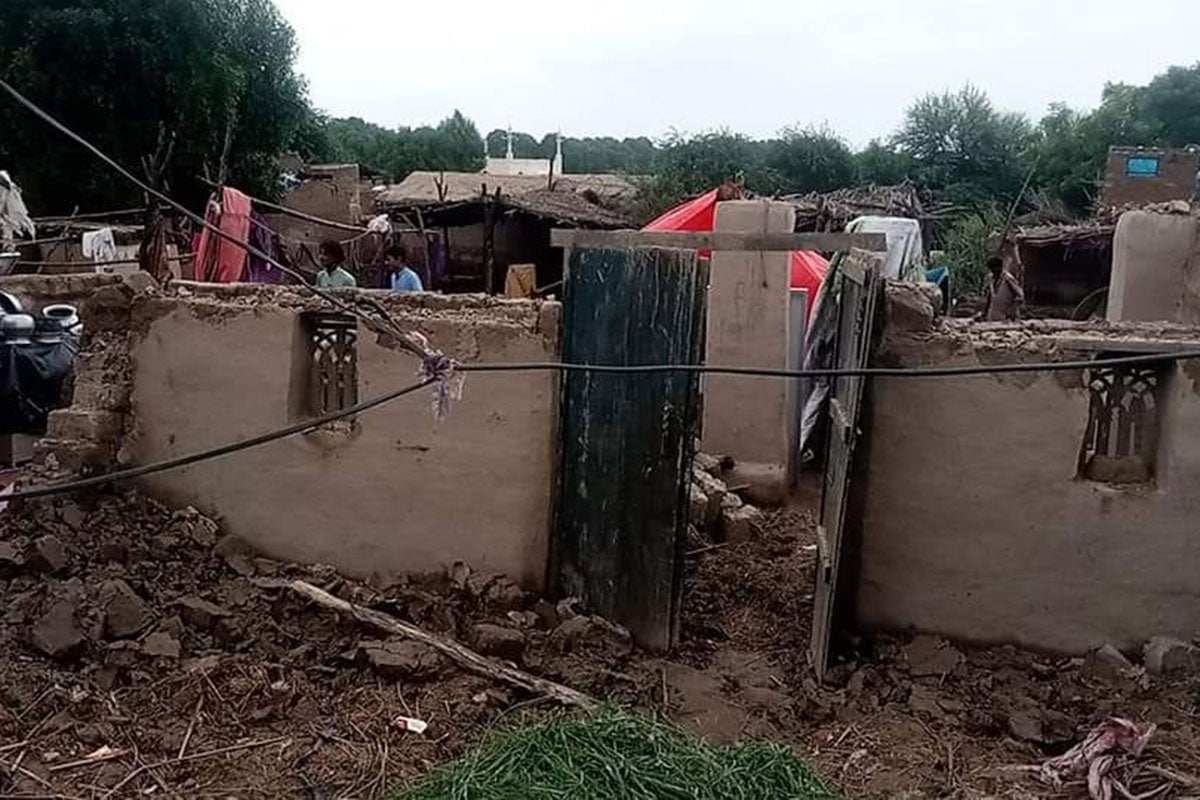
Image
A view of a flood-damaged dwelling in Pakistan, August 2022. Photo courtesy of Rozan

Catastrophic flooding in Pakistan that began in mid-2022 has killed over 1,500 people, displaced nearly 8 million, and left countless more in areas still submerged and lacking shelter, food, clean water and medicine. Amid the disaster, women and girls are facing additional risks to their safety.

“The destruction of infrastructure and the lack of global resources have made it extremely difficult [...] to reach far-flung areas, and the floods have jeopardized medical care systems and community support, which [leaves] women and girls at increased risk of violence,” explains Fouzia.

Funded by the UN Trust Fund to End Violence against Women (UN Trust Fund), Rozan runs a project in the Hyderabad and Sukkur districts of Pakistan to improve institutional support for women survivors of domestic violence when they leave temporary safe shelters. The project focuses on building the capacity of service providers, enabling them to offer specialist support services including shelter; medical, legal, and psychological aid; and vocational training that can help women survivors find job opportunities and set up their own businesses post-shelter.

Since 2019, the women-led organization has also conducted awareness-raising campaigns to transform harmful perceptions of survivors and ensure that they can safely return to their communities. And the Rozan team has trained 72 service providers on ethical guidelines and protocols, better equipping them to work with survivors.

But the destruction of the floods has severely disrupted Rozan’s activities and services. “It has been extremely difficult for community-based organizations, who understand local situations and challenges, to address the specific needs of women and girls”, says Fouzia.

As the flooding reduces available support services, it’s also driving increased demand for them. Heightened tensions, fear and uncertainty coupled with loss of income are driving increased violence against women and girls—especially violence by intimate partners and other male family members. Cases of harassment and sexual violence have also been reported, fueled by disputes over food and other essential items. As food insecurity rises, young girls in particular are at higher risk of violence, including sexual exploitation and forced marriage “in exchange for money to buy food for the rest of the family”, Fouzia explains.

Support from the UN Trust Fund has enabled Rozan to lead flood relief drives based on assessments of the needs of women and girls, and to provide dignity kits and basic medical and survival supplies to communities settling in camps and temporary shelters. Rozan’s team of psychologists have also been providing emotional and psychosocial support to these communities, helping to address issues of stress and shock.

Despite its pervasiveness, violence against women is preventable. This 16 Days, we’re highlighting the programmes and initiatives making a difference in the lives of women and girls worldwide. Through education, advocacy, service provision and more, UN Women and partners are working to support survivors, bring perpetrators to justice and end gender-based violence once and for all. These impact stories prove that a better future is not only possible—it’s already being built.

The UN Trust Fund to End Violence against Women (UN Trust Fund), established in 1996 and managed by UN Women on behalf of the UN system, is the only global grant-giving mechanism dedicated to eradicating all forms of violence against women and girls. Since its establishment, the UN Trust Fund has awarded USD 215 million to 646 initiatives in 140 countries and territories. 

Topics

  • Ending violence against women and girls
  • Humanitarian action
  • Crisis response and recovery
  • Asia and the Pacific
  • Pakistan

Related content

Image
Image placeholder with UN Women logo (English) - 3:2 aspect ratio
Press briefing

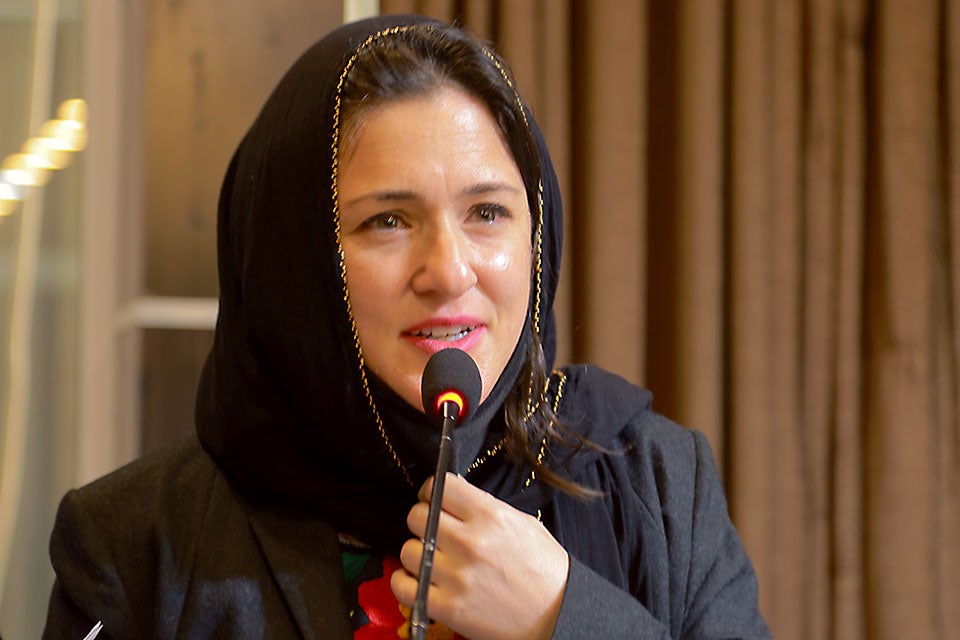
Press briefing at the United Nations by UN Women Special Representative in Afghanistan, Susan Ferguson

14 August 2026
Press briefing at the United Nations by UN Women Special Representative in Afghanistan, Susan Ferguson
Image
A portrait of an Afghan woman in silhouette
Press release

Five years after the Taliban takeover: the normalization of the exclusion of women and girls in Afghanistan

12 August 2026
Five years after the Taliban takeover: the normalization of the exclusion of women and girls in Afghanistan
Image
Women pose in front of a bus with the Born Perfect campaign banner
Feature

Inside Liberia’s campaign to end female genital mutilation (FGM)

10 August 2026
Inside Liberia’s campaign to end female genital mutilation (FGM)

Footer menu-HQ

  • News and stories
  • Resources
  • What we do
  • How we work
  • Where we are
  • Partnerships
  • Employment
  • Procurement
  • Contact us
  • Executive Board
  • Commission on the Status of Women

Donate button menu [Footer tablet]

  • Donate

Donate button menu [Footer]

  • Donate

Social media menu

  • Facebook
  • Twitter
  • LinkedIn
  • Flickr
  • YouTube
  • Instagram
UN Women - For all women and girls

Footer bottom [Menu]

  • Copyright
  • Information security
  • Privacy notice
  • Report wrongdoing
  • Terms of use
Share this page
  • Share to Facebook
  • Share to Twitter
  • Share to LinkedIn
  • Share to E-mail

Or copy link