
Universal menu

  • Global
  • Regions
    • Africa
    • Americas and the Caribbean
    • Arab States
    • Asia and the Pacific
    • Europe and Central Asia
  • Knowledge
  • Data
  • Training
  • Transparency
UN Women - For all women and girls

Main Navigation-HQ

  • Who we are
    • About us
      • About UN Women
      • Business model
      • Guiding documents
      • Worldwide presence
    • Leadership
      • Governance structure
      • Executive leadership
      • Executive Board
      • Accountability
    • Work with us
      • Employment
      • Procurement
      • Calls for proposals
      • Contact us
      • UN Women Strategic Plan 2026–2029
      • UN Women Strategic Plan 2026–2029 - social media image
        UN Women Strategic Plan 2026–2029
  • What we do
    • Focus areas
      • Ending violence against women
      • Peace and security
      • Humanitarian action
      • Leadership and governance
      • Economic empowerment
      • Innovation and technology
      • Women with disabilities
      • Youth
      • HIV and AIDS
    • How we work
      • 2030 Agenda for Sustainable Development
      • Commission on the Status of Women
      • Gender parity in the UN system
      • Intergovernmental support
      • Partnerships
      • Research and data
      • Training Centre
      • Trust funds
      • UN system coordination
      • Gender Equality Accelerators
      • Gender Equality Accelerators artwork
        Gender Equality Accelerators
  • News and stories
    • Latest
      • News
      • Articles and explainers
      • In focus
    • Media center
      • Press materials
      • Media contacts
      • Explainer: Why are women so exhausted? Care work and the mental load
      • Two adults stand at a table changing diapers on baby dolls, with laundry hanging on a clothesline behind them in a home setting.
        Explainer: Why are women so exhausted? Care work and the mental load
      • Press release: Aid cuts dismantle women’s organizations working in humanitarian crises
      • A young Ugandan woman sits with another local woman to talk
        Press release: Aid cuts dismantle women’s organizations working in humanitarian crises
  • Digital library
    • Resources
      • Publications
      • Annual reports
      • Progress of the world’s women
      • World survey on the role of women in development
      • The gender snapshot
    • GenderTerm
      • GenderTerm
      • Reprint permissions
      • UN Women Highlights 2025–2026
      • A smiling woman.
        UN Women Highlights 2025–2026
      • The gender snapshot 2025
      • gender snapshot thumbnail transparent
        The gender snapshot 2025
  • Get involved
    • How to get involved
      • For ALL Women and Girls
      • International Women's Day
      • 16 Days of Activism to End Violence against Women and Girls
      • UNiTE! Campaign to End Violence against Women
      • Generation Equality
      • He for She
Ask AI
https://84e5cfacd5c7e99f9825edf344450c.1b.environment.api.powerplatform.com/powervirtualagents/botsbyschema/crad4_websiteQA/directline/token?api-version=2022-03-01-preview
1
-
Ask your question here
AI website assistant

Hello, how can I assist you?

AI chatbot responses may be incorrect. Always verify important information.

Donate button menu

Donate

Breadcrumb

  1. Home
  2. Explore Our Latest News
  3. Explore Our Latest News

Website survey

We want to know how we can improve your experience on this website. Completing this survey takes less than 5 minutes.

TAKE THE SURVEY
Press release

Two years of relentless conflict in Sudan have triggered the world’s worst humanitarian crisis for 6 million displaced women and girls

The number of people at risk of gender-based violence, including sexual violence, has tripled to over 12 million since the beginning of the war.

10 April 2025
  • Share to Facebook
  • Share to Twitter
  • Share to LinkedIn
  • Share to E-mail

New York / Port Sudan – Sudanese women and girls are bearing the brunt of a crisis that is entering its third year on April 15. Facing acute food insecurity, alarming rates of gender-based violence, and limited access to healthcare, education, and livelihood opportunities, they comprise most of the 12 million displaced people inside and outside the country.
Image
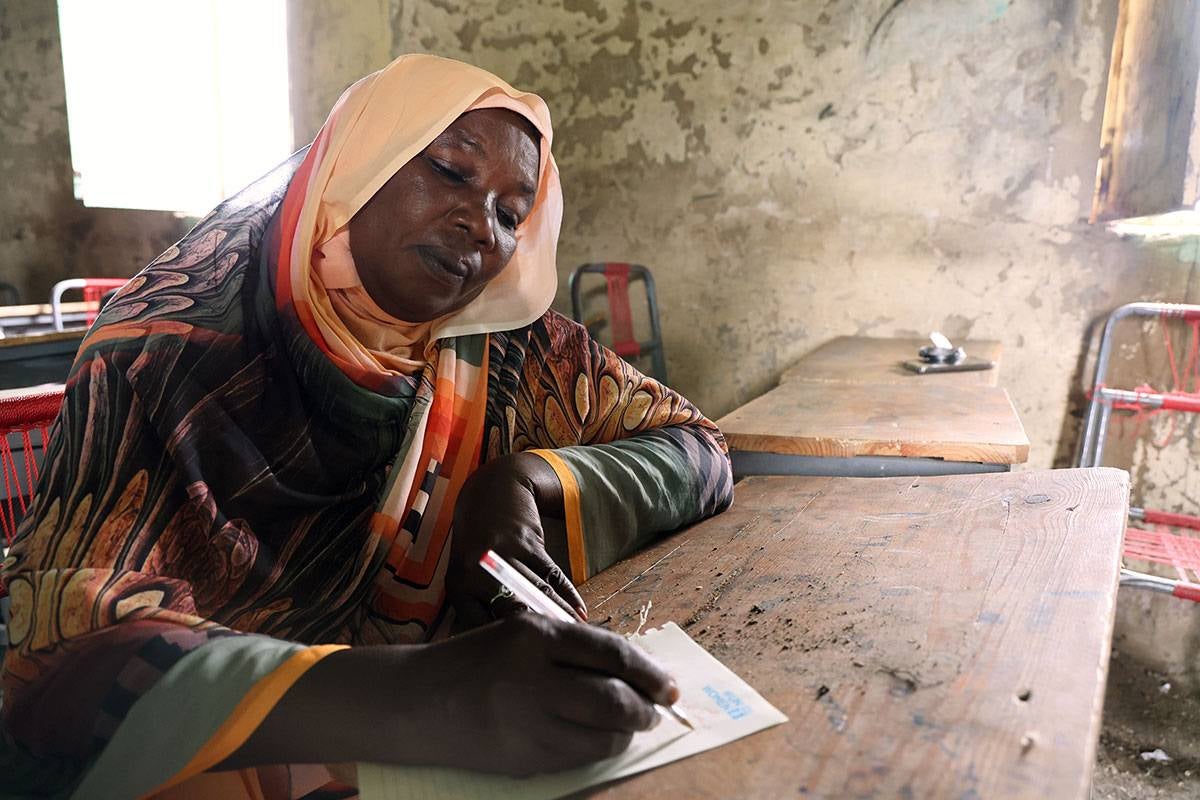
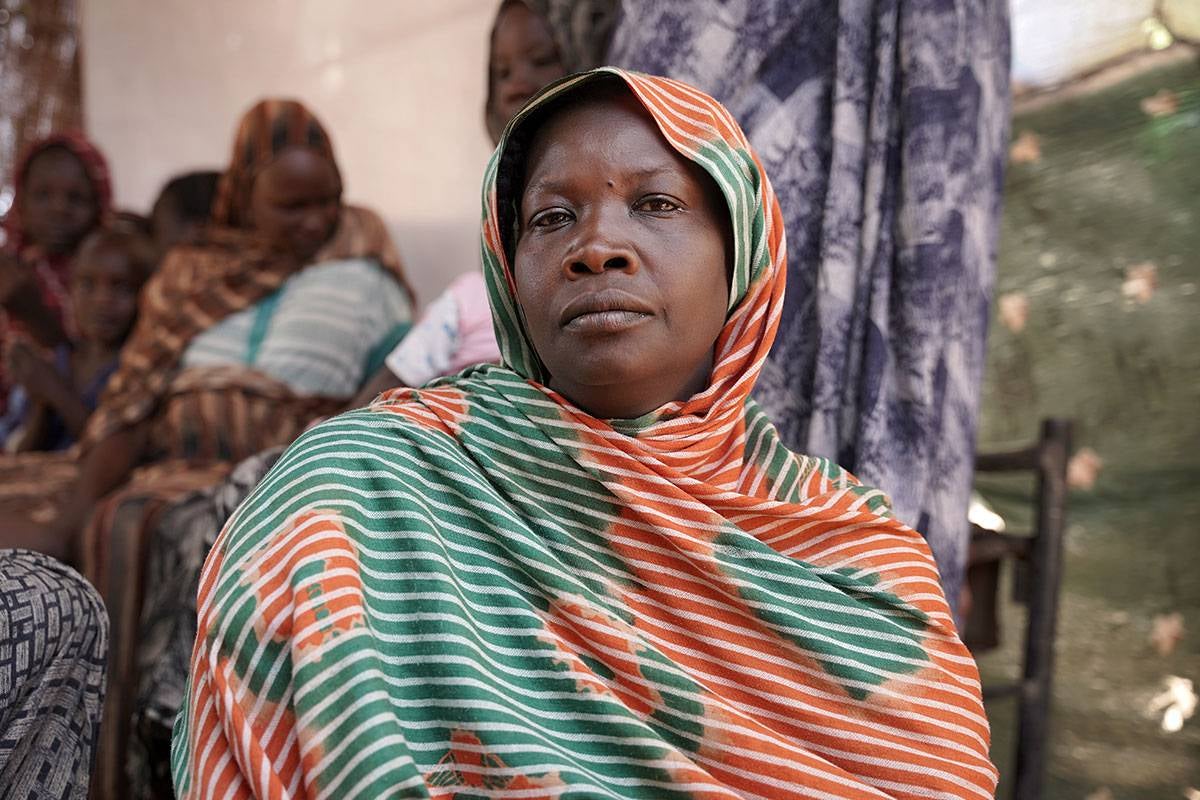
As part of the EU-funded project WE-RISE, led by UN Women and the Italian Agency for Development Cooperation, Women in Eastern Sudan received farm inputs, training on value chain transformation, marketing, women’s rights, violence against women, and education. October 2024. Photo: UN Women / Muna Elsadaty
As part of the EU-funded project WE-RISE, led by UN Women and the Italian Agency for Development Cooperation,
Women in Eastern Sudan received farm inputs, training on value chain transformation, marketing, women’s rights, violence against women, and education. October 2024. Photo: UN Women / Muna Elsadaty.
As part of the EU-funded project WE-RISE, led by UN Women and the Italian Agency for Development Cooperation, Women in Eastern Sudan received farm inputs, training on value chain transformation, marketing, women’s rights, violence against women, and education. October 2024. Photo: UN Women / Muna Elsadaty.

In less than two years, the number of people at risk of gender-based violence has tripled to 12.1 million. Cases of conflict-related sexual violence remain hugely under-reported, but evidence points to its systematic use as a weapon of war. Amid the escalating conflict, women and girls are facing acute levels of food insecurity and a worsening hunger crisis in most impacted areas, given their limited access to food, essential goods, and services.

With 80 per cent of hospitals in conflict-affected areas not functioning, maternal deaths have spiked, and women’s access to sexual and reproductive health care is hampered. 80 per cent of displaced women lack access to clean water due to affordability, safety concerns, and distance.

Despite these challenges, women have stepped up as key responders and peace champions, and are demanding 50 per cent of representation at negotiation tables, guided by the Kampala Feminist Declaration, a vital blueprint set by 49 women-led groups.

“Women in Sudan are enduring the gravest forms of violence—particularly sexual violence—while being systematically excluded from peace processes,” said Anna Mutavati, UN Women Regional Director for East and Southern Africa. “This exclusion persists despite compelling evidence of their transformative role in shaping Sudan’s political landscape. Their strength is extraordinary, but they cannot and should not be left to navigate this crisis alone. We urge all stakeholders—governments, donors, the international community—to act decisively: end the conflict, amplify women’s voices in peacebuilding, and deliver justice. Sudanese women deserve not merely survival, but the dignity to rebuild and thrive.”

Over the past two years, UN Women has partnered with more than 60 women-led organizations to reach over 15,000 women in some of Sudan’s most affected areas—providing household essentials, critical services and skills training. Through programmes supported by the Women’s Peace and Humanitarian Fund (WPHF), displaced women have accessed safe shelter, mental health care, and legal aid, while also gaining access to key spaces to have their voices heard in local and international arenas. Yet the needs are vast, and more funding is crucial to expand support.

UN Women urgently calls for peace restoration and an immediate end to all forms of gender-based violence and accountability for perpetrators. Local women’s organizations must receive sufficient resources to protect and empower their communities, and women’s voices must be front and center in every peace negotiation. By working together and placing women at the heart of recovery, Sudan can begin to heal and move toward a more just and stable future.


This press release is available in Arabic here. 
More on the Sudan war

Sudan’s civil war is having a devastating impact on women and girls. As gender-based violence surges and essential services collapse, this In Focus breaks down how the conflict is affecting women and girls, and what UN Women is doing to support them.

Read more
Image
Nassim, 28 years and a mother of five children at the Tambasi centre for displaced families in El Fasher, North Darfur. Photo: UNICEF/UNI569483/Mohamed Zakaria

Topics

  • Humanitarian action
  • Crisis response and recovery
  • Peace and security
  • Sexual violence in conflict
  • Africa
  • Sudan

Related content

Image
A woman looks out at rubble from inside a ruined building.
Press release

Women head one in four households in Gaza as war tears families apart and reshapes household structures

8 September 2026
Women head one in four households in Gaza as war tears families apart and reshapes household structures
Image
UNWomen_Placeholder
Press briefing

Killing of Palestinians in Gaza has been so widespread that women now head one in four households, double the pre-October 2023 rate

8 September 2026
Killing of Palestinians in Gaza has been so widespread that women now head one in four households, double the pre-October 2023 rate
Image
 A woman sits amid the ruins of a building.
Feature

No homes and no support: The women in Gaza trying to rebuild their lives

8 September 2026
No homes and no support: The women in Gaza trying to rebuild their lives

Footer menu-HQ

  • News and stories
  • Resources
  • What we do
  • How we work
  • Where we are
  • Partnerships
  • Employment
  • Procurement
  • Contact us
  • Executive Board
  • Commission on the Status of Women

Donate button menu [Footer tablet]

  • Donate

Donate button menu [Footer]

  • Donate

Social media menu

  • Facebook
  • Twitter
  • LinkedIn
  • Flickr
  • YouTube
  • Instagram
UN Women - For all women and girls

Footer bottom [Menu]

  • Copyright
  • Information security
  • Privacy notice
  • Report wrongdoing
  • Terms of use
Share this page
  • Share to Facebook
  • Share to Twitter
  • Share to LinkedIn
  • Share to E-mail

Or copy link