
Universal menu

  • Global
  • Regions
    • Africa
    • Americas and the Caribbean
    • Arab States
    • Asia and the Pacific
    • Europe and Central Asia
  • Knowledge
  • Data
  • Training
  • Transparency
UN Women - For all women and girls

Main Navigation-HQ

  • Who we are
    • About us
      • About UN Women
      • Business model
      • Guiding documents
      • Worldwide presence
    • Leadership
      • Governance structure
      • Executive leadership
      • Executive Board
      • Accountability
    • Work with us
      • Employment
      • Procurement
      • Calls for proposals
      • Contact us
      • UN Women Strategic Plan 2026–2029
      • UN Women Strategic Plan 2026–2029 - social media image
        UN Women Strategic Plan 2026–2029
  • What we do
    • Focus areas
      • Ending violence against women
      • Peace and security
      • Humanitarian action
      • Leadership and governance
      • Economic empowerment
      • Innovation and technology
      • Women with disabilities
      • Youth
      • HIV and AIDS
    • How we work
      • 2030 Agenda for Sustainable Development
      • Commission on the Status of Women
      • Gender parity in the UN system
      • Intergovernmental support
      • Partnerships
      • Research and data
      • Training Centre
      • Trust funds
      • UN system coordination
      • Gender Equality Accelerators
      • Gender Equality Accelerators artwork
        Gender Equality Accelerators
  • News and stories
    • Latest
      • News
      • Articles and explainers
      • In focus
    • Media center
      • Press materials
      • Media contacts
      • Explainer: Why are women so exhausted? Care work and the mental load
      • Two adults stand at a table changing diapers on baby dolls, with laundry hanging on a clothesline behind them in a home setting.
        Explainer: Why are women so exhausted? Care work and the mental load
      • Press release: Aid cuts dismantle women’s organizations working in humanitarian crises
      • A young Ugandan woman sits with another local woman to talk
        Press release: Aid cuts dismantle women’s organizations working in humanitarian crises
  • Digital library
    • Resources
      • Publications
      • Annual reports
      • Progress of the world’s women
      • World survey on the role of women in development
      • The gender snapshot
    • GenderTerm
      • GenderTerm
      • Reprint permissions
      • UN Women Highlights 2025–2026
      • A smiling woman.
        UN Women Highlights 2025–2026
      • The gender snapshot 2025
      • gender snapshot thumbnail transparent
        The gender snapshot 2025
  • Get involved
    • How to get involved
      • For ALL Women and Girls
      • International Women's Day
      • 16 Days of Activism to End Violence against Women and Girls
      • UNiTE! Campaign to End Violence against Women
      • Generation Equality
      • He for She
Ask AI
https://84e5cfacd5c7e99f9825edf344450c.1b.environment.api.powerplatform.com/powervirtualagents/botsbyschema/crad4_websiteQA/directline/token?api-version=2022-03-01-preview
1
-
Ask your question here
AI website assistant

Hello, how can I assist you?

AI chatbot responses may be incorrect. Always verify important information.

Donate button menu

Donate

Breadcrumb

  1. Home
  2. Explore Our Latest News
  3. Explore Our Latest News

Website survey

We want to know how we can improve your experience on this website. Completing this survey takes less than 5 minutes.

TAKE THE SURVEY
Feature

Promoting innovation to shatter gender stereotypes

1 March 2023
  • Share to Facebook
  • Share to Twitter
  • Share to LinkedIn
  • Share to E-mail

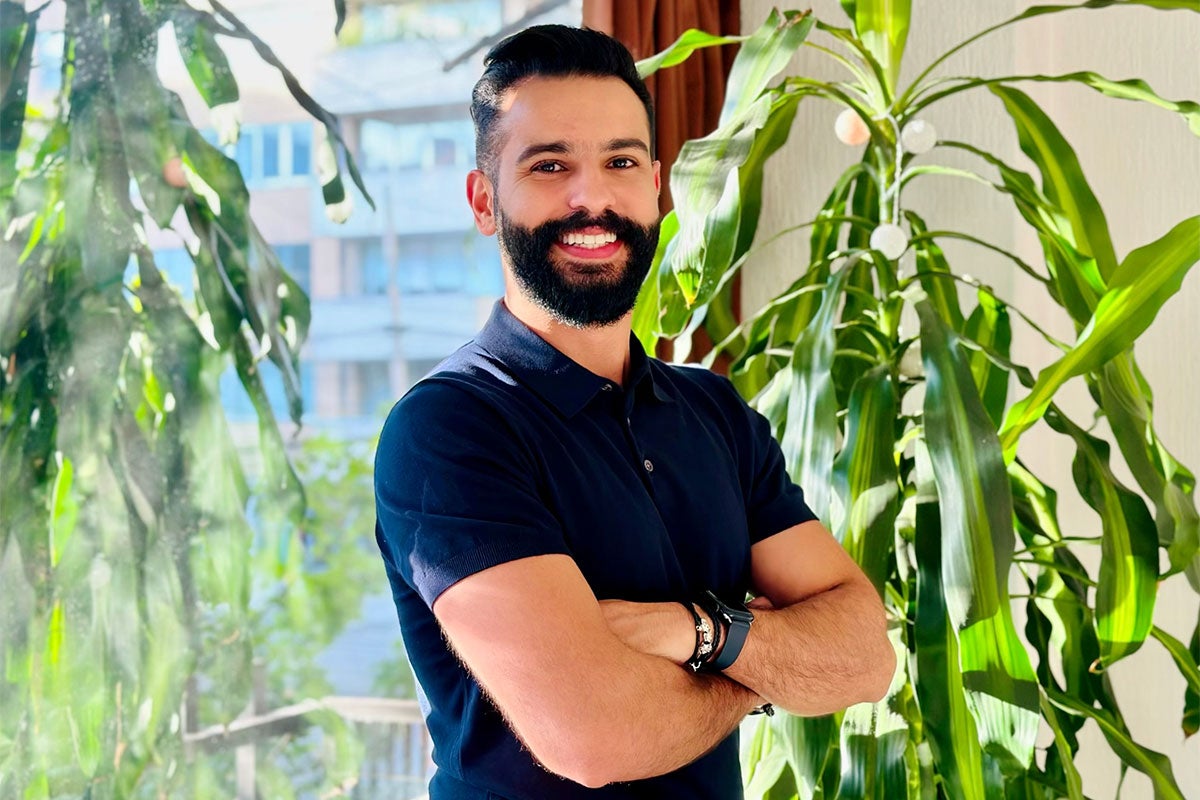
Laith Abu-Taleb is a 28-year-old gender equality activist and tech entrepreneur from Jordan. A youth mobilization specialist for UN Women’s Arab States regional office, he believes that integrating the unique knowledge and experience of young people into the tech sphere is a powerful way to drive not only technological innovation but also social progress. Laith is the co-founder of Arabic HeForShe, a movement to engage men in the fight for gender equality, and the co-developer of WeRise, a UN Women-supported app that promotes women’s empowerment through gamification. 
Image
Laith Abu-Taleb, from Jordan, is a 28-year-old gender equality activist and the co-developer of WeRise. Photo courtesy of Laith Abu-Taleb.

Boys’ club

In the digital age, the real-world status of women and girls has become indivisible from its online counterpart. “We are living in 2023,” Laith emphasizes. “We can’t separate gender equality and technology.”   

And yet women remain systematically excluded from technology and innovation. This means not only missing out on high-paying jobs, but also on the chance to shape the digital world in which we are increasingly living. Though targeted interventions have opened new doors for women and girls, many still remain closed—due, Laith says, to the lingering power of gendered norms.  

“If we go to the root, when we are talking about science and technology, the stereotyping in our communities limits women’s participation and education in those fields,” Laith explains. So when it comes to expanding women’s influence in the tech sector, “we don’t even have the base,” he says.  

In his work with HeForShe, Laith has experienced first-hand the resistance to changing such norms. The taboo around the topic has made it difficult even for those who do believe in gender equality to speak up: many of his fellow activists did not want to be publicly associated with the movement, for fear of judgement. “They believed that, ‘yes, we should be part of the movement, but I don't want any online presence because I don't want my family and my neighbors to talk about me in a negative way,’” Laith explains.  

Status update

But, with time and perseverance, Laith has seen these attitudes start to change. “They are not afraid anymore,” he says. “They are proud when they are talking about gender equality.”  

And that, he emphasizes, is in large part thanks to the power of digital activism. “We start normalizing the idea of gender equality by sharing knowledge,” he says. When he started working with HeForShe, it was difficult to reach people, so the team turned to social media—and eventually to other tech as well—to grow their movement.  

This was the motivation behind the development of WeRise. The app, now available on iOS and Android in Arabic, English and French, offers users a digital platform with gender equality-related games, quizzes, forums and other interactive content. “It’s a safe space for everyone to talk and to learn more about gender equality,” he says.  

Laith sees technology as an entrance point for marginalized communities to gain visibility, support and—ultimately—power. You don’t need a technical background, he says, to tap into its potential: “By using your phone, you have access to technology. By having an account on Instagram, you have access to technology.” 

Chain reaction

“I believe that every one of us should have an impact,” Laith says. Start by educating yourself and those around you: “we can do this while we are having dinner with our friends or breakfast with our families”, or by speaking out through social media. Maybe you only reach one person, “but this one person can influence another one and another one and then another one,” he says. “So you are making a chain of impact.”  

Topics

  • Gender stereotypes
  • Innovation and technology
  • Information and communications technology (ICT)
  • Arab States/North Africa
  • Jordan

Related content

Image
UNWomen_Placeholder
Press briefing

Killing of Palestinians in Gaza has been so widespread that women now head one in four households, double the pre-October 2023 rate

8 September 2026
Killing of Palestinians in Gaza has been so widespread that women now head one in four households, double the pre-October 2023 rate
Image
A woman looks out at rubble from inside a ruined building.
Press release

Women head one in four households in Gaza as war tears families apart and reshapes household structures

8 September 2026
Women head one in four households in Gaza as war tears families apart and reshapes household structures
Image
 A woman sits amid the ruins of a building.
Feature

No homes and no support: The women in Gaza trying to rebuild their lives

8 September 2026
No homes and no support: The women in Gaza trying to rebuild their lives

Footer menu-HQ

  • News and stories
  • Resources
  • What we do
  • How we work
  • Where we are
  • Partnerships
  • Employment
  • Procurement
  • Contact us
  • Executive Board
  • Commission on the Status of Women

Donate button menu [Footer tablet]

  • Donate

Donate button menu [Footer]

  • Donate

Social media menu

  • Facebook
  • Twitter
  • LinkedIn
  • Flickr
  • YouTube
  • Instagram
UN Women - For all women and girls

Footer bottom [Menu]

  • Copyright
  • Information security
  • Privacy notice
  • Report wrongdoing
  • Terms of use
Share this page
  • Share to Facebook
  • Share to Twitter
  • Share to LinkedIn
  • Share to E-mail

Or copy link