
Universal menu

  • Global
  • Regions
    • Africa
    • Americas and the Caribbean
    • Arab States
    • Asia and the Pacific
    • Europe and Central Asia
  • Knowledge
  • Data
  • Training
  • Transparency
UN Women - For all women and girls

Main Navigation-HQ

  • Who we are
    • About us
      • About UN Women
      • Business model
      • Guiding documents
      • Worldwide presence
    • Leadership
      • Governance structure
      • Executive leadership
      • Executive Board
      • Accountability
    • Work with us
      • Employment
      • Procurement
      • Calls for proposals
      • Contact us
      • UN Women Strategic Plan 2026–2029
      • UN Women Strategic Plan 2026–2029 - social media image
        UN Women Strategic Plan 2026–2029
  • What we do
    • Focus areas
      • Ending violence against women
      • Peace and security
      • Humanitarian action
      • Leadership and governance
      • Economic empowerment
      • Innovation and technology
      • Women with disabilities
      • Youth
      • HIV and AIDS
    • How we work
      • 2030 Agenda for Sustainable Development
      • Commission on the Status of Women
      • Gender parity in the UN system
      • Intergovernmental support
      • Partnerships
      • Research and data
      • Training Centre
      • Trust funds
      • UN system coordination
      • Gender Equality Accelerators
      • Gender Equality Accelerators artwork
        Gender Equality Accelerators
  • News and stories
    • Latest
      • News
      • Articles and explainers
      • In focus
    • Media center
      • Press materials
      • Media contacts
      • Explainer: Why are women so exhausted? Care work and the mental load
      • Two adults stand at a table changing diapers on baby dolls, with laundry hanging on a clothesline behind them in a home setting.
        Explainer: Why are women so exhausted? Care work and the mental load
      • Press release: Aid cuts dismantle women’s organizations working in humanitarian crises
      • A young Ugandan woman sits with another local woman to talk
        Press release: Aid cuts dismantle women’s organizations working in humanitarian crises
  • Digital library
    • Resources
      • Publications
      • Annual reports
      • Progress of the world’s women
      • World survey on the role of women in development
      • The gender snapshot
    • GenderTerm
      • GenderTerm
      • Reprint permissions
      • UN Women Highlights 2025–2026
      • A smiling woman.
        UN Women Highlights 2025–2026
      • The gender snapshot 2025
      • gender snapshot thumbnail transparent
        The gender snapshot 2025
  • Get involved
    • How to get involved
      • For ALL Women and Girls
      • International Women's Day
      • 16 Days of Activism to End Violence against Women and Girls
      • UNiTE! Campaign to End Violence against Women
      • Generation Equality
      • He for She
Ask AI
https://84e5cfacd5c7e99f9825edf344450c.1b.environment.api.powerplatform.com/powervirtualagents/botsbyschema/crad4_websiteQA/directline/token?api-version=2022-03-01-preview
1
-
Ask your question here
AI website assistant

Hello, how can I assist you?

AI chatbot responses may be incorrect. Always verify important information.

Donate button menu

Donate

Breadcrumb

  1. Home
  2. Explore Our Latest News
  3. Explore Our Latest News

Website survey

We want to know how we can improve your experience on this website. Completing this survey takes less than 5 minutes.

TAKE THE SURVEY
Feature

UN Women and partners fight gender-based violence by helping to change social norms and attitudes in Ethiopia

17 August 2023
  • Share to Facebook
  • Share to Twitter
  • Share to LinkedIn
  • Share to E-mail

Mengistie Tegenie’s four sisters were married before the age of 18. Bright and academically gifted, their schooling—like that of many young women in Ethiopia—stopped after their arranged marriages.

During his first year at university, Tegenie says he felt guilty that he was able to continue his studies while his sisters were not. For many young women, he adds, child marriage doesn’t just block them from career opportunities; it comes with the added risk of gender-based violence (GBV).

 “I saw the impact of child marriage on all our lives, especially for women and girls who are disproportionately affected by violence. I knew it’s the men who also must speak up; that I’d have to be the one to make the change.”
Image
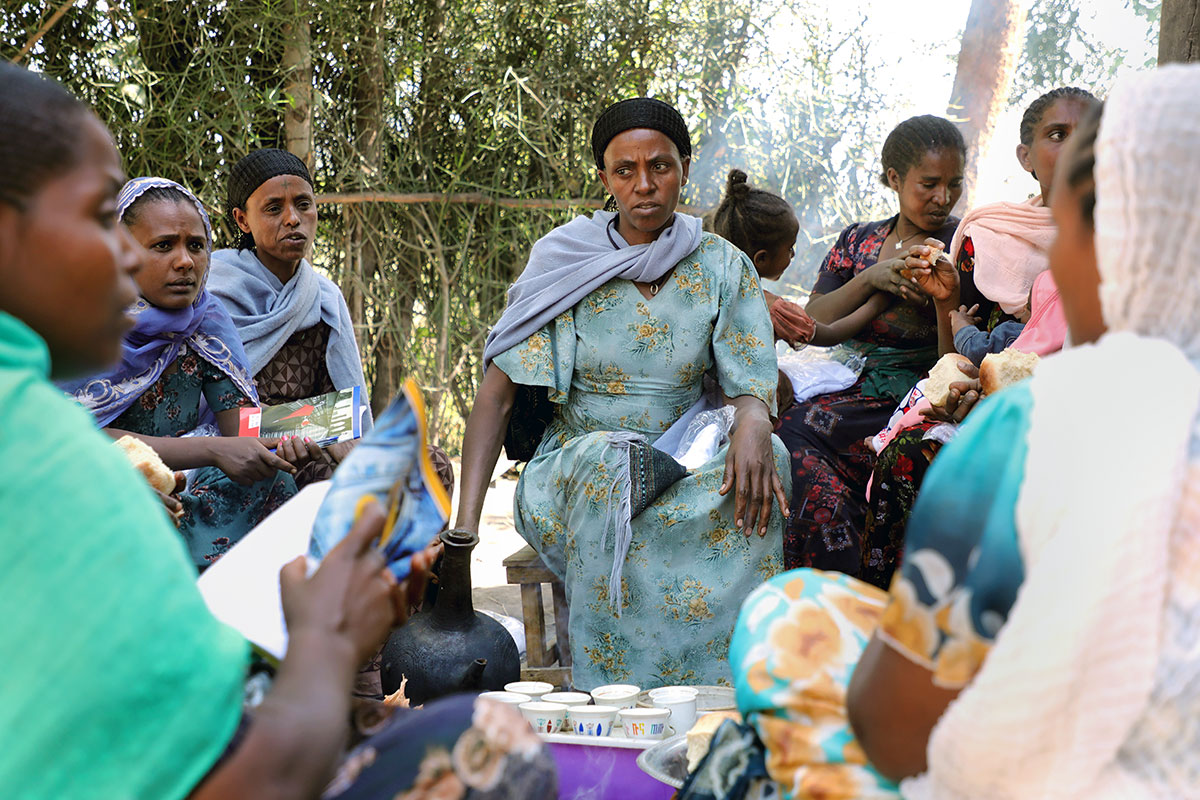
Women gather for coffee in Guba Lafto in the Amhara region of Ethiopia. These “coffee corner” events gathered conflict-affected women and referred women and girls in need to service providers who could offer psychosocial, legal, and medical support. Photo: UN Women.

Today, Tegenie, a GBV specialist for Norwegian Church Aid, has dedicated his life to ending child marriage and violence against women.

These threats, Tegenie says, have only been growing more severe: GBV has spiked amid a brutal two-year conflict, drought, and the COVID-19 pandemic, which have trapped women and girls in vulnerable conditions. Child marriages have also more than doubled in the country's four hardest-hit regions.

In response, Tegenie and Norwegian Church Aid have partnered with UN Women and UNFPA to address attitudes and beliefs that perpetuate GBV and gender inequalities in several local Ethiopian communities. The initiative, started in 2021, is supported through a Central Emergency Relief Fund (CERF) global grant allocation on GBV prevention and response that has been implemented in six countries, including Ethiopia.

Changing social norms begins at the grassroots

To change social norms, Tegenie says, awareness raising must begin at the grassroots level. With support from UN Women, Norwegian Church Aid held community conversations led by trained facilitators to discuss the ramifications of child marriage and violence against women. At the end of the dialogue, community leaders were asked to make public declarations denouncing these practices and add sanctions and other consequences into local bylaws.

“We want to engage men and boys and change their attitudes about these practices. We want them to be aware of how it affects the lives of women and girls and engage in community efforts to end violence against women and girls,” Tegenie says.

Ultimately, he acknowledges, social norm change takes a long time and requires the buy-in of community leaders. In many regions of Ethiopia, that includes faith leaders, some of whom have been promoting harmful practices against women and girls.

Tegenie and Norwegian Church Aid provided trainings for 48 faith leaders across Orthodox, Protestant, and Islamic traditions and encouraged the country’s top religious councils to issue their own declarations stating that GBV and child marriage have no basis in their religions. “These religious institutions influence the parish priests, the pastors, in the grassroots communities. That’s what changes norms,” he says.

About the CERF Global Grant for Gender-based Violence Prevention and Response

The Central Emergency Response Fund (CERF) is a United Nations emergency facility established in 2005 to enable humanitarian responders to deliver life-saving assistance whenever and wherever crises strike. In 2021, UN Women and the United Nations Population Fund (UNFPA) were allocated USD 25 million by the CERF Global Grant to strengthen the response to and prevention of gender-based violence in emergencies.

Topics

  • Ending violence against women and girls
  • Anti-violence interventions
  • Child marriage
  • Harmful practices
  • Gender equality and women’s empowerment
  • Men and boys (masculinity)
  • Humanitarian action
  • Crisis response and recovery
  • Peace and security
  • Post-conflict recovery
  • Africa
  • Ethiopia

Related content

Image
UNWomen_Placeholder
Statement

A year since Afghan women staff barred from entering United Nations premises across the country

7 September 2026
A year since Afghan women staff barred from entering United Nations premises across the country
Image
Sima Bahous and Walid Masri shake hands
News

UN Women Executive Director concludes three-day visit to Jordan

3 September 2026
UN Women Executive Director concludes three-day visit to Jordan
Image
A family sits in the back of a truck, surrounded by their belongings
Feature

How conflict is experienced across three generations of Lebanese women

2 September 2026
How conflict is experienced across three generations of Lebanese women

Footer menu-HQ

  • News and stories
  • Resources
  • What we do
  • How we work
  • Where we are
  • Partnerships
  • Employment
  • Procurement
  • Contact us
  • Executive Board
  • Commission on the Status of Women

Donate button menu [Footer tablet]

  • Donate

Donate button menu [Footer]

  • Donate

Social media menu

  • Facebook
  • Twitter
  • LinkedIn
  • Flickr
  • YouTube
  • Instagram
UN Women - For all women and girls

Footer bottom [Menu]

  • Copyright
  • Information security
  • Privacy notice
  • Report wrongdoing
  • Terms of use
Share this page
  • Share to Facebook
  • Share to Twitter
  • Share to LinkedIn
  • Share to E-mail

Or copy link