
Universal menu

  • Global
  • Regions
    • Africa
    • Americas and the Caribbean
    • Arab States
    • Asia and the Pacific
    • Europe and Central Asia
  • Knowledge
  • Data
  • Training
  • Transparency
UN Women - For all women and girls

Main Navigation-HQ

  • Who we are
    • About us
      • About UN Women
      • Business model
      • Guiding documents
      • Worldwide presence
    • Leadership
      • Governance structure
      • Executive leadership
      • Executive Board
      • Accountability
    • Work with us
      • Employment
      • Procurement
      • Calls for proposals
      • Contact us
      • UN Women Strategic Plan 2026–2029
      • UN Women Strategic Plan 2026–2029 - social media image
        UN Women Strategic Plan 2026–2029
  • What we do
    • Focus areas
      • Ending violence against women
      • Peace and security
      • Humanitarian action
      • Leadership and governance
      • Economic empowerment
      • Innovation and technology
      • Women with disabilities
      • Youth
      • HIV and AIDS
    • How we work
      • 2030 Agenda for Sustainable Development
      • Commission on the Status of Women
      • Gender parity in the UN system
      • Intergovernmental support
      • Partnerships
      • Research and data
      • Training Centre
      • Trust funds
      • UN system coordination
      • Gender Equality Accelerators
      • Gender Equality Accelerators artwork
        Gender Equality Accelerators
  • News and stories
    • Latest
      • News
      • Articles and explainers
      • In focus
    • Media center
      • Press materials
      • Media contacts
      • Explainer: Why are women so exhausted? Care work and the mental load
      • Two adults stand at a table changing diapers on baby dolls, with laundry hanging on a clothesline behind them in a home setting.
        Explainer: Why are women so exhausted? Care work and the mental load
      • Press release: Aid cuts dismantle women’s organizations working in humanitarian crises
      • A young Ugandan woman sits with another local woman to talk
        Press release: Aid cuts dismantle women’s organizations working in humanitarian crises
  • Digital library
    • Resources
      • Publications
      • Annual reports
      • Progress of the world’s women
      • World survey on the role of women in development
      • The gender snapshot
    • GenderTerm
      • GenderTerm
      • Reprint permissions
      • UN Women Highlights 2025–2026
      • A smiling woman.
        UN Women Highlights 2025–2026
      • The gender snapshot 2025
      • gender snapshot thumbnail transparent
        The gender snapshot 2025
  • Get involved
    • How to get involved
      • For ALL Women and Girls
      • International Women's Day
      • 16 Days of Activism to End Violence against Women and Girls
      • UNiTE! Campaign to End Violence against Women
      • Generation Equality
      • He for She
Ask AI
https://84e5cfacd5c7e99f9825edf344450c.1b.environment.api.powerplatform.com/powervirtualagents/botsbyschema/crad4_websiteQA/directline/token?api-version=2022-03-01-preview
1
-
Ask your question here
AI website assistant

Hello, how can I assist you?

AI chatbot responses may be incorrect. Always verify important information.

Donate button menu

Donate

Breadcrumb

  1. Home
  2. Explore Our Latest News
  3. Explore Our Latest News

Website survey

We want to know how we can improve your experience on this website. Completing this survey takes less than 5 minutes.

TAKE THE SURVEY
Feature

Survey shows high support for paternity leave across North Africa and Middle East

27 September 2023
  • Share to Facebook
  • Share to Twitter
  • Share to LinkedIn
  • Share to E-mail

A new UN Women survey has found high support for expanded paternity leave policies throughout the Middle East and North Africa, and for increasing fathers’ participation in childcare.

Researchers surveyed 1,154 people in governments, the private sector, and civil society organizations in Jordan, Lebanon, Morocco, Palestine, and Tunisia, none of which currently offer parental leave longer than 15 days.

The survey found that 86 per cent of those surveyed supported extending the duration of paternity leave in their countries. That high level of support is paired with the finding that 76 per cent of men surveyed believed they spent too little time with their children.

While this research shows there is a widespread appetite for new policies, the data also paint a complex picture.
Image
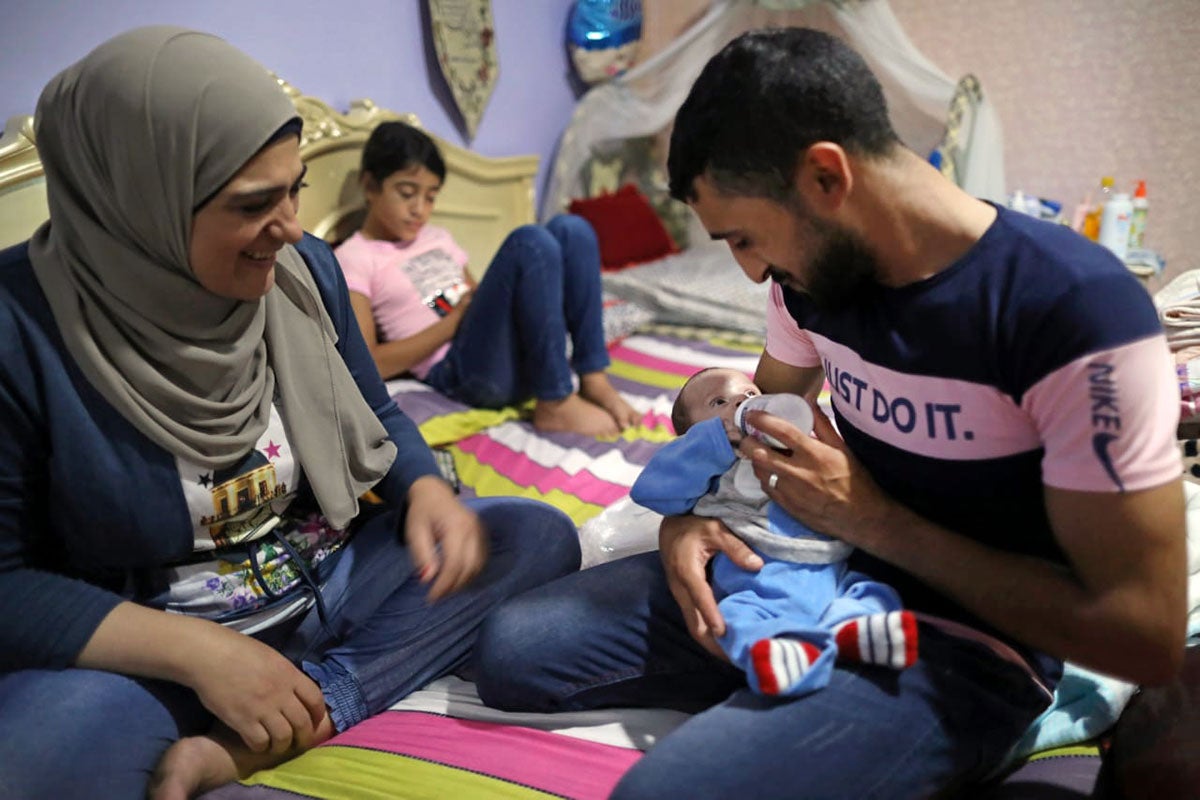
A man is seeing feeding a baby in Tyre, Lebanon, in 2020.
A man is seeing feeding bottled breastmilk to a baby in Tyre, Lebanon, in 2020. People across the Middle East and North Africa support longer paternity leave policies, a new UN Women study has found. Photo: UN Women/Marwan Tahtah

Perceptions out of sync with a more progressive reality

The survey found that 68 per cent of respondents believed that a woman would be positively treated in her workplace if she took leave to care for her children. However, despite the high level of de facto support for longer paternity leave, only 23 per cent believed a man would receive a similar positive reaction if he was to take paternity leave.

In Tunisia, 65 per cent of those surveyed supported the idea of equal parental leave for both mothers and fathers, but believed that only 16 per cent of their colleagues would feel the same way.

Tunisia’s gap was the largest of those five countries, but the same tendency was observed in them all: a high number of respondents supported equal leave, but doubted whether their colleagues would agree.

That means men could incorrectly assume that their peers have more traditional beliefs, and therefore misjudge the potential reaction if they used parental leave policies.

Burdens on women and men

None of the men surveyed in the study said that they were the primary caregivers for children in their households. Only 1 per cent of married men reported being their children’s primary caregiver, compared to 62 per cent of married women.

A previous UN Women study in the Arab States found that men in the region invested 1 hour in care for every 4.7 hours invested by women, the highest imbalance globally.

Social norms and structures about childcare have fostered an environment where “masculinity is considered an important element in assessing the role of men in childcare,” the study notes. It says that, while attitudes have shifted towards greater support for women’s paid work and participation in the public sphere, perspectives on the role of men and masculinity have not changed significantly.

“From day one, boys and girls are brought up with an image of masculinity that boxes men into one role: earning money”, said a Moroccan woman quoted in the report. But this too is becoming a burden, given the rising cost of living in the region.

Arab men have high levels of anxiety and depression, largely stemming from unrealistic expectations on their income needed to provide for both nuclear and extended families, according to an earlier UN Women study.

Wide support for prioritizing childcare policy

A majority of respondents (62 per cent) said they believe that the role of men in childcare should be placed on the national policy agenda.

Presently, Morocco offers the longest paternity leave of the five countries surveyed, at 15 days; Lebanon offers four days, but only for members of the military; Jordan and Palestine each offer three days; and Tunisia offers two.

Respondents in Palestine, Lebanon, and Jordan said the ideal paternity leave would last 30 days, while those in Tunisia said two months, and those in Morocco said three months.

The study also noted that many of those who oppose expanded paternity leave may not disagree with the policy but rather the implications “on government budgets or firms’ expenses”.

However, as Susanne Mikhail Eldhagen, Regional Director of UN Women for the Arab States, explains, increased parental leave seeks to “enable men to spend more time with their children, which in turn enables women’s participation in the paid labour force, hence increasing overall well-being of children as well as increasing the family income and consequently national economic and social development.”

The survey includes recommendations ranging from promoting public awareness on the benefits of men’s involvement in childcare to expanding childcare services and family-friendly policies in the workplace.

The study, “Knowledge, attitudes and practices of institutional actors on paternity leave and the role of men in childcare in the Middle East and North Africa region,” was undertaken by UN Women in partnership with the Arab World for Research and Development with support from the Swedish International Development Cooperation Agency.

Topics

  • Gender equality and women’s empowerment
  • Gender equality and inequality
  • Governance and national planning
  • Governance

Related content

Image
Sima Bahous and Walid Masri shake hands
News

UN Women Executive Director concludes three-day visit to Jordan

3 September 2026
UN Women Executive Director concludes three-day visit to Jordan
Image
A portrait of an Afghan woman in silhouette
Press release

Five years after the Taliban takeover: the normalization of the exclusion of women and girls in Afghanistan

12 August 2026
Five years after the Taliban takeover: the normalization of the exclusion of women and girls in Afghanistan
Image
Women sit together on the floor inside an indoor space, with a woman wearing a purple headscarf seated in the foreground.
Feature

Aid cuts, employment bans, movement restrictions: The triple threat to Afghan women

16 July 2026
Aid cuts, employment bans, movement restrictions: The triple threat to Afghan women

Footer menu-HQ

  • News and stories
  • Resources
  • What we do
  • How we work
  • Where we are
  • Partnerships
  • Employment
  • Procurement
  • Contact us
  • Executive Board
  • Commission on the Status of Women

Donate button menu [Footer tablet]

  • Donate

Donate button menu [Footer]

  • Donate

Social media menu

  • Facebook
  • Twitter
  • LinkedIn
  • Flickr
  • YouTube
  • Instagram
UN Women - For all women and girls

Footer bottom [Menu]

  • Copyright
  • Information security
  • Privacy notice
  • Report wrongdoing
  • Terms of use
Share this page
  • Share to Facebook
  • Share to Twitter
  • Share to LinkedIn
  • Share to E-mail

Or copy link