

Universal menu

  • Global
  • Regions
    • Africa
    • Americas and the Caribbean
    • Arab States
    • Asia and the Pacific
    • Europe and Central Asia
  • Knowledge
  • Data
  • Training
  • Transparency
UN Women - For all women and girls

Main Navigation-HQ

  • Who we are
    • About us
      • About UN Women
      • Business model
      • Guiding documents
      • Worldwide presence
    • Leadership
      • Governance structure
      • Executive leadership
      • Executive Board
      • Accountability
    • Work with us
      • Employment
      • Procurement
      • Calls for proposals
      • Contact us
      • UN Women Strategic Plan 2026–2029
      • UN Women Strategic Plan 2026–2029 - social media image
        UN Women Strategic Plan 2026–2029
  • What we do
    • Focus areas
      • Ending violence against women
      • Peace and security
      • Humanitarian action
      • Leadership and governance
      • Economic empowerment
      • Innovation and technology
      • Women with disabilities
      • Youth
      • HIV and AIDS
    • How we work
      • 2030 Agenda for Sustainable Development
      • Commission on the Status of Women
      • Gender parity in the UN system
      • Intergovernmental support
      • Partnerships
      • Research and data
      • Training Centre
      • Trust funds
      • UN system coordination
      • Gender Equality Accelerators
      • Gender Equality Accelerators artwork
        Gender Equality Accelerators
  • News and stories
    • Latest
      • News
      • Articles and explainers
      • In focus
    • Media center
      • Press materials
      • Media contacts
      • Explainer: Why are women so exhausted? Care work and the mental load
      • Two adults stand at a table changing diapers on baby dolls, with laundry hanging on a clothesline behind them in a home setting.
        Explainer: Why are women so exhausted? Care work and the mental load
      • Press release: Aid cuts dismantle women’s organizations working in humanitarian crises
      • A young Ugandan woman sits with another local woman to talk
        Press release: Aid cuts dismantle women’s organizations working in humanitarian crises
  • Digital library
    • Resources
      • Publications
      • Annual reports
      • Progress of the world’s women
      • World survey on the role of women in development
      • The gender snapshot
    • GenderTerm
      • GenderTerm
      • Reprint permissions
      • UN Women Highlights 2025–2026
      • A smiling woman.
        UN Women Highlights 2025–2026
      • The gender snapshot 2025
      • gender snapshot thumbnail transparent
        The gender snapshot 2025
  • Get involved
    • How to get involved
      • For ALL Women and Girls
      • International Women's Day
      • 16 Days of Activism to End Violence against Women and Girls
      • UNiTE! Campaign to End Violence against Women
      • Generation Equality
      • He for She
Ask AI
https://84e5cfacd5c7e99f9825edf344450c.1b.environment.api.powerplatform.com/powervirtualagents/botsbyschema/crad4_websiteQA/directline/token?api-version=2022-03-01-preview
1
-
Ask your question here
AI website assistant

Hello, how can I assist you?

AI chatbot responses may be incorrect. Always verify important information.

Donate button menu

Donate

Breadcrumb

  1. Home
  2. Explore Our Latest News
  3. Explore Our Latest News

Website survey

We want to know how we can improve your experience on this website. Completing this survey takes less than 5 minutes.

TAKE THE SURVEY
Feature

UN Women’s Oasis programme empowers Jordanian and Syrian women 

2 December 2023
  • Share to Facebook
  • Share to Twitter
  • Share to LinkedIn
  • Share to E-mail

[Also available in Arabic]

Since 2012, UN Women has established 22 centres across Jordan to provide Syrian refugees and vulnerable Jordanian women with safe, inclusive spaces.

Known as the Oasis programme, these centres have provided crucial cash-for-work, skill development, and early childhood services to more than 30,000 people, including many women with disabilities. The initiative focuses on addressing gender barriers, promoting economic empowerment, and enhancing protection against gender-based violence.
Image
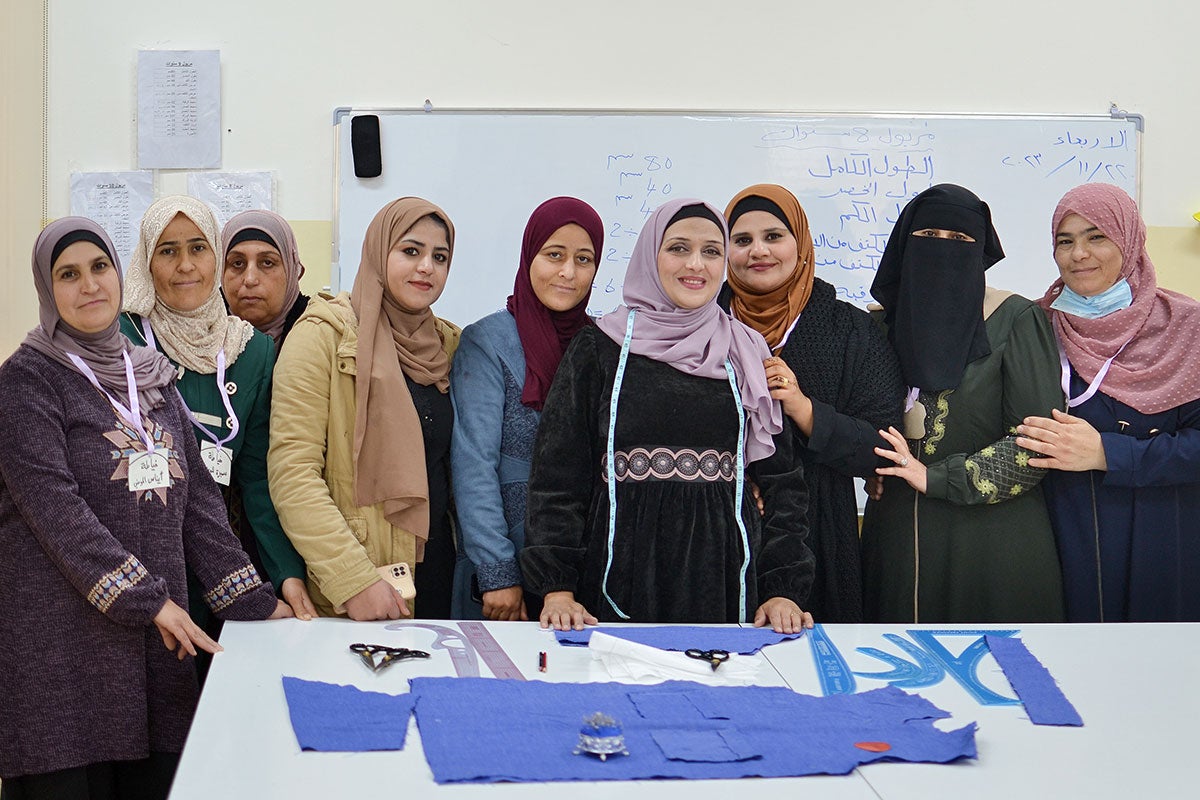
Participants in a tailoring class are seen at the UN Women Oasis Centre in Ajloun, Jordan.
Participants in a tailoring class are seen at the UN Women Oasis Centre in Ajloun, Jordan. Photo: UN Women/Bashar Al-Jabari

“Our aim is to enable women to participate in the labour market, confront societal violence, and emerge as leaders,” said Nidal Al-Hajjaj, Oasis’ Programme Manager. Al-Hajjaj has led the programme’s expansion from four centres at its launch to 18 throughout Jordan and four in the Zaatari and Azraq refugee camps.

The programme’s multifaceted approach, covering livelihood, protection, leadership building, and education, reflects Nidal’s aim to foster an environment conducive to transformative investments in women.

The programme’s success is further reflected in its contributions to social cohesion and gender sensitization within communities, integrating critical feedback to refine and augment its impact continually. Oasis centres embody the theme of this year’s 16 Days of Activism Against Gender-Based Violence campaign: “UNITE! Invest to prevent violence against women and girls.”

“The Oasis centres offer a safe space where women voice concerns and gain positive coping strategies”, said Hadeel Qunaibi, a protection officer at Oasis. Through interactive workshops and awareness sessions, women engage with human rights, gender-based violence, and protection mechanisms, all aligned with the campaign.

“It's more than workshops; it’s about community integration, creating an effect of empowered women equipped to face life’s responsibilities”, Qunaibi added.

Najwa Abu-Zaalan, a mother of four, took a six-month tailoring course at the Oasis centre in the city of Ajloun earlier this year. The course not only enhanced her skills but also helped her gain financial independence and self-confidence. Abu-Zaalan remains connected to Oasis, and now works as a trainer at the centre.

“I encourage all women to participate and improve their financial situation”, she said. Her story echoes the theme of this year’s activism: investment leading to transformative results.

Another Oasis participant, Ala’a Al-Kasabreh, said that a tailoring class offered by Oasis gave her a new sense of possibility.

“After my experience at the Oasis centre, I am now more creative, more open to other new experiences”, she said. “I feel I am more independent, feel much better about myself, and can take better care of my family. This experience has added much to my life.”

“I am very glad I could meet new people during this journey”, she added. “We all exchanged and benefitted from each other’s experiences, and I am well connected now.”
Image
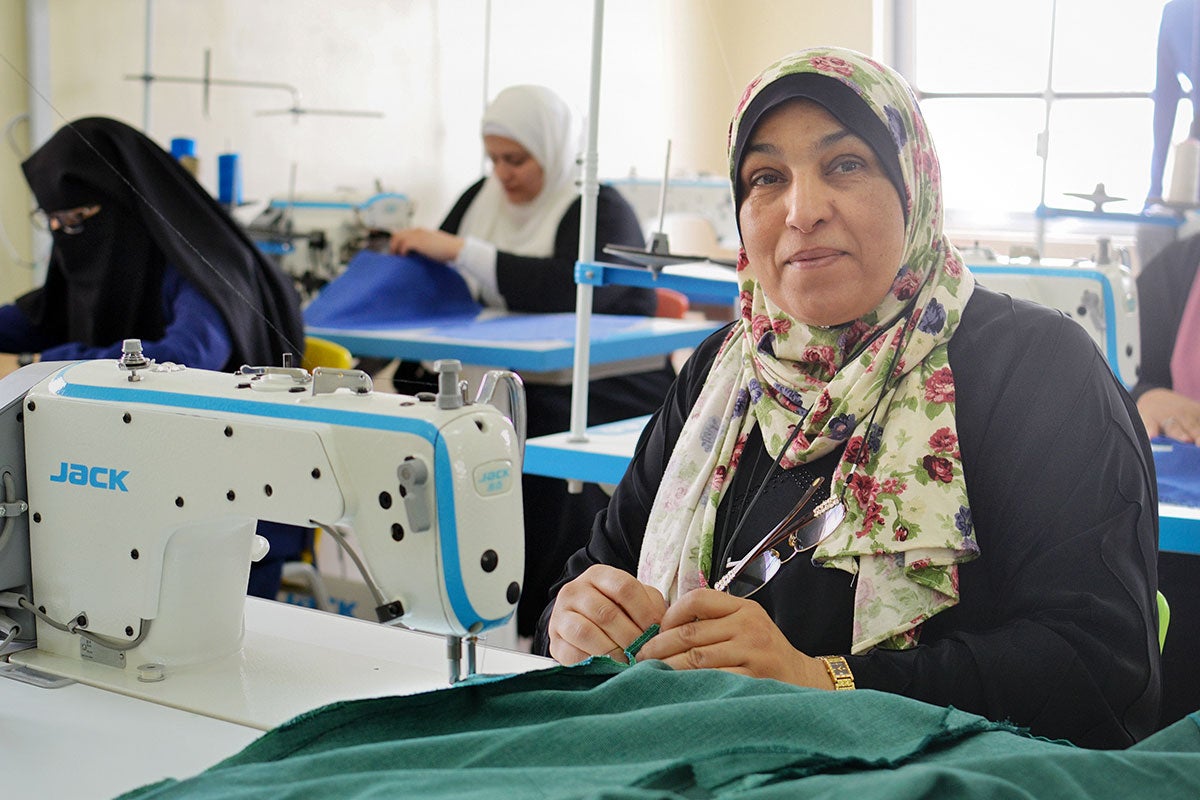
Abeer Abu-Rizeq is seen during a tailoring class at UN Women’s Madaba Oasis Centre.
Abeer Abu-Rizeq is seen during a tailoring class at UN Women’s Madaba Oasis Centre. Photo: UN Women/Bashar Al-Jabari

Similarly, Abeer Abu-Rizeq, a woman with a disability who attended courses at Oasis’ centre in the city of Madaba, said the programme matched her life’s needs.

“I am very grateful that I learned about this centre and the courses it offers”, she said. “My acceptance into the programme came at just the right time, which was much needed, as I am divorced now and have a son whom I need to take good care of.”

Oasis’ ripple effect is noticeable, creating a hub for resilience, leadership, and self-discovery for women across Jordan. As the programme continues to expand, it stands as a testament to the power of investment in preventing violence against women and girls. 

The Oasis programme is funded by the European Union through the Regional Trust Fund in Response to the Syrian crisis, the Madad Fund, and the governments of Canada, Australia, Finland, France, Iceland, and Italy, in partnership with the Jordanian Ministry of Social Development.

Topics

  • Economic empowerment
  • Social protection
  • Ending violence against women and girls
  • Anti-violence interventions
  • Shelters
  • Arab States/North Africa
  • Jordan

Related content

Image
A young woman poses for a portrait while wearing a UN Women vest
Feature

Serving through crisis: UN Women’s humanitarian workers on what keeps them going

17 August 2026
Serving through crisis: UN Women’s humanitarian workers on what keeps them going
Image
Image placeholder with UN Women logo (English) - 3:2 aspect ratio
Press briefing

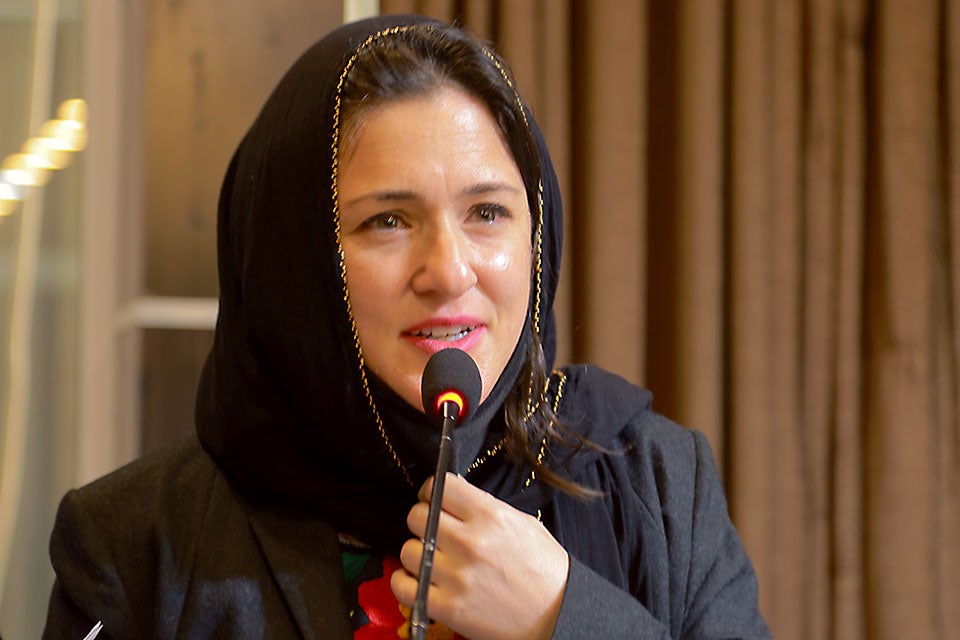
Press briefing at the United Nations by UN Women Special Representative in Afghanistan, Susan Ferguson

14 August 2026
Press briefing at the United Nations by UN Women Special Representative in Afghanistan, Susan Ferguson
Image
A portrait of an Afghan woman in silhouette
Press release

Five years after the Taliban takeover: the normalization of the exclusion of women and girls in Afghanistan

12 August 2026
Five years after the Taliban takeover: the normalization of the exclusion of women and girls in Afghanistan

Footer menu-HQ

  • News and stories
  • Resources
  • What we do
  • How we work
  • Where we are
  • Partnerships
  • Employment
  • Procurement
  • Contact us
  • Executive Board
  • Commission on the Status of Women

Donate button menu [Footer tablet]

  • Donate

Donate button menu [Footer]

  • Donate

Social media menu

  • Facebook
  • Twitter
  • LinkedIn
  • Flickr
  • YouTube
  • Instagram
UN Women - For all women and girls

Footer bottom [Menu]

  • Copyright
  • Information security
  • Privacy notice
  • Report wrongdoing
  • Terms of use
Share this page
  • Share to Facebook
  • Share to Twitter
  • Share to LinkedIn
  • Share to E-mail

Or copy link