
Universal menu

  • Global
  • Regions
    • Africa
    • Americas and the Caribbean
    • Arab States
    • Asia and the Pacific
    • Europe and Central Asia
  • Knowledge
  • Data
  • Training
  • Transparency
UN Women - For all women and girls

Main Navigation-HQ

  • Who we are
    • About us
      • About UN Women
      • Business model
      • Guiding documents
      • Worldwide presence
    • Leadership
      • Governance structure
      • Executive leadership
      • Executive Board
      • Accountability
    • Work with us
      • Employment
      • Procurement
      • Calls for proposals
      • Contact us
      • UN Women Strategic Plan 2026–2029
      • UN Women Strategic Plan 2026–2029 - social media image
        UN Women Strategic Plan 2026–2029
  • What we do
    • Focus areas
      • Ending violence against women
      • Peace and security
      • Humanitarian action
      • Leadership and governance
      • Economic empowerment
      • Innovation and technology
      • Women with disabilities
      • Youth
      • HIV and AIDS
    • How we work
      • 2030 Agenda for Sustainable Development
      • Commission on the Status of Women
      • Gender parity in the UN system
      • Intergovernmental support
      • Partnerships
      • Research and data
      • Training Centre
      • Trust funds
      • UN system coordination
      • Gender Equality Accelerators
      • Gender Equality Accelerators artwork
        Gender Equality Accelerators
  • News and stories
    • Latest
      • News
      • Articles and explainers
      • In focus
    • Media center
      • Press materials
      • Media contacts
      • Explainer: Why are women so exhausted? Care work and the mental load
      • Two adults stand at a table changing diapers on baby dolls, with laundry hanging on a clothesline behind them in a home setting.
        Explainer: Why are women so exhausted? Care work and the mental load
      • Press release: Aid cuts dismantle women’s organizations working in humanitarian crises
      • A young Ugandan woman sits with another local woman to talk
        Press release: Aid cuts dismantle women’s organizations working in humanitarian crises
  • Digital library
    • Resources
      • Publications
      • Annual reports
      • Progress of the world’s women
      • World survey on the role of women in development
      • The gender snapshot
    • GenderTerm
      • GenderTerm
      • Reprint permissions
      • UN Women Highlights 2025–2026
      • A smiling woman.
        UN Women Highlights 2025–2026
      • The gender snapshot 2025
      • gender snapshot thumbnail transparent
        The gender snapshot 2025
  • Get involved
    • How to get involved
      • For ALL Women and Girls
      • International Women's Day
      • 16 Days of Activism to End Violence against Women and Girls
      • UNiTE! Campaign to End Violence against Women
      • Generation Equality
      • He for She
Ask AI
https://84e5cfacd5c7e99f9825edf344450c.1b.environment.api.powerplatform.com/powervirtualagents/botsbyschema/crad4_websiteQA/directline/token?api-version=2022-03-01-preview
1
-
Ask your question here
AI website assistant

Hello, how can I assist you?

AI chatbot responses may be incorrect. Always verify important information.

Donate button menu

Donate

Breadcrumb

  1. Home
  2. Explore Our Latest News
  3. Explore Our Latest News

Website survey

We want to know how we can improve your experience on this website. Completing this survey takes less than 5 minutes.

TAKE THE SURVEY
Feature

Rebuilding the women’s movement in Afghanistan, one organization at a time

14 May 2024
  • Share to Facebook
  • Share to Twitter
  • Share to LinkedIn
  • Share to E-mail

After the Taliban takeover, former magazine-owner Siamoy* redirected her work towards women’s empowerment and capacity-building. Focusing on the most vulnerable women, including illiterate women and women with disabilities, her NGO now provides training and start-up funding for women-led businesses in five provinces.

“UN Women gave us hope – the kind of hope I had lost after the Taliban takeover,” says Siamoy. “I was in a deep depression. I thought I would go crazy. I had lost everything. … But now, thanks to UN Women, I have an office and employees.”

Hers is among the 113 women’s organizations being supported across 19 provinces through the ‘Rebuilding the Women’s Movement in Afghanistan’ programme. Launched in mid-2022, the UN Women programme provides tailored training, skills-building and seed funds for small-scale initiatives.
Image
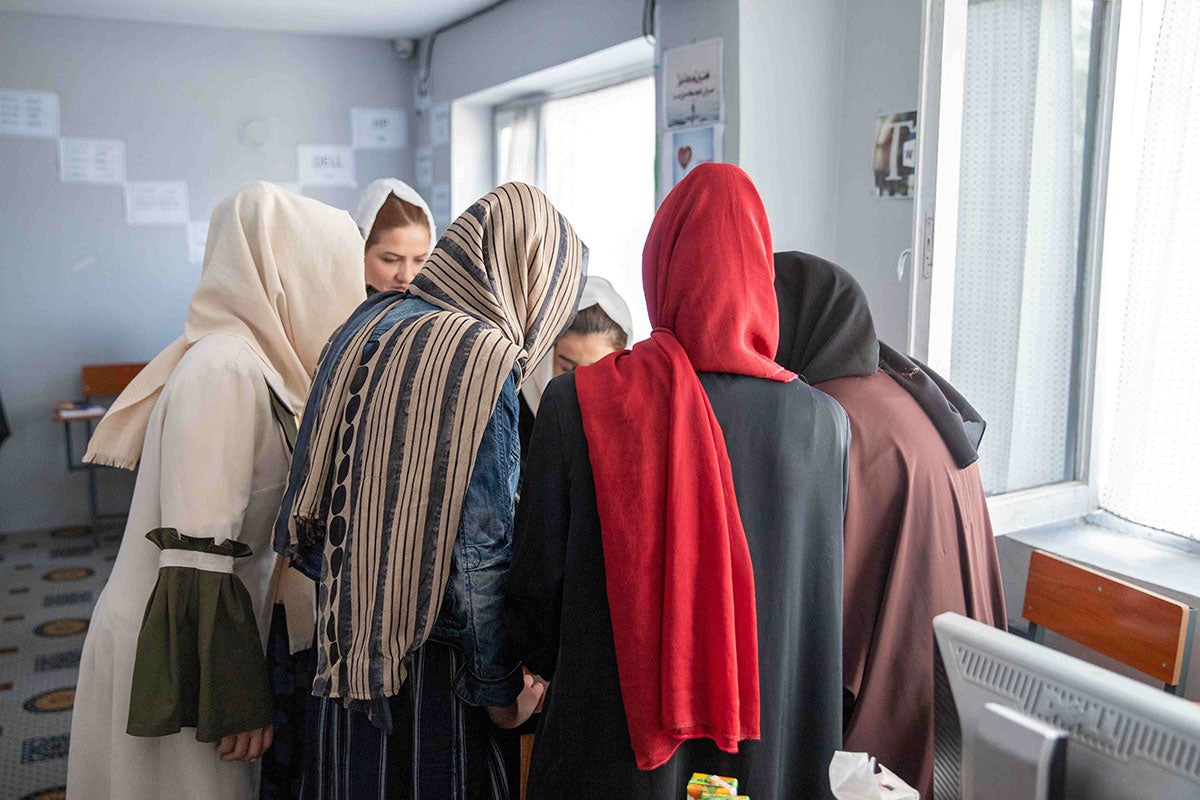
As spaces for women to meet, share and learn continue to be constricted in Afghanistan, UN Women is offering various types of support and training for 113 women-led organizations.
As spaces for women to meet, share and learn continue to be constricted in Afghanistan, UN Women is offering various types of support and training for 113 women-led organizations. Photo: UN Women/Sayed Habib Bidell

Women's rights and employment in Afghanistan 

According to International Labour Organization data, women’s employment rate was 25 per cent lower by the end of 2022 compared to before the Taliban takeover in 2021. With women also banned from working in national and international NGOs as of December 2022, and allowed to pursue a limited number of professions and run home-based small businesses, this programme is providing an essential lifeline for women to build their skills for future work and restore their hope.

“In this difficult situation, UN Women is standing with us,” adds Siamoy. “We will get stronger through this support. If we support 20 women, those women will help another 20 women.”

Since partnering with UN Women in October 2023, Siamoy is now able to pay seven full-time employees. They’ve also received five training sessions on strategic planning and project management.

“The training on project management is one of the best I’ve ever received,” she says. “I’ve changed some of my goals. I don’t want to work for just 20 or 40 women in Faryab anymore. I want to work for 500 to 1,000 women across Afghanistan. I don’t just want to give them tailoring machines. I want to build a factory for them to have a lifetime source of income. I’m dreaming big now.”

In a village in Ghor Province*, 43-year-old Bita* secretly surveys women to find out who are most in need. She established a local organization in 2011 that ran projects for elderly women but had to cease its activities. It wasn’t until 2022 that she was able to revive it, after partnering with UN Women.

“When we established our organization, we had just a few members, no formal policies, plans or real structure,” Bita admits. “But a UN Women colleague supported us with developing a policy. Another colleague helped us devise our organization’s structure.  … This has boosted our confidence.”
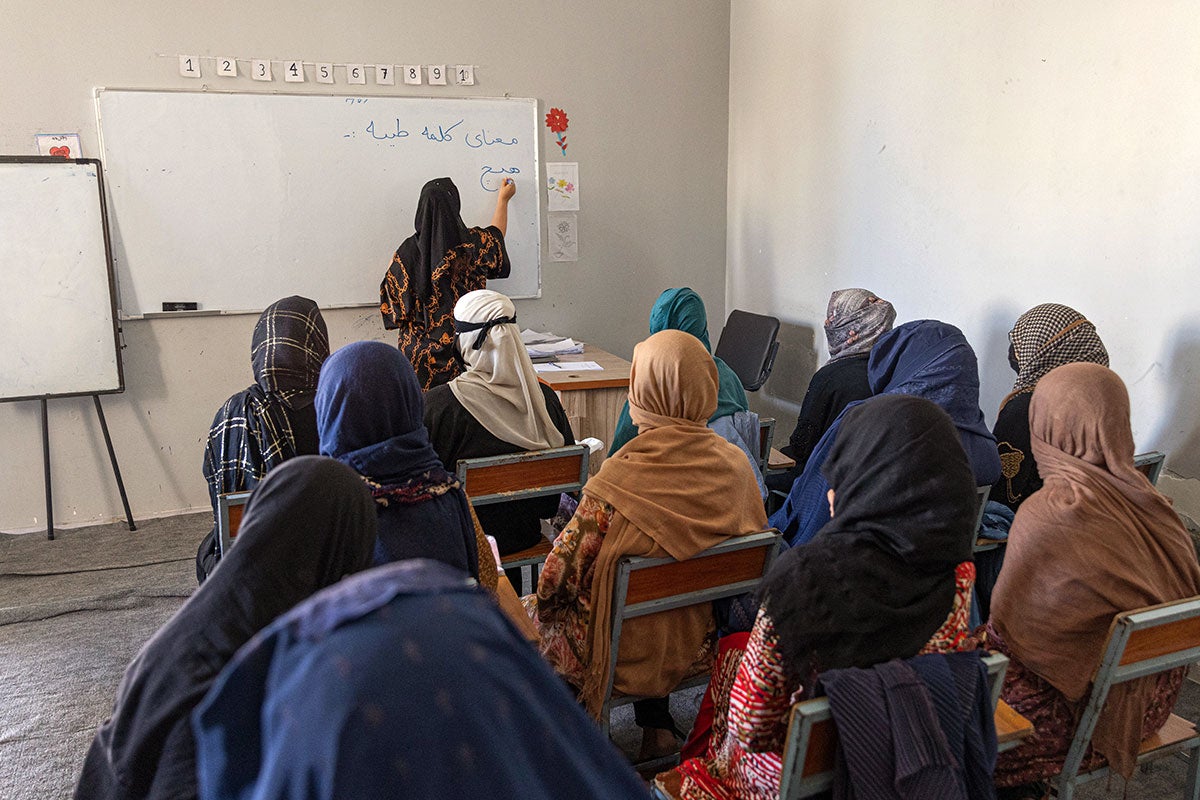
Image
UN Women’s support includes a comprehensive set of training to help women’s organizations improve the way they operate.
UN Women’s support includes a comprehensive set of training to help women’s organizations improve the way they operate. Photo: UN Women/Sayed Habib Bidell

Building skills, capacity and hope for women in Afghanistan

In Mazar, Balkh Province, 30-year-old Najiba* had established a women’s organization in 2019 and was working as a manager at a private company. But after losing her job following the Taliban takeover, she decided to focus her energy on her organization.

With support from UN Women since January 2024, Najiba can now pay her 10 employees, who hadn’t earned any income since joining. She says training on management, monitoring and proposal-writing have all been extremely helpful.

“We now have a lot of information, which has opened a window of hope for us, especially on safeguarding [beneficiaries from risks] – a topic we learned about for the first time. Trainings on how to make policies and define our goals have also helped us refine and make ours more professional,” says Najiba.

In Baghlan, 23-year-old former medical student Kamela* is a programme officer with a women-led organization dedicated to capacity-building for women and youth, who also received training from UN Women on project management.

“A key lesson I took from the training is my value as a programme manager. Employees have power and I must recognize my power and that what I am doing is really important,” says Kamela.

“The training motivates us to do more. … we’re starting from the ground-up to help each other. UN Women is so supportive, regularly coming to our office to coach us. They tell us that we are doing good, then tell us how we can do things even better. They tell us how to be more impactful with our actions and guide us step-by-step and face-to-face. When we go to the UN Women office, they convey knowledge in a way that really motivates us.”

According to UN Women Special Representative in Afghanistan Alison Davidian, supporting women-led grass-roots organizations is not only helping to keep them afloat but preparing them for future larger-scale work: “This is UN Women’s value added – our commitment to investing in women’s organizations, not only financially but through long-term, consistent technical investment and capacity-building to ensure their success, motivate them and promote their sustainability.”

As of May 2024, the “Rebuilding the Women’s Movement in Afghanistan” flagship programme has partnered with 113 organizations in 19 provinces and supported at least 515 women earn salaries. This programme is made possible through the generous support of donors including: the Governments of Austria, Belgium, Canada, Norway, Spain, Sweden and Switzerland.

* Names, locations, and details changed to protect the identity of the protagonists. They are also not shown in the accompanying photos.

Topics

  • Gender equality and women’s empowerment
  • Peace and security
  • Conflict, war
  • Asia and the Pacific
  • Afghanistan

Related content

Image
Image placeholder with UN Women logo (English) - 3:2 aspect ratio
Press briefing

Press briefing at the United Nations by UN Women Special Representative in Afghanistan, Susan Ferguson

14 August 2026
Press briefing at the United Nations by UN Women Special Representative in Afghanistan, Susan Ferguson
Image
A portrait of an Afghan woman in silhouette
Press release

Five years after the Taliban takeover: the normalization of the exclusion of women and girls in Afghanistan

12 August 2026
Five years after the Taliban takeover: the normalization of the exclusion of women and girls in Afghanistan
Image
A woman stands amid a crowd of people and motorcycles on a busy street.
Feature

How aid cuts are threatening women’s organizations responding to Haiti’s gang violence

6 August 2026
How aid cuts are threatening women’s organizations responding to Haiti’s gang violence

Footer menu-HQ

  • News and stories
  • Resources
  • What we do
  • How we work
  • Where we are
  • Partnerships
  • Employment
  • Procurement
  • Contact us
  • Executive Board
  • Commission on the Status of Women

Donate button menu [Footer tablet]

  • Donate

Donate button menu [Footer]

  • Donate

Social media menu

  • Facebook
  • Twitter
  • LinkedIn
  • Flickr
  • YouTube
  • Instagram
UN Women - For all women and girls

Footer bottom [Menu]

  • Copyright
  • Information security
  • Privacy notice
  • Report wrongdoing
  • Terms of use
Share this page
  • Share to Facebook
  • Share to Twitter
  • Share to LinkedIn
  • Share to E-mail

Or copy link