

Interview: “Women are a driving force in disaster risk reduction and emergency response”
Originally published on UN Women's regional website for Asia and the Pacific
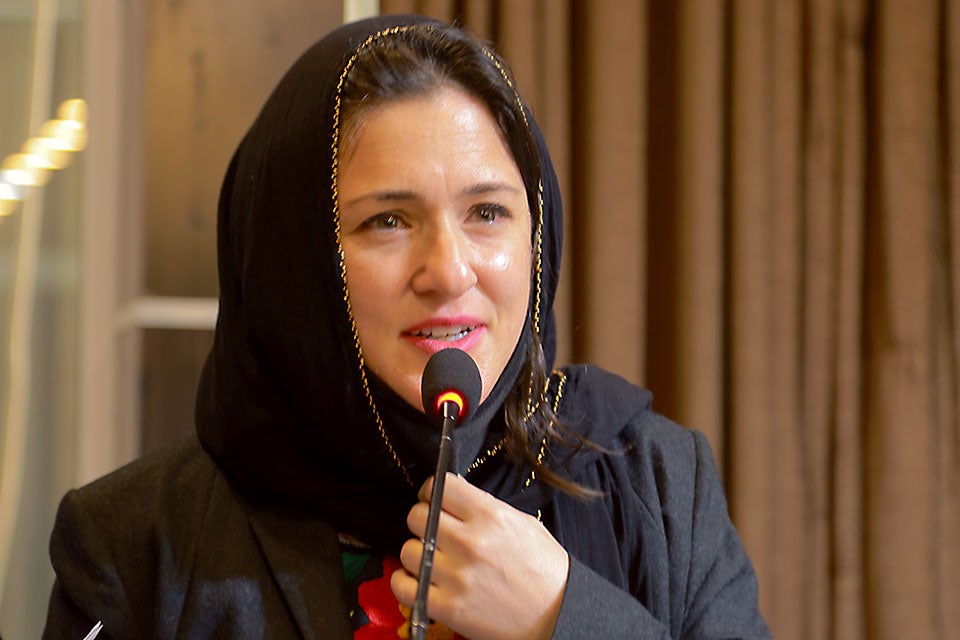
Pannapa (Aimee) Na Nan has more than 14 years of experience coordinating disaster management at national, regional and international levels. As the director of International Cooperation Section at the Department of Disaster Prevention and Mitigation, Ministry of Interior of Thailand, she co-chairs the Technical Working Group on Protection, Gender and Inclusion (TWG-PGI) convened by the Association of Southeast Asian Nations (ASEAN) Committee on Disaster Management. UN Women provides technical support to the TWG-PGI to achieve gender equality and end gender-based violence across ASEAN’s disaster management efforts. Na Nan is also a member of the UN Disaster Assessment and Coordination Team and the ASEAN Emergency Rapid Assessment Team (ASEAN ERAT).
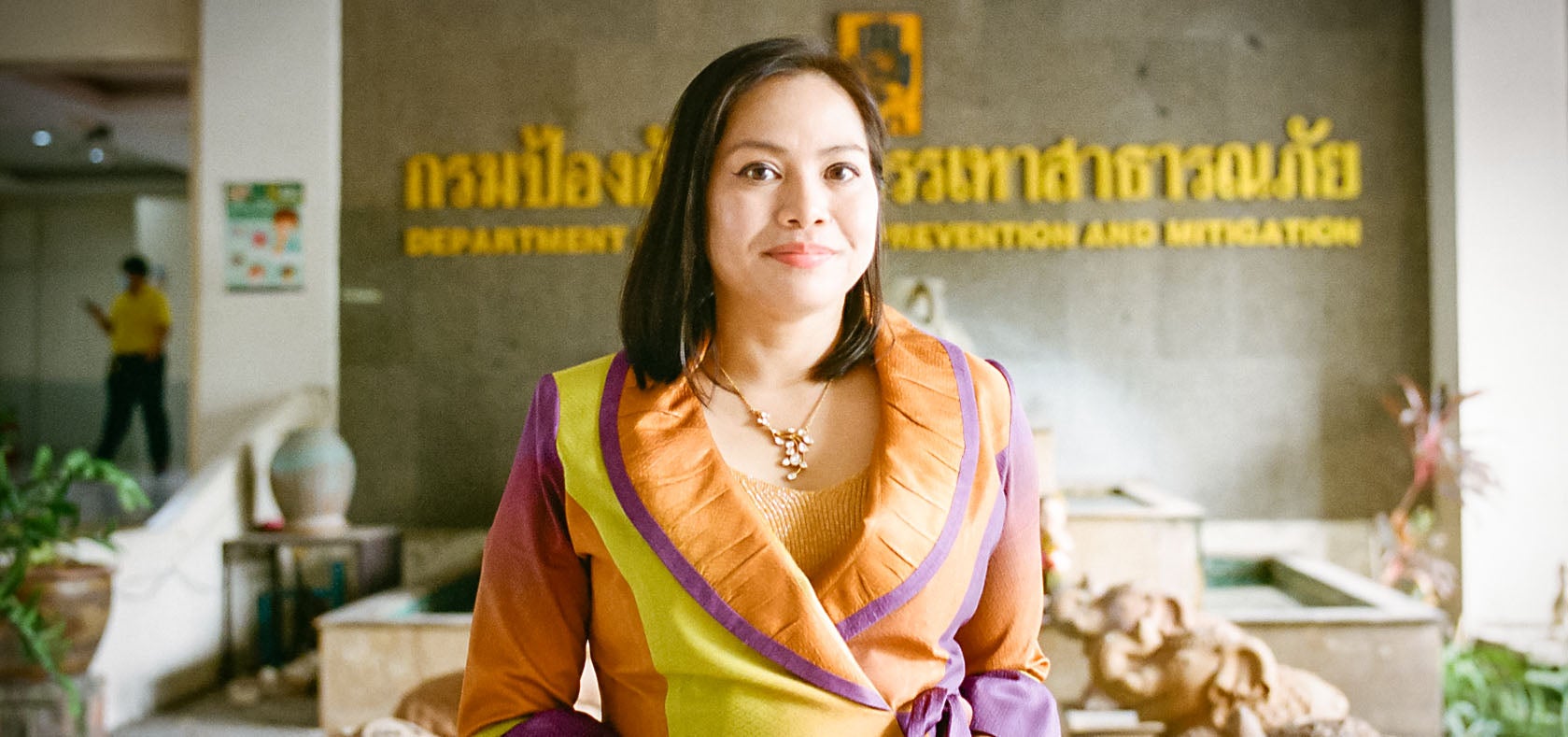
Women and girls are not just victims of disasters and crises, but active agents of change. What are women's roles in disaster management in Thailand?
When I first joined the Department of Disaster Prevention and Mitigation (DDPM), I was one of few women in the disaster management sector. At that time, people associated disaster management and humanitarian action with a mental image of men in orange vests doing search and rescue after disasters. But over the years, this field has shifted from "saving victims" of disasters to engaging with and empowering affected populations to keep their homes and communities safe in the face of floods or droughts. Watching that shift happen has been among the most rewarding experiences of my career.
With that shift, in Thailand, women are becoming one of the driving forces in disaster risk reduction and emergency response. You can see this during the COVID-19 pandemic, where 70 to 80 per cent of health volunteers are women. They are at the forefront of risk communications and trusted by their communities. We also see more and more women elected as leaders of their local administration units.
At the provincial level, we see a unique form of women’s participation and leadership in disaster management through increasing formalization of housewives’ associations, which provide essential aid and care to people in disaster affected areas. And at the national level, women are receiving more training and are increasingly professionally involved in the disaster management sector.
Why is regional and international cooperation in across the Association of Southeast Asian Nations is important?
Quite simply, we are not alone in this world. With its high vulnerability to natural hazards, South-East Asia is often referred to as "the supermarket for disasters". In this regard, ASEAN can share valuable lessons learned, exchange knowledge, and provide assistance to other regions. We also benefit from strong relationships with other regions in times of need.
Regional and international cooperation always go hand in hand. We need to enhance our regional mechanisms for cooperation, coordination, and technical assistance in all aspects to uphold the spirit of "One ASEAN One Response" – meaning that ASEAN responds to disasters in the region and outside the region as one caring, resilient society.
Can you tell us about the role of the Technical Working Group on Protection, Gender and Inclusion (TWG-PGI)?
The TWG-PGI convenes ASEAN sectoral bodies on disaster management, gender, and social welfare to support the achievement of the ASEAN Agreement on Disaster Management and Emergency Response (AADMER). For the first time, the AADMER Work Programme 2021-2025 recognizes the unique needs and key roles of those most affected by disasters, including women, children, youth, the elderly, and people with disabilities. Our TWG-PGI supports all those implementing AADMER to address specific protection and gender issues, such as gender-based violence, in disaster preparedness, risk reduction, response, and recovery.
This week, with the support of UN Women and the European Civil Protection and Humanitarian Aid Operations (ECHO), we are launching the ASEAN Regional Framework on PGI in Disaster Management 2021-2025 which articulates a shared vision in promoting gender equality and social inclusion in disaster management in the region. All TWG-PGI efforts will accelerate progress towards building a safer and more resilient ASEAN Community.
How can we ensure that vulnerable groups, including women and children, are represented in disaster risk reduction efforts?
Every year, ASEAN is hit by multiple disasters that hamper the region's economic growth and development. While advancing economic recovery, ASEAN leaders also address vulnerable groups affected by disasters. With more investment into DRR, including in areas such as social protection, people's lives will be saved, and more development issues can be solved.
The mission "leaving no one behind" should not only be fulfilled in the disaster management sector but also across sectoral bodies in all areas. We also need to remember that governments are not omnipotent. It is essential to listen to people and collaborate with partners, including academia, private sector, CSOs, and youth groups, through the "4Ps" approach – public, private, people, partnership – to take into consideration the needs of vulnerable persons in disaster-prone settings.
In the post-COVID world, how can disaster management policies and mechanisms be reoriented or repurposed to a more inclusive management strategy in the region?
Disasters do not take a break when the world is reeling from the COVID-19 pandemic. As we are witnessing, COVID-19 is a risk multiplier to those already affected by disasters and exacerbating gendered impacts to women and girls. Therefore, a holistic DRR strategy needs to integrate the public health perspective and a gender lens to reflect all types of crises and the needs of all people.
In the aftermath of the COVID-19 pandemic, strengthened coordination between the health and disaster risk management in line with the 2016 Bangkok Principles to reduce the risk from biological hazards, is at the heart of efforts to reduce risks from biological hazards. As disaster management will only get more complex with multi-layered risks, including climate change, closer cooperation within all stakeholders is needed for a more inclusive mechanism to cope with the multi-hazard situation.
Related content
For ALL Women and Girls: Sushmita S. Preetha on elevating and protecting women journalists

Interview: Gender equality is key to a just renewable energy future
