
Universal menu

  • Global
  • Regions
    • Africa
    • Americas and the Caribbean
    • Arab States
    • Asia and the Pacific
    • Europe and Central Asia
  • Knowledge
  • Data
  • Training
  • Transparency
UN Women - For all women and girls

Main Navigation-HQ

  • Who we are
    • About us
      • About UN Women
      • Business model
      • Guiding documents
      • Worldwide presence
    • Leadership
      • Governance structure
      • Executive leadership
      • Executive Board
      • Accountability
    • Work with us
      • Employment
      • Procurement
      • Calls for proposals
      • Contact us
      • UN Women Strategic Plan 2026–2029
      • UN Women Strategic Plan 2026–2029 - social media image
        UN Women Strategic Plan 2026–2029
  • What we do
    • Focus areas
      • Ending violence against women
      • Peace and security
      • Humanitarian action
      • Leadership and governance
      • Economic empowerment
      • Innovation and technology
      • Women with disabilities
      • Youth
      • HIV and AIDS
    • How we work
      • 2030 Agenda for Sustainable Development
      • Commission on the Status of Women
      • Gender parity in the UN system
      • Intergovernmental support
      • Partnerships
      • Research and data
      • Training Centre
      • Trust funds
      • UN system coordination
      • Gender Equality Accelerators
      • Gender Equality Accelerators artwork
        Gender Equality Accelerators
  • News and stories
    • Latest
      • News
      • Articles and explainers
      • In focus
    • Media center
      • Press materials
      • Media contacts
      • Explainer: Why are women so exhausted? Care work and the mental load
      • Two adults stand at a table changing diapers on baby dolls, with laundry hanging on a clothesline behind them in a home setting.
        Explainer: Why are women so exhausted? Care work and the mental load
      • Press release: Aid cuts dismantle women’s organizations working in humanitarian crises
      • A young Ugandan woman sits with another local woman to talk
        Press release: Aid cuts dismantle women’s organizations working in humanitarian crises
  • Digital library
    • Resources
      • Publications
      • Annual reports
      • Progress of the world’s women
      • World survey on the role of women in development
      • The gender snapshot
    • GenderTerm
      • GenderTerm
      • Reprint permissions
      • UN Women Highlights 2025–2026
      • A smiling woman.
        UN Women Highlights 2025–2026
      • The gender snapshot 2025
      • gender snapshot thumbnail transparent
        The gender snapshot 2025
  • Get involved
    • How to get involved
      • For ALL Women and Girls
      • International Women's Day
      • 16 Days of Activism to End Violence against Women and Girls
      • UNiTE! Campaign to End Violence against Women
      • Generation Equality
      • He for She
Ask AI
https://84e5cfacd5c7e99f9825edf344450c.1b.environment.api.powerplatform.com/powervirtualagents/botsbyschema/crad4_websiteQA/directline/token?api-version=2022-03-01-preview
1
-
Ask your question here
AI website assistant

Hello, how can I assist you?

AI chatbot responses may be incorrect. Always verify important information.

Donate button menu

Donate

Breadcrumb

  1. Home
  2. Explore Our Latest News
  3. Explore Our Latest News

Website survey

We want to know how we can improve your experience on this website. Completing this survey takes less than 5 minutes.

TAKE THE SURVEY
News

Advancing digital and financial inclusion of women: CSW69 event highlights pathways to women's economic empowerment

13 March 2025
  • Share to Facebook
  • Share to Twitter
  • Share to LinkedIn
  • Share to E-mail

As the world marks 30 years since the Beijing Declaration and Platform for Action, global leaders gathered at the United Nations Headquarters in New York to discuss transformative approaches to advance women's economic empowerment through digital and financial inclusion. 

"Digital poverty is widening inequality. And yet, when women have access to financial services, entire economies grow. When women lead, societies thrive," said Sima Bahous, Executive Director of UN Women, at a high-level Ministerial Roundtable on 12 March. 
Image
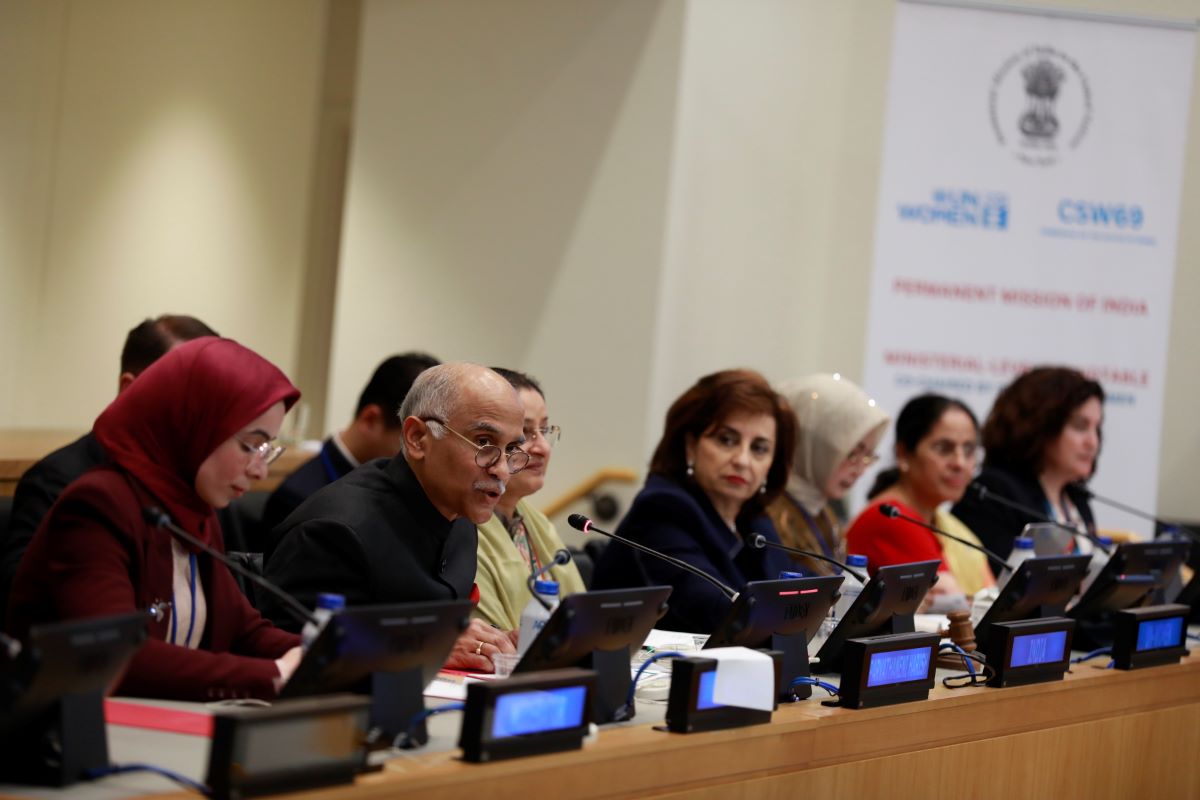
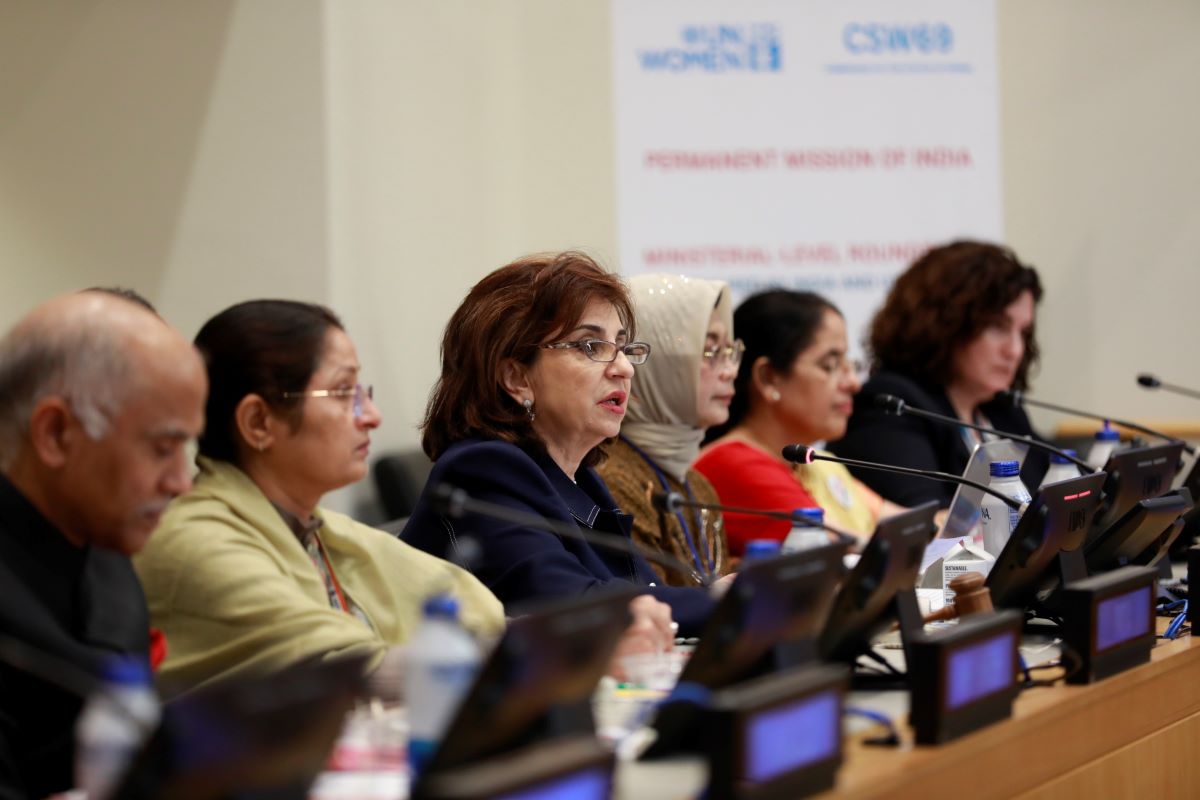
High-level panellists speak at the Ministerial Roundtable on Digital and Financial Inclusion for Women's Empowerment. Photo: UN Women/Ryan Brown

Co-hosted by the Government of India and UN Women, the event focused on "Digital and Financial Inclusion for Women's Empowerment" during the 69th session of the Commission on the Status of Women (CSW69) – an issue that is particularly relevant to fulfilling the Beijing+30 agenda and its emerging priorities. 

The roundtable featured two main sessions: the first focused on leveraging digital public infrastructure to accelerate women-led development, moderated by Christine Arab, UN Women Regional Director for Asia and the Pacific; the second explored financial inclusion and the criticality of core resources, moderated by Daniel Seymour, Director of UN Women's Strategic Partnerships Division. 

The event discussed how to leverage digital public infrastructure to accelerate women-led development and address the critical issue of financing for women's empowerment, bringing together ministers and high-level representatives from India, Qatar, Morocco, Indonesia, Panama, and Australia. 
Image
"Digital poverty is widening inequality," said Sima Bahous, Executive Director of UN Women, at a high-level Ministerial Roundtable on 12 March. Photo: UN Women/Ryan Brown

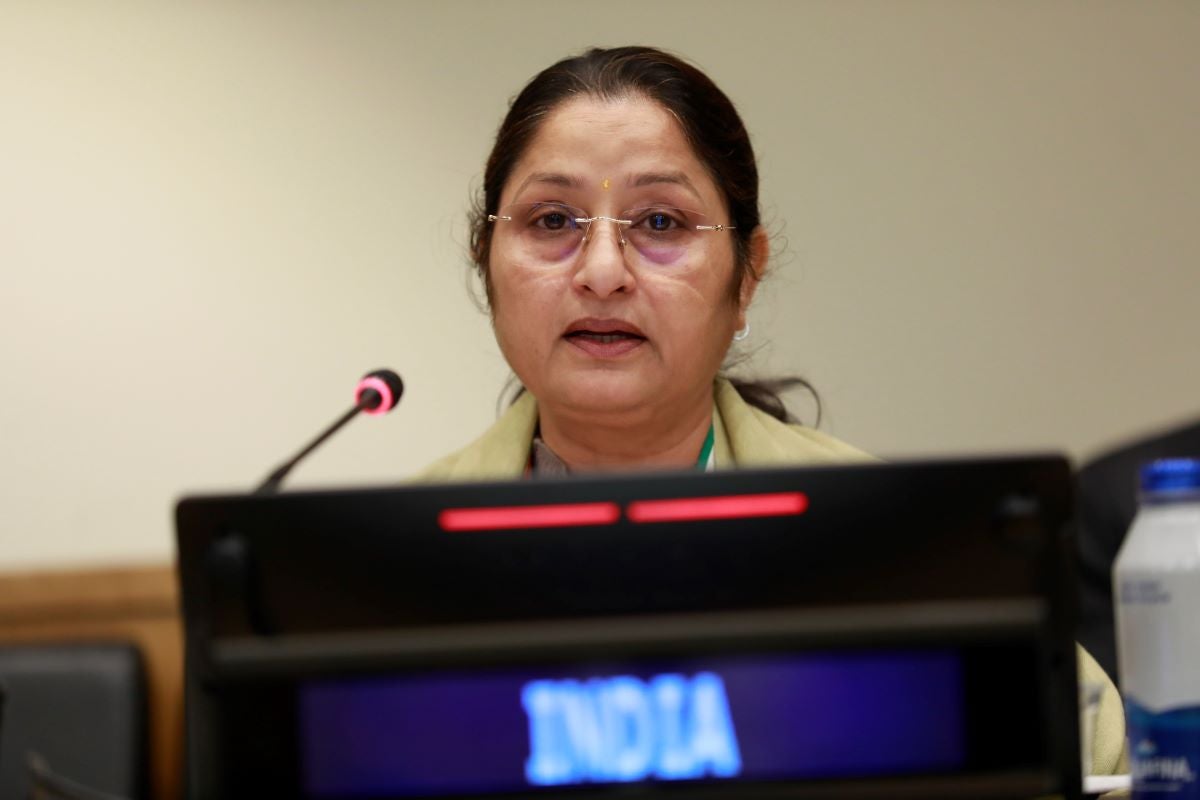
Participants shared various approaches to building digital infrastructure that works for women with India’s Cabinet Minister of Women and Child Development, Annpurna Devi, highlighting the country’s approach to digital inclusion: " Digital Public Infrastructure should be a bridge, not abBarrier!" Successful models such as India's Unified Payments Interface (UPI), have revolutionized financial transactions, with women increasingly using digital platforms for savings and investments. 

At the historic 1995 Beijing meeting, more than 200 Indian women were in attendance along with the Government of India, helping shape what became the most comprehensive global blueprint for advancing women's rights. India has also demonstrated commitment through gender-responsive budgeting, increasing its allocation for gender-specific programs to 8.8 percent of the national budget in 2025-26 amounting to $55.2 billion. 

In a similar vein, Fatima Zohra Iraqi, Head of Human Rights Unit, Minister of Health, Morocco, shared their policy approach: “The finance law in Morocco integrates a gender-responsive budgeting approach, aiming to promote gender equality through fiscal policies. This approach ensures that public resources are allocated in a way that reduces disparities between men and women.” 

Amurwani Dwi Lestariningsih, Deputy Minister for Gender Equality, Indonesia, noted, "While the gender gap in digital access remains a challenge, our government recognizes women's crucial role in Micro, Small, and Medium Enterprises (MSMEs). With 64.5 per cent of MSMEs in Indonesia being women-led, they significantly contribute to our country's economic resilience." 

Qatar emphasized that women's economic empowerment is essential for achieving the SDGs. Buthaina Bint Ali Al Jabr Al Nuaimi, Minister of Social Development and Family, stressed: "It is crucial to maintain and increase core resources to UN Women, ensuring funding is both flexible and predictable to boost investment in gender equality, which will positively impact the lives of women and girls." During her remarks, the Minister announced a contribution of USD 1 million from Qatar to UN Women’s core resources. 

Permanent Representative of India to the United Nations, Parvathaneni Harish, highlighted the rationale for investing in women: " Digital and financial inclusion are not just tools for economic growth—they are a transformative force for bringing about women's equality and empowerment." This perspective underlined the event's core message that financial and digital inclusion must go beyond access to create pathways for women's leadership and decision-making power. 

The discussion underscored alarming statistics: globally, a $1.7 trillion financing gap persists for women-owned MSMEs, while financial literacy rates for women remain disproportionately lower than for men in almost every country and across all age groups. 
Image
India’s Cabinet Minister of Women and Child Development, Annpurna Devi, highlighted the country’s approach to digital inclusion at the high-level Ministerial Roundtable on 12 March. Photo: UN Women/Ryan Brown

Throughout the discussion, participants emphasized that women's economic empowerment serves as a foundation for their participation in decision-making at household, community, and institutional levels. Digital tools were recognized as critical for enabling women to engage with governance systems, lead businesses, and advocate for their rights.

The ministerial roundtable provided an important platform for Member States, especially from the Global South, to share experiences on how UN Women could better leverage its mandate to support countries in delivering on their commitments during this milestone year. 

Commenting on the occasion, UN Women's Deputy Executive Director, Kirsi Madi emphasized the importance of sustainable funding: "UN Women is committed to turning commitments into realities and core resources are the foundation of our work. They enable us to deliver positive change, work in long-term partnerships, drive innovation, test new approaches, scale up digital and financial inclusion, and ensure that no woman is left behind." 
Image
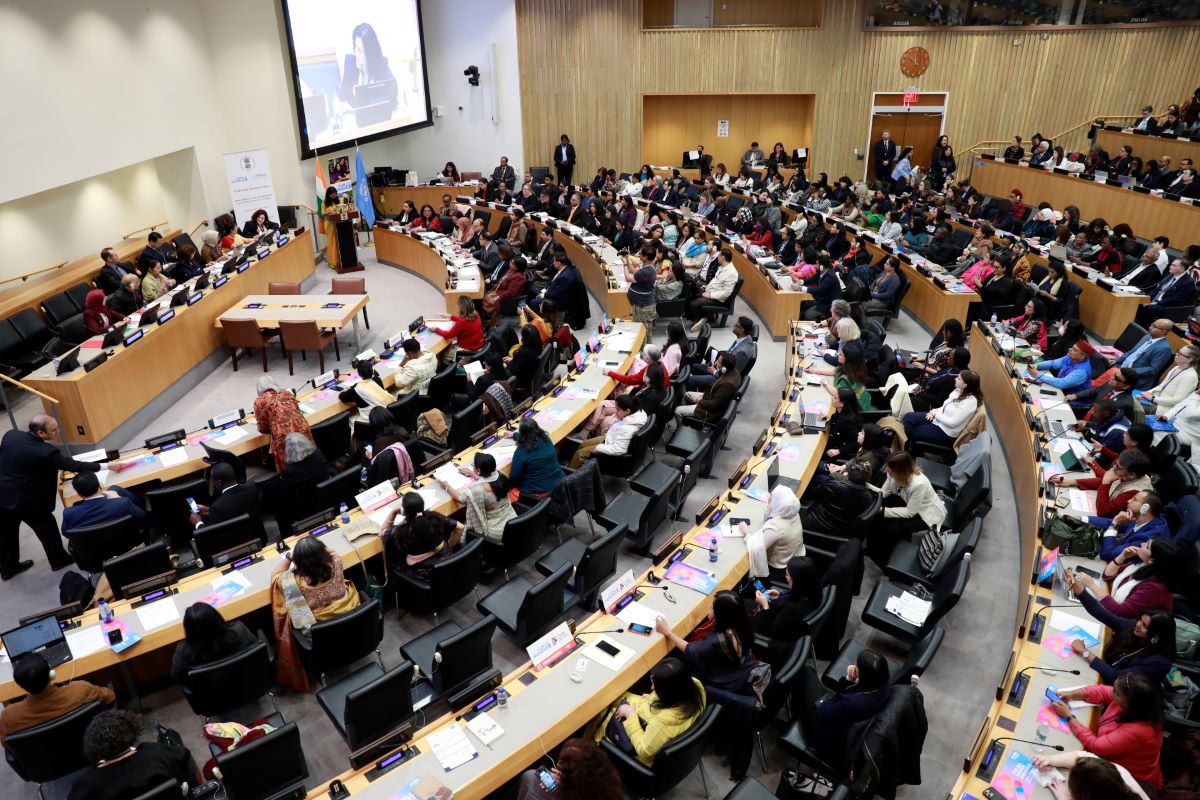
Participants at the Ministerial Roundtable share strategies for advancing women's financial inclusion. Photo: UN Women/ Ryan Brown

Stephanie Copus Campbell, Ambassador for Gender Equality, Australia, highlighted their ongoing support: “Australia is a proud partner with UN Women. UN Women has the capacity to work at country level with governments on building the ways in which governments and civil societies want to work to identify their problems and address them with solutions.” 

As CSW69 continues to examine global progress on women's empowerment 30 years after the Beijing Declaration and Platform for Action, the Ministerial Roundtable highlighted concrete pathways through digital innovation, financial inclusion, and strategic partnerships that can transform commitments into action. Through commitment to women-led development, financial inclusion, and social transformation, countries like India, Qatar, Indonesia are creating crucial examples of good practice that can drive gender-inclusive and sustainable growth.

Topics

  • Beijing Platform for Action
  • Commission on the Status of Women
  • Youth

Related content

Image
UNWomen_Placeholder
Statement

UN Women statement for International Youth Day

11 August 2026
UN Women statement for International Youth Day
Image
Victoria Komekyeya sits in a computer lab and speaks with UN Women staff
Feature

From learning to leading: Unlocking the power of girls in ICT

27 March 2026
From learning to leading: Unlocking the power of girls in ICT
Image
Closing remarks by Ms. Sima Bahous, UN Under-Secretary-General and UN Women Executive Director at the Commission on the Status of Women at its Seventieth Session, UN Headquarters, 19 March 2026.
Speech

Speech: The headwinds are strong, but our shared resolve to advance women’s rights is stronger

19 March 2026
Speech: The headwinds are strong, but our shared resolve to advance women’s rights is stronger

Footer menu-HQ

  • News and stories
  • Resources
  • What we do
  • How we work
  • Where we are
  • Partnerships
  • Employment
  • Procurement
  • Contact us
  • Executive Board
  • Commission on the Status of Women

Donate button menu [Footer tablet]

  • Donate

Donate button menu [Footer]

  • Donate

Social media menu

  • Facebook
  • Twitter
  • LinkedIn
  • Flickr
  • YouTube
  • Instagram
UN Women - For all women and girls

Footer bottom [Menu]

  • Copyright
  • Information security
  • Privacy notice
  • Report wrongdoing
  • Terms of use
Share this page
  • Share to Facebook
  • Share to Twitter
  • Share to LinkedIn
  • Share to E-mail

Or copy link