
Universal menu

  • Global
  • Regions
    • Africa
    • Americas and the Caribbean
    • Arab States
    • Asia and the Pacific
    • Europe and Central Asia
  • Knowledge
  • Data
  • Training
  • Transparency
UN Women - For all women and girls

Main Navigation-HQ

  • Who we are
    • About us
      • About UN Women
      • Business model
      • Guiding documents
      • Worldwide presence
    • Leadership
      • Governance structure
      • Executive leadership
      • Executive Board
      • Accountability
    • Work with us
      • Employment
      • Procurement
      • Calls for proposals
      • Contact us
      • UN Women Strategic Plan 2026–2029
      • UN Women Strategic Plan 2026–2029 - social media image
        UN Women Strategic Plan 2026–2029
  • What we do
    • Focus areas
      • Ending violence against women
      • Peace and security
      • Humanitarian action
      • Leadership and governance
      • Economic empowerment
      • Innovation and technology
      • Women with disabilities
      • Youth
      • HIV and AIDS
    • How we work
      • 2030 Agenda for Sustainable Development
      • Commission on the Status of Women
      • Gender parity in the UN system
      • Intergovernmental support
      • Partnerships
      • Research and data
      • Training Centre
      • Trust funds
      • UN system coordination
      • Gender Equality Accelerators
      • Gender Equality Accelerators artwork
        Gender Equality Accelerators
  • News and stories
    • Latest
      • News
      • Articles and explainers
      • In focus
    • Media center
      • Press materials
      • Media contacts
      • Explainer: Why are women so exhausted? Care work and the mental load
      • Two adults stand at a table changing diapers on baby dolls, with laundry hanging on a clothesline behind them in a home setting.
        Explainer: Why are women so exhausted? Care work and the mental load
      • Press release: Aid cuts dismantle women’s organizations working in humanitarian crises
      • A young Ugandan woman sits with another local woman to talk
        Press release: Aid cuts dismantle women’s organizations working in humanitarian crises
  • Digital library
    • Resources
      • Publications
      • Annual reports
      • Progress of the world’s women
      • World survey on the role of women in development
      • The gender snapshot
    • GenderTerm
      • GenderTerm
      • Reprint permissions
      • UN Women Highlights 2025–2026
      • A smiling woman.
        UN Women Highlights 2025–2026
      • The gender snapshot 2025
      • gender snapshot thumbnail transparent
        The gender snapshot 2025
  • Get involved
    • How to get involved
      • For ALL Women and Girls
      • International Women's Day
      • 16 Days of Activism to End Violence against Women and Girls
      • UNiTE! Campaign to End Violence against Women
      • Generation Equality
      • He for She
Ask AI
https://84e5cfacd5c7e99f9825edf344450c.1b.environment.api.powerplatform.com/powervirtualagents/botsbyschema/crad4_websiteQA/directline/token?api-version=2022-03-01-preview
1
-
Ask your question here
AI website assistant

Hello, how can I assist you?

AI chatbot responses may be incorrect. Always verify important information.

Donate button menu

Donate

Breadcrumb

  1. Home
  2. Explore Our Latest News
  3. Explore Our Latest News

Website survey

We want to know how we can improve your experience on this website. Completing this survey takes less than 5 minutes.

TAKE THE SURVEY
Op-ed

Op-ed: Three priorities for climate action

Only with women’s full and meaningful participation do we have any hope of a sustainable future, and there are specific areas the G20 can prioritize for our best chance of success on climate-related goals.
1 September 2023
UN Women Executive Director Sima Bahous
  • Share to Facebook
  • Share to Twitter
  • Share to LinkedIn
  • Share to E-mail
Image
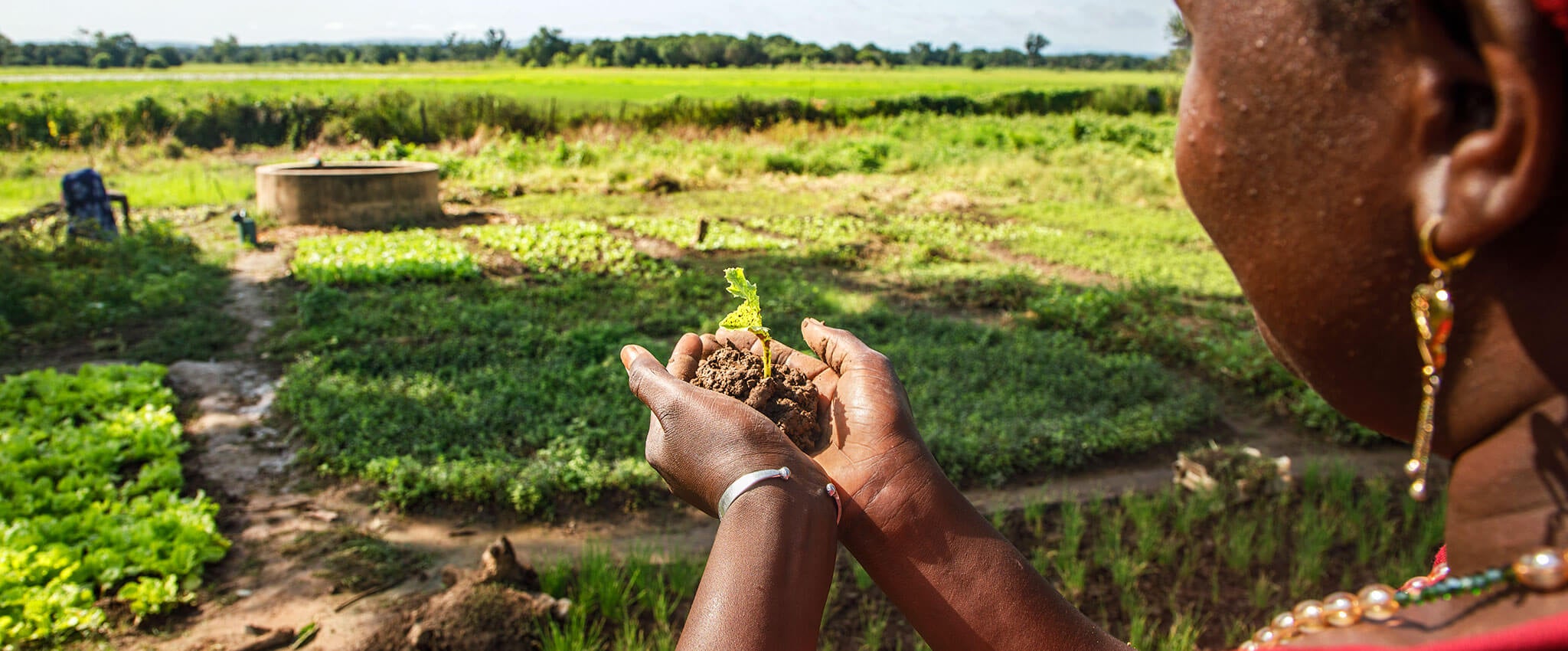
Women in the village of Fadiga, in the Kédougou region of Senegal, have worked for many years in agriculture. Photo: UN Women/Alioune Ndiaye.

As we approach the 28th Conference of the Parties to the United Nations Framework Convention on Climate Change, the G20’s political leadership will be critical to move economies towards sustainability and to help cities and communities mitigate and adapt to climate impacts. Integral to that leadership are women, with whom we have the best chance of progress.

Prioritizing women’s rights in climate action is a pivotal yet neglected pathway to climate justice and a sustainable future. Women’s full and meaningful participation is essential to achieve solutions that work for all of society and that get the Sustainable Development Goals back on track. Under India’s G20 presidency, and as advocated in the recent ministerial meetings’ outcomes, the emphasis on women-led development can accelerate the redistribution of skewed opportunities and resources for women to shape development planning and execution.

I therefore recommend to the G20 three priorities for action.

My first recommendation is to strengthen women’s resilience to the impacts of dramatically changing weather patterns, droughts, floods, fires, and environmental degradation. This has been the key aim of UN Women’s programme on climate-resilient agriculture. Implemented across sub-Saharan Africa and in countries as diverse as China, Haiti, and Morocco, we are supporting women farmers with agroecological farming techniques to feed their families and escape poverty. This is critical, since women working on small-scale farms are the main food producers in many regions, and since the polycrises of the last few years have seen alarming increases in women’s food insecurity. It is also more urgent now than ever to provide universal social protection and public services that effectively reach women. With the G20’s support, the newly created Loss and Damage Fund could provide much-needed finance to build and strengthen such systems and services in developing countries.

Economic transitions

My second recommendation is to ensure that the transitions to new economic models not only support sustainability and thriving ecosystems, but also deliver on gender equality. As we leave behind economies based on fossil fuels, extraction, and pollution, I encourage the G20 to champion a “gender-just transition”. This would prioritize the creation of green jobs for women in new sectors such as renewable energy and green infrastructure. In doing so, we can close the stubborn global gender gap in employment.

Solutions such as clean cookstoves and energy-efficient appliances and buildings, and renewable energy micro-grids to electrify remote areas, would create employment, improve women’s and children’s health, and reduce the unpaid care and domestic work overwhelmingly done by women and girls. Good quality care jobs—in health, education, and child and elder care—are inherently green and sustainable. I urge that G20 delegations to COP28 mainstream the diverse voices, knowledge, and experiences of women and girls, and that they promote action to resolve both the climate and care crises.

My third recommendation is to overhaul climate finance to ensure that it addresses gender equality in the contexts most vulnerable to climate change, and to successfully reach women’s, feminist, Indigenous, and grassroots organizations. Supporting women’s resilience and ensuring a gender-just transition will require significant financing for women in developing countries. The leadership of this G20 cohort is essential to ensure that the 2009 commitment to provide USD 100 billion per year in climate finance is finally fulfilled and that the Loss and Damage Fund is fully financed. Let us take inspiration from formidable women leaders, including Mia Mottley of Barbados, whose innovative proposals, such as the Bridgetown Initiative, could be game changers for tackling both the debt crisis and the climate crisis.

Equality and climate change

Since UN Women’s very first days in 2011, we have focused on climate change, supporting national delegations and negotiators to mainstream gender equality into climate negotiations, and developing innovative programming to build women’s resilience to climate impacts and disasters. We support and foster collective action, including through a global multi-stakeholder partnership: the Action Coalition on Feminist Action for Climate Justice. And we are developing a major programme of research and data work on gender equality in the age of climate change, centred on our flagship report, “Progress of the world’s women”. Through these we will amplify women’s voices in all their diversity, showcase their work, and demonstrate how it can be replicated and scaled up to achieve the durable, transformative change that the world so desperately needs.

Article reprinted with permission from “G20 India: The New Delhi Summit”, pp. 150–152.

Topics

  • 2030 Agenda for Sustainable Development
  • Sustainable Development Goals (SDGs)
  • Economic empowerment
  • Employment
  • Unpaid work
  • Women farmers
  • Macroeconomic policies
  • Food security
  • Poverty
  • Rural women
  • Gender equality and women’s empowerment
  • Humanitarian action
  • Disaster risk reduction
  • Leadership and political participation
  • UN Women administration
  • Executive Director

Related content

Image
Image placeholder with UN Women logo (English) - 3:2 aspect ratio
Statement

UN Women statement for International Equal Pay Day 2026

18 September 2026
UN Women statement for International Equal Pay Day 2026
Image
UNWomen_Placeholder
Media advisory

UN Women at the 81st session of the UN General Assembly (UNGA 81)

4 September 2026
UN Women at the 81st session of the UN General Assembly (UNGA 81)
Image
Sima Bahous and Walid Masri shake hands
News

UN Women Executive Director concludes three-day visit to Jordan

3 September 2026
UN Women Executive Director concludes three-day visit to Jordan

Footer menu-HQ

  • News and stories
  • Resources
  • What we do
  • How we work
  • Where we are
  • Partnerships
  • Employment
  • Procurement
  • Contact us
  • Executive Board
  • Commission on the Status of Women

Donate button menu [Footer tablet]

  • Donate

Donate button menu [Footer]

  • Donate

Social media menu

  • Facebook
  • Twitter
  • LinkedIn
  • Flickr
  • YouTube
  • Instagram
UN Women - For all women and girls

Footer bottom [Menu]

  • Copyright
  • Information security
  • Privacy notice
  • Report wrongdoing
  • Terms of use
Share this page
  • Share to Facebook
  • Share to Twitter
  • Share to LinkedIn
  • Share to E-mail

Or copy link