
Universal menu

  • Global
  • Regions
    • Africa
    • Americas and the Caribbean
    • Arab States
    • Asia and the Pacific
    • Europe and Central Asia
  • Knowledge
  • Data
  • Training
  • Transparency
UN Women - For all women and girls

Main Navigation-HQ

  • Who we are
    • About us
      • About UN Women
      • Business model
      • Guiding documents
      • Worldwide presence
    • Leadership
      • Governance structure
      • Executive leadership
      • Executive Board
      • Accountability
    • Work with us
      • Employment
      • Procurement
      • Calls for proposals
      • Contact us
      • UN Women Strategic Plan 2026–2029
      • UN Women Strategic Plan 2026–2029 - social media image
        UN Women Strategic Plan 2026–2029
  • What we do
    • Focus areas
      • Ending violence against women
      • Peace and security
      • Humanitarian action
      • Leadership and governance
      • Economic empowerment
      • Innovation and technology
      • Women with disabilities
      • Youth
      • HIV and AIDS
    • How we work
      • 2030 Agenda for Sustainable Development
      • Commission on the Status of Women
      • Gender parity in the UN system
      • Intergovernmental support
      • Partnerships
      • Research and data
      • Training Centre
      • Trust funds
      • UN system coordination
      • Gender Equality Accelerators
      • Gender Equality Accelerators artwork
        Gender Equality Accelerators
  • News and stories
    • Latest
      • News
      • Articles and explainers
      • In focus
    • Media center
      • Press materials
      • Media contacts
      • Explainer: Why are women so exhausted? Care work and the mental load
      • Two adults stand at a table changing diapers on baby dolls, with laundry hanging on a clothesline behind them in a home setting.
        Explainer: Why are women so exhausted? Care work and the mental load
      • Press release: Aid cuts dismantle women’s organizations working in humanitarian crises
      • A young Ugandan woman sits with another local woman to talk
        Press release: Aid cuts dismantle women’s organizations working in humanitarian crises
  • Digital library
    • Resources
      • Publications
      • Annual reports
      • Progress of the world’s women
      • World survey on the role of women in development
      • The gender snapshot
    • GenderTerm
      • GenderTerm
      • Reprint permissions
      • UN Women Highlights 2025–2026
      • A smiling woman.
        UN Women Highlights 2025–2026
      • The gender snapshot 2025
      • gender snapshot thumbnail transparent
        The gender snapshot 2025
  • Get involved
    • How to get involved
      • For ALL Women and Girls
      • International Women's Day
      • 16 Days of Activism to End Violence against Women and Girls
      • UNiTE! Campaign to End Violence against Women
      • Generation Equality
      • He for She
Ask AI
https://84e5cfacd5c7e99f9825edf344450c.1b.environment.api.powerplatform.com/powervirtualagents/botsbyschema/crad4_websiteQA/directline/token?api-version=2022-03-01-preview
1
-
Ask your question here
AI website assistant

Hello, how can I assist you?

AI chatbot responses may be incorrect. Always verify important information.

Donate button menu

Donate

Breadcrumb

  1. Home
  2. Explore Our Latest News
  3. Explore Our Latest News

Website survey

We want to know how we can improve your experience on this website. Completing this survey takes less than 5 minutes.

TAKE THE SURVEY
Speech

Speech: Breaking remaining barriers for women and girls in Africa

Remarks by UN Women Executive Director Sima Bahous at the Africa Business Initiative, “Unstoppable Africa”.

18 September 2022
UN Women Executive Director Sima Bahous
  • Share to Facebook
  • Share to Twitter
  • Share to LinkedIn
  • Share to E-mail

[As delivered.]

In Africa, women leaders and entrepreneurs have already proved in so many different ways to be really unstoppable in terms of how much progress they are driving and the inspiration they are giving to us all throughout the world.
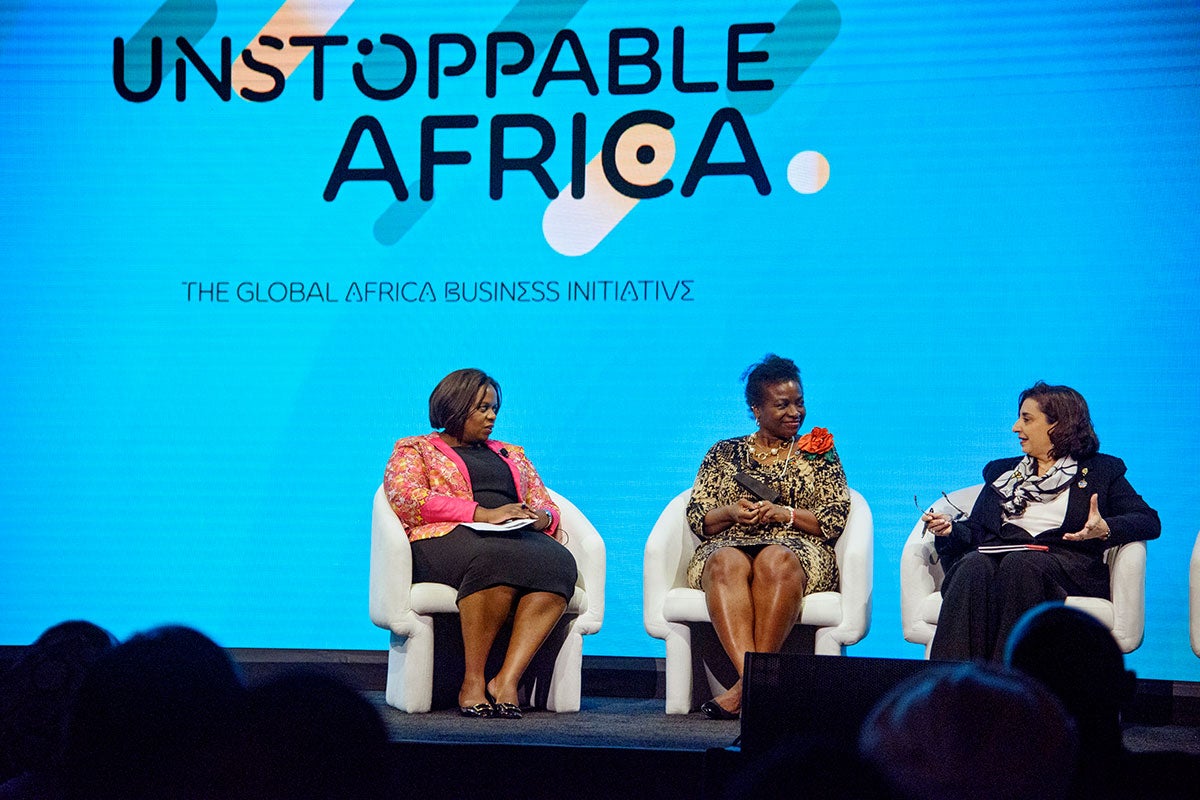
Image
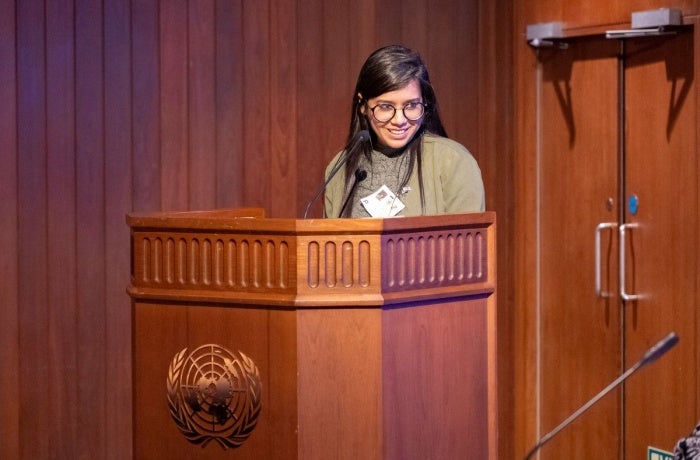
UN Women Executive Director Sima Bahous delivers remarks at the launch of the Global Africa Business Initiative (GABI) held in New York on 18 September 2022. Photo: UN Women/Catianne Tijerina

We see that there are five African countries with women as Heads of State and Government and cabinets are becoming more gender balanced in several African countries. Just last night, one of my colleagues, the UN Women Regional Director for West and Central Africa, was appointed as the Minister of Economy, Planning and International Cooperation in her own country of Senegal.

We applaud all these advances and offer congratulations. However, we must say that progress for the majority of women is very slow and very uneven. These are the issues that we really need to look at.

Women in Africa are excluded from the economy. Although women make up 58 per cent of Africa’s self-employed population, they make on average 34 per cent less money than men do. In Africa, women are still under-represented in decision-making and we need to figure out the best way to make sure they are more represented.

Women are discriminated against in all areas; they have insufficient access to finances or land ownership. Women entrepreneurs don’t even have access to government tenders; women-owned businesses in sub-Saharan Africa win only an estimated one per cent of public procurement contracts. They really need to have access to this and the supply chain where they can be part of the economy of the formal sector as well as their presence in the informal sector.

We must also recall the effect of the COVID-19 pandemic, the effect of the crises, and the climate emergency. These exact their highest price on women and girls. We know they are exacting a very high price on the women and girls in Africa, with drought, poverty,  and violence against women which has skyrocketed through COVID but also in relation to poverty and the discriminatory laws that they continue to fight. Generally they feel that they are excluded from being part and parcel of their own societies.

Opportunities to redress this include ensuring that we have special measures so that women become part of the decision making; so we need to look at quotas for women not only in decision making in government but also in the private sector.

So I appeal to the private sector who are here today, to ensure more quotas for more women to find lucrative resources in their businesses and in their society where they can flourish.

Access to digital technologies is another key for women, in terms especially for their education, also for their entrepreneurship, their information, their health, and the services that they need to be able to become more empowered and more participatory in their society.

I thank you.

Topics

  • Economic empowerment
  • Entrepreneurship
  • Gender equality and women’s empowerment
  • Gender discrimination
  • Executive Director

Related content

Image
Image placeholder with UN Women logo (English) - 3:2 aspect ratio
Statement

UN Women statement for International Equal Pay Day 2026

18 September 2026
UN Women statement for International Equal Pay Day 2026
Image
Sima Bahous and Walid Masri shake hands
News

UN Women Executive Director concludes three-day visit to Jordan

3 September 2026
UN Women Executive Director concludes three-day visit to Jordan
Image
A portrait of an Afghan woman in silhouette
Press release

Five years after the Taliban takeover: the normalization of the exclusion of women and girls in Afghanistan

12 August 2026
Five years after the Taliban takeover: the normalization of the exclusion of women and girls in Afghanistan

Footer menu-HQ

  • News and stories
  • Resources
  • What we do
  • How we work
  • Where we are
  • Partnerships
  • Employment
  • Procurement
  • Contact us
  • Executive Board
  • Commission on the Status of Women

Donate button menu [Footer tablet]

  • Donate

Donate button menu [Footer]

  • Donate

Social media menu

  • Facebook
  • Twitter
  • LinkedIn
  • Flickr
  • YouTube
  • Instagram
UN Women - For all women and girls

Footer bottom [Menu]

  • Copyright
  • Information security
  • Privacy notice
  • Report wrongdoing
  • Terms of use
Share this page
  • Share to Facebook
  • Share to Twitter
  • Share to LinkedIn
  • Share to E-mail

Or copy link