
Statement: Making choices to place women at the heart of our agenda
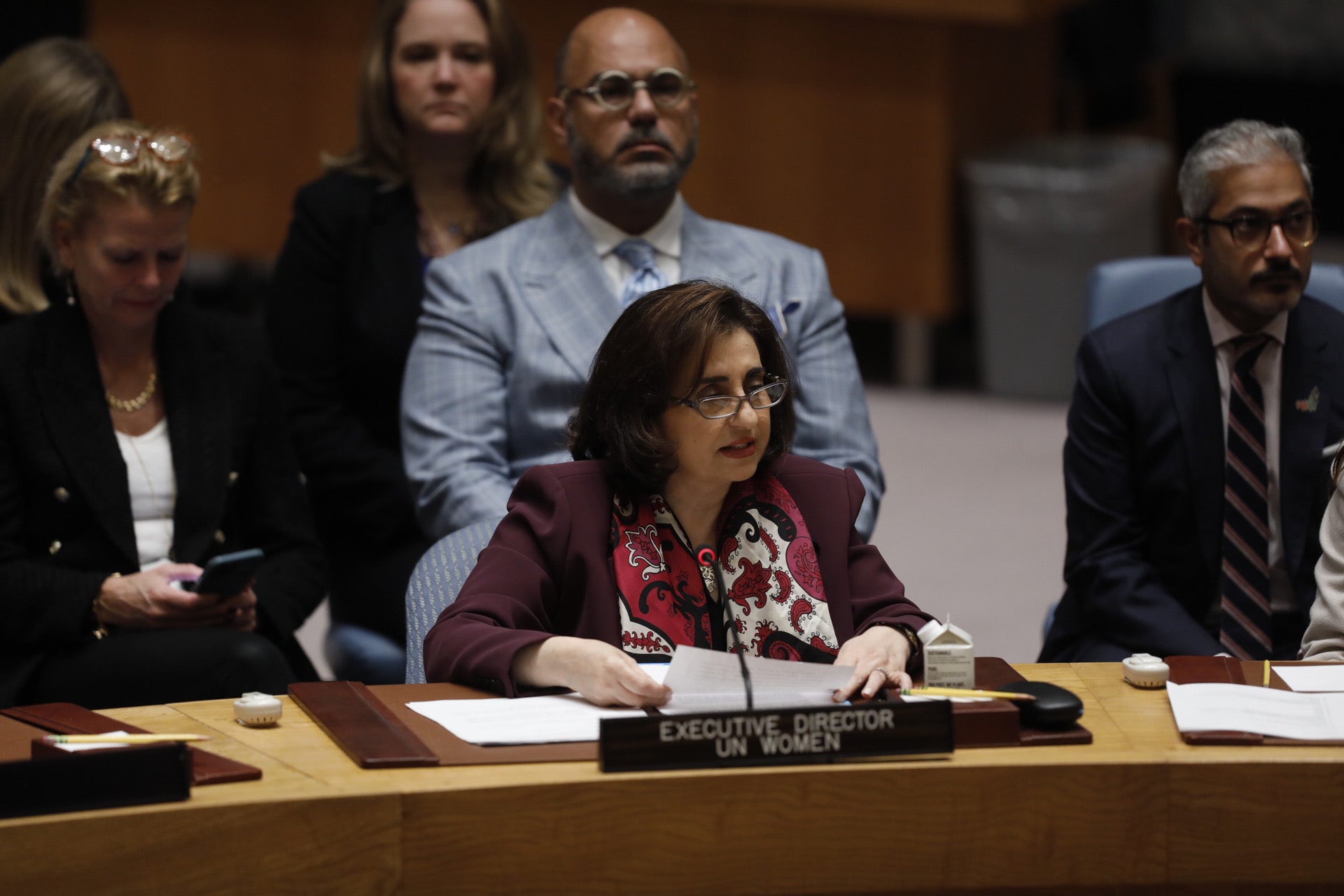
Remarks by Under-Secretary-General of the United Nations and Executive Director of UN Women Sima Bahous at the UN Security Council Open Debate on Women, Peace and Security
[As delivered]
This is a vitally important time for the Women, Peace and Security agenda. A reversal of generational gains in women’s rights is taking place against surging threats to security. Violent conflict, displacement, the repercussions of the global pandemic and the growing climate emergency all exact their highest price from women and girls.
The Deputy Secretary-General has already made clear the linkages between the challenges we face. The retreat from and pushback against the rights of women and girls aggravates those challenges while depriving us of the most powerful solutions.
The Secretary-General’s report describes how the Women, Peace and Security Agenda has been driven back. It details crucial and specific implementation gaps. These demand our collective, urgent attention. I urge everyone with a part to play in the pursuit of peace and security to read the report in full.
I will focus on three cross-cutting areas highlighted by this report and have three corresponding asks from you. To be clear from the outset, these are: to protect and support women human rights defenders as a powerful force for peace; to guarantee a seat at the table for women when peace is made; and to ensure that what we say about the priorities of women, peace and security are reflected in what we fund. We are a long way from where we should be on all these three asks.
I will begin with women human rights defenders, whose courage and commitment embody the ideals of this Council.
Around the world, from Iran, to Tigray, to Ukraine, to Afghanistan and more, women human rights defenders risk their lives every day in the name of peace and human rights and for the sake of their communities and our planet.
They should be cherished by everyone. Instead, they are increasingly under attack. Examples are tragically numerous.
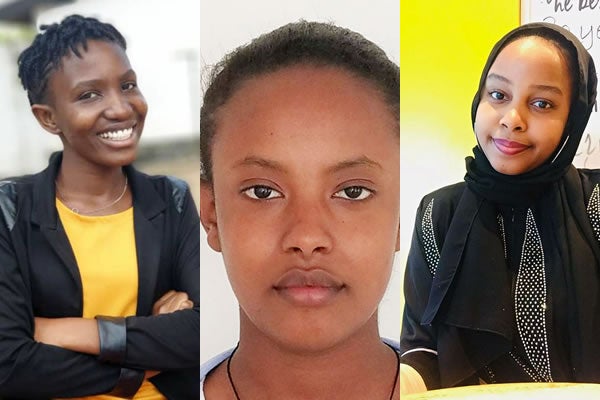
Daniela Soto, an indigenous women human rights defender from Colombia has been advocating for human rights since she was a teenager. Last May, she was shot twice in her abdomen by armed civilians. She survived the attack and spoke five months later at the United Nations Security Council, here, bringing attention to the continuing killings of indigenous women leaders in Colombia.
Siti Alnfor Ahmed Bakr, a 24-year-old nurse and activist in Sudan, was killed by security forces in November last year when she participated in a peaceful demonstration in Bahry.
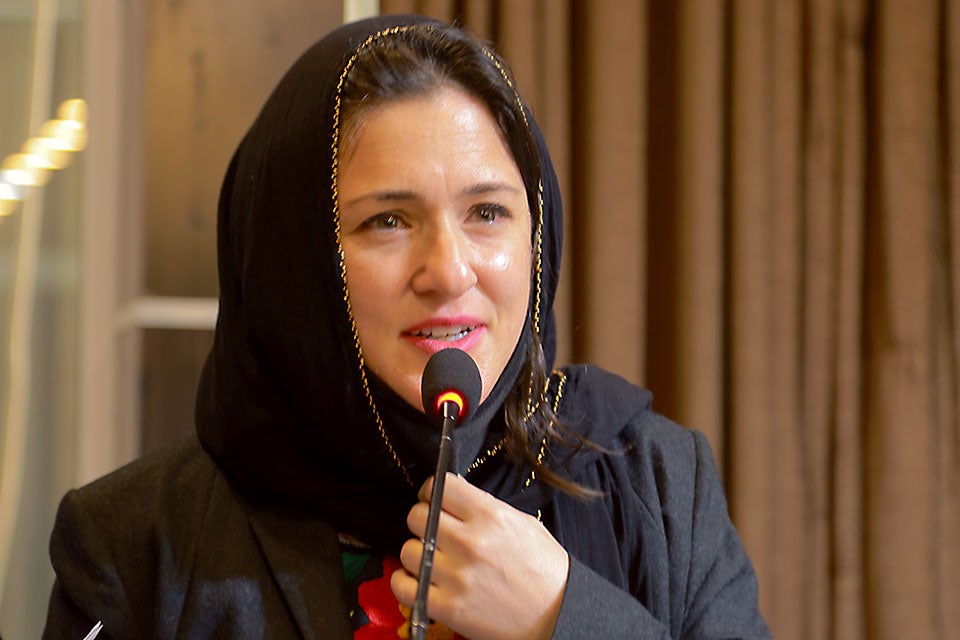
We will soon hear from Ms. Zahra Nader who will share with us the enormous risks taken and price paid by women human rights defenders in Afghanistan. They continue to demonstrate for their human rights in the face of the Taliban’s policy of systematic repression of women and girls. And for this they are harassed, detained and tortured.
Each one of these incidents is appalling in its own right. But they also reflect a bigger picture. The Office of the High Commissioner for Human Rights recently reported that 60 per cent of the nearly 350 individual cases of intimidation or reprisals for cooperation with the UN in the past year concerned women. UN Women’s surveys show us that nearly a third of women representatives of civil society who have briefed this Council have also faced reprisals. That briefing this Council should be cause for such reprisals should surely shock and compel us to action.
The UN has stepped up its public condemnations of these reprisals, conducted visits to women human rights defenders at risk, facilitated the establishment of networks of women human rights defenders, and supported the development of policies and laws that upgrade protection.
For example, in Libya, the UN has engaged with social media companies to fight misinformation and hate speech targeting women’s rights activists. In Colombia, more than 5,500 women leaders and human rights defenders have benefitted from protection strategies developed under a UN Women programme.
These interventions save lives and help create a space for the bravery of women human rights defenders to be translated into change. But there remains much more we can and therefore must do. The Secretary-General’s report points the way. We must urgently strengthen reporting and coordination on the UN side and build further our partnerships with Member States, regional organizations and civil society; provide material and political support to women human rights defenders and their organizations; and review and update legislation and administrative measures for asylum, temporary relocation or temporary protected status needed due to gender-based persecution.
Through these measures and more we can make our political support visible and real.
And lest any think that marginalizing women keeps them safe, let us be clear: it achieves the opposite. Denying women spaces, access, or funding because of safety concerns emboldens perpetrators and, in their eyes, validates their tactics. Women human rights defenders must be front and centre in our work ahead.
We know that the pursuit of inclusive and sustainable peace demands the full participation of women. The point has been made here multiple times and is reflected in this Council’s own resolutions and supported by a wide range of evidence.
Why then was women’s representation in UN-led peace processes in 2021 only 19 per cent – lower than in 2020?
Why is representation even lower in processes not led by the UN?
And why is it that from 2020 to 2021 we saw a decrease in women’s participation in leadership and management structures in refugee and IDP contexts?
In conflict-affected countries, the proportion of women on COVID-19 task forces was only 16 per cent. This, despite women’s leading role on the frontlines of the COVID response, at home and in their communities and professions.
And today, women’s representation in national parliaments is five per cent lower in conflict-affected countries than the global average, and 12 per cent lower in local government positions.
We know very well what to do. Quotas and temporary special measures remain our best tool to set right these damaging imbalances and to promote equality in decision-making.
In the past year, we have seen the Security Council use stronger language to demand women’s full, equal, and meaningful participation in peace processes, such as in Cyprus or Yemen, and these are welcome demands. I thank you for this.
Nonetheless, I urge all those supporting peace processes to insist on women’s direct and formal participation, and to insist on strengthening women’s resilience and leadership as a path to peace. I echo the Secretary-General’s call for Special Envoys to insist on women’s direct and formal participation, and to take specific steps to facilitate this. This should not be, and is not, beyond us.
Let me turn now to funding, one of the key levers by which our words become reality. Investing in women’s leadership, women’s civil society organizations, and supporting women human rights defenders in conflict contexts is more urgent, more needed and makes more sense than ever.
It is encouraging that 103 countries have now adopted National Action Plans on Women, Peace and Security compared to 37 a decade ago. It is heartening that a growing number of countries are choosing to adopt a feminist foreign policy; and I urge any going back on such decisions to reconsider. I also welcome the 184 signatories of the Compact on Women, Peace and Security and Humanitarian Action.
However, these commitments can only fulfill their promise when they are supported with funding commensurate to the challenge. In 2021, there was a 72 per cent shortfall in funding aimed at preventing and responding to gender-based violence in humanitarian emergencies. The share of bilateral aid to fragile and conflict-affected contexts dedicated to gender equality remains at five per cent. Funding for women’s organizations in conflict-affected countries, where it is needed most, went from US$181 million in 2019 to $150 million in 2020. In Afghanistan in 2022, 77 per cent of women’s civil society organizations have not received any funding and are no longer running programmes. In Myanmar, approximately half of women’s organizations had to close following the coup.
I call on the international community to reverse this trend. All those in a position to do so must significantly step up funding for gender equality in conflict settings. To fail to do this is to fail to live up to our claims of commitment and support.
I urge Member States to live up to their words and to make the choice to fund women human rights defenders and the work of the UN and our partners.
We are not naïve. We understand that economic pressures around the world drive these reductions in part. But this is also a matter of prioritization. It is a false economy that increases military spending, which has now reached an all-time high, while neglecting those investments that make it less necessary.
The Women, Peace and Security Agenda demands both our individual commitment and our collective action.
UN Women is doing its part despite the challenges. We will continue to do so. We are redoubling our efforts to support an ever-more effective integration of women’s leadership, women’s empowerment and gender equality across humanitarian work. We do so through UN coordination, supporting meaningful intergovernmental action, and supporting Member States to accelerate the implementation of the Women, Peace and Security Agenda in humanitarian settings.
Just last week UN Women joined the Inter-Agency Standing Committee, the highest-level humanitarian coordination platform of the UN System. I thank all of you who supported this. It reflects the recognition by our sister entities not only of the role and contribution of UN Women in this space, but also of the centrality of gender equality to effective humanitarian action. I assure you that I will tirelessly advocate for women’s leadership and gender equality, together with my entire team, across the breadth of humanitarian response.
As UN Women, we are also committed to ensure that all we do contributes to Women, Peace and Security. This includes the Generation Equality Forum, which provides a unique space for public and private partners together to achieve transformative change for gender equality.
Let us make the Secretary-General’s report a milestone. The needs could not be greater, nor the cause more pressing. We must take its recommendations to heart.
I ask that you follow through on measures to protect and empower women human rights defenders because they are there, on the front line, and their courage and leadership deserve nothing less than our full support.
I call on you to demand that women are properly represented in peace processes. There are no real excuses for anything less. That we are going backwards is surely a simple failure of will.
And I urge you to make the smart decision with funding and prioritize resources for women, peace and security. Our stated commitments are too far from the reality of where money goes right now. That needs to change.
We have choices to make. The right ones are clear and compelling and place women at the heart of our agenda. I hope that when we next meet it will be to discuss our success and progress in doing so. The alternative is not only to fail women, it is to fail us all.
I thank you.
Related content
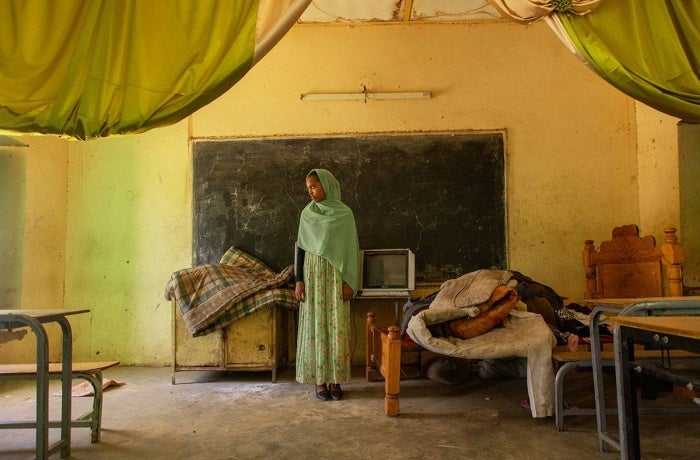
Press briefing by UN Women on the impact on women and girls of two years of relentless conflict in Sudan

Two years of relentless conflict in Sudan have triggered the world’s worst humanitarian crisis for 6 million displaced women and girls