
Universal menu

  • Global
  • Regions
    • Africa
    • Americas and the Caribbean
    • Arab States
    • Asia and the Pacific
    • Europe and Central Asia
  • Knowledge
  • Data
  • Training
  • Transparency
UN Women - For all women and girls

Main Navigation-HQ

  • Who we are
    • About us
      • About UN Women
      • Business model
      • Guiding documents
      • Worldwide presence
    • Leadership
      • Governance structure
      • Executive leadership
      • Executive Board
      • Accountability
    • Work with us
      • Employment
      • Procurement
      • Calls for proposals
      • Contact us
      • UN Women Strategic Plan 2026–2029
      • UN Women Strategic Plan 2026–2029 - social media image
        UN Women Strategic Plan 2026–2029
  • What we do
    • Focus areas
      • Ending violence against women
      • Peace and security
      • Humanitarian action
      • Leadership and governance
      • Economic empowerment
      • Innovation and technology
      • Women with disabilities
      • Youth
      • HIV and AIDS
    • How we work
      • 2030 Agenda for Sustainable Development
      • Commission on the Status of Women
      • Gender parity in the UN system
      • Intergovernmental support
      • Partnerships
      • Research and data
      • Training Centre
      • Trust funds
      • UN system coordination
      • Gender Equality Accelerators
      • Gender Equality Accelerators artwork
        Gender Equality Accelerators
  • News and stories
    • Latest
      • News
      • Articles and explainers
      • In focus
    • Media center
      • Press materials
      • Media contacts
      • Explainer: Why are women so exhausted? Care work and the mental load
      • Two adults stand at a table changing diapers on baby dolls, with laundry hanging on a clothesline behind them in a home setting.
        Explainer: Why are women so exhausted? Care work and the mental load
      • Press release: Aid cuts dismantle women’s organizations working in humanitarian crises
      • A young Ugandan woman sits with another local woman to talk
        Press release: Aid cuts dismantle women’s organizations working in humanitarian crises
  • Digital library
    • Resources
      • Publications
      • Annual reports
      • Progress of the world’s women
      • World survey on the role of women in development
      • The gender snapshot
    • GenderTerm
      • GenderTerm
      • Reprint permissions
      • UN Women Highlights 2025–2026
      • A smiling woman.
        UN Women Highlights 2025–2026
      • The gender snapshot 2025
      • gender snapshot thumbnail transparent
        The gender snapshot 2025
  • Get involved
    • How to get involved
      • For ALL Women and Girls
      • International Women's Day
      • 16 Days of Activism to End Violence against Women and Girls
      • UNiTE! Campaign to End Violence against Women
      • Generation Equality
      • He for She
Ask AI
https://84e5cfacd5c7e99f9825edf344450c.1b.environment.api.powerplatform.com/powervirtualagents/botsbyschema/crad4_websiteQA/directline/token?api-version=2022-03-01-preview
1
-
Ask your question here
AI website assistant

Hello, how can I assist you?

AI chatbot responses may be incorrect. Always verify important information.

Donate button menu

Donate

Breadcrumb

  1. Home
  2. Explore Our Latest News
  3. Explore Our Latest News

Website survey

We want to know how we can improve your experience on this website. Completing this survey takes less than 5 minutes.

TAKE THE SURVEY
Statement

Care: A critical investment for gender equality and the rights of women and girls

UN Women Statement for the International Day of Care and Support

29 October 2024
  • Share to Facebook
  • Share to Twitter
  • Share to LinkedIn
  • Share to E-mail

If women’s unpaid work were assigned a monetary value, it would exceed 40 per cent of GDP in some countries. Globally, women and girls spend more than 2.5 times as many hours a day on unpaid care work than men. This disparity prevents women and girls from fully realizing their rights and opportunities, throughout their lives. Women and girls remain the default providers of poorly paid and unpaid care work everywhere, and the most marginalized women – those who live in poverty, migrant women, women in informal work, and women from minority groups – shoulder the largest share of unpaid care work. An estimated 80 per cent of paid domestic workers worldwide are women.
Image
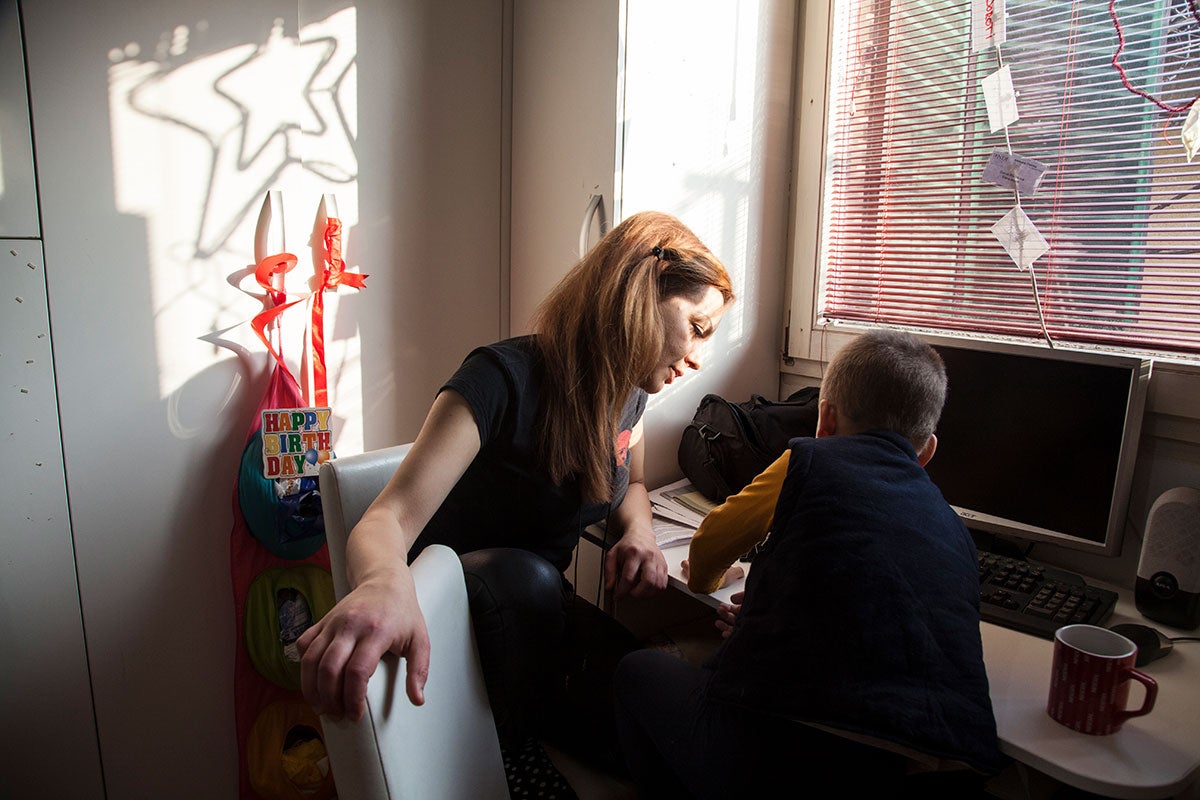
26-year-old Firdez Ademoska is a Roma woman and a mother of three children in the Former Yugoslav Republic of Macedonia. (December 2016). She started dating her husband at the age of 11 and left her home to move in with him at the age of 13. She quit school after getting married at 15. She now stays at home looking after the children and taking care of the household, and occasionally she works seasonal jobs.
26-year-old Firdez Ademoska is a Roma woman and a mother of three children in the Former Yugoslav Republic of Macedonia. (December 2016). She started dating her husband at the age of 11 and left her home to move in with him at the age of 13. She quit school after getting married at 15. She now stays at home looking after the children and taking care of the household, and occasionally she works seasonal jobs. Photo: UN Women/Rena Effendi

The world needs to confront the serious disconnect between what is essential for societies and economies to thrive, what is counted, and what is prioritized in budgets and policies. This is a fundamental human rights issue, and one of the biggest drivers of gender inequality and poverty.

When we invest in comprehensive care systems, we are investing in women, communities, societies and economies. This can simultaneously reduce women’s time and income poverty, enhance their labour market participation and increase the number of decent care jobs, potentially creating almost 300 million jobs by 2035.

Today, in the second time that the world commemorates the International Day of Care and Support, we celebrate efforts being made across the world, from Colombia and Panama recently passing laws establishing National Care Systems, to the parliaments of Brazil and Chile similarly discussing their own laws, to Kenya using the data of its first national Time Use Survey to inform the development of its national care policy. We welcome the Philippines’ Caregivers Welfare Act that upholds the rights of caregivers; Spain’s approval of a strategy for a new model of long-term care in the community; and Canada’s work with provincial, territorial, and Indigenous partners to provide a high-quality, affordable, flexible, and inclusive early learning and child care system, with new investments totalling up to $30 billion over five years.

Today, we call for bold actions that transform care systems. We rally behind the Human Rights Council’s call for the centrality of care and support from a human rights perspective and the Economic and Social Council’s emphasis on promoting care and support systems for social development.

Engaging through multi-partner and multistakeholder platforms such as the Global Alliance of Care or the Generation Equality Action Coalitions we can support innovation, experience sharing and achieve greater impact.

As we approach the 30th anniversary of the Beijing Declaration and Platform for Action, with its resounding recognition that equal is greater, let us all commit to action to transform care systems. Let us commit to the end of undervalued and gendered division of care work and instead build thriving, equitable and sustainable economies and societies for today and tomorrow.

Topics

  • Gender equality and women’s empowerment
  • Gender equality and inequality

Related content

Image
A portrait of an Afghan woman in silhouette
Press release

Five years after the Taliban takeover: the normalization of the exclusion of women and girls in Afghanistan

12 August 2026
Five years after the Taliban takeover: the normalization of the exclusion of women and girls in Afghanistan
Image
Sima Bahous, speaking.
Speech

Speech: Our vision is clear, our movement strong, our resolve undeterred

23 June 2026
Speech: Our vision is clear, our movement strong, our resolve undeterred
Image
Father carries his daughter onto his shoulders while they play in front of a wall decorated with colourful handprints.
Feature

The fatherhood programme challenging gender norms

18 June 2026
The fatherhood programme challenging gender norms

Footer menu-HQ

  • News and stories
  • Resources
  • What we do
  • How we work
  • Where we are
  • Partnerships
  • Employment
  • Procurement
  • Contact us
  • Executive Board
  • Commission on the Status of Women

Donate button menu [Footer tablet]

  • Donate

Donate button menu [Footer]

  • Donate

Social media menu

  • Facebook
  • Twitter
  • LinkedIn
  • Flickr
  • YouTube
  • Instagram
UN Women - For all women and girls

Footer bottom [Menu]

  • Copyright
  • Information security
  • Privacy notice
  • Report wrongdoing
  • Terms of use
Share this page
  • Share to Facebook
  • Share to Twitter
  • Share to LinkedIn
  • Share to E-mail

Or copy link