
Universal menu

  • Global
  • Regions
    • Africa
    • Americas and the Caribbean
    • Arab States
    • Asia and the Pacific
    • Europe and Central Asia
  • Knowledge
  • Data
  • Training
  • Transparency
UN Women - For all women and girls

Main Navigation-HQ

  • Who we are
    • About us
      • About UN Women
      • Business model
      • Guiding documents
      • Worldwide presence
    • Leadership
      • Governance structure
      • Executive leadership
      • Executive Board
      • Accountability
    • Work with us
      • Employment
      • Procurement
      • Calls for proposals
      • Contact us
      • UN Women Strategic Plan 2026–2029
      • UN Women Strategic Plan 2026–2029 - social media image
        UN Women Strategic Plan 2026–2029
  • What we do
    • Focus areas
      • Ending violence against women
      • Peace and security
      • Humanitarian action
      • Leadership and governance
      • Economic empowerment
      • Innovation and technology
      • Women with disabilities
      • Youth
      • HIV and AIDS
    • How we work
      • 2030 Agenda for Sustainable Development
      • Commission on the Status of Women
      • Gender parity in the UN system
      • Intergovernmental support
      • Partnerships
      • Research and data
      • Training Centre
      • Trust funds
      • UN system coordination
      • Gender Equality Accelerators
      • Gender Equality Accelerators artwork
        Gender Equality Accelerators
  • News and stories
    • Latest
      • News
      • Articles and explainers
      • In focus
    • Media center
      • Press materials
      • Media contacts
      • Explainer: Why are women so exhausted? Care work and the mental load
      • Two adults stand at a table changing diapers on baby dolls, with laundry hanging on a clothesline behind them in a home setting.
        Explainer: Why are women so exhausted? Care work and the mental load
      • Press release: Aid cuts dismantle women’s organizations working in humanitarian crises
      • A young Ugandan woman sits with another local woman to talk
        Press release: Aid cuts dismantle women’s organizations working in humanitarian crises
  • Digital library
    • Resources
      • Publications
      • Annual reports
      • Progress of the world’s women
      • World survey on the role of women in development
      • The gender snapshot
    • GenderTerm
      • GenderTerm
      • Reprint permissions
      • UN Women Highlights 2025–2026
      • A smiling woman.
        UN Women Highlights 2025–2026
      • The gender snapshot 2025
      • gender snapshot thumbnail transparent
        The gender snapshot 2025
  • Get involved
    • How to get involved
      • For ALL Women and Girls
      • International Women's Day
      • 16 Days of Activism to End Violence against Women and Girls
      • UNiTE! Campaign to End Violence against Women
      • Generation Equality
      • He for She
Ask AI
https://84e5cfacd5c7e99f9825edf344450c.1b.environment.api.powerplatform.com/powervirtualagents/botsbyschema/crad4_websiteQA/directline/token?api-version=2022-03-01-preview
1
-
Ask your question here
AI website assistant

Hello, how can I assist you?

AI chatbot responses may be incorrect. Always verify important information.

Donate button menu

Donate

Breadcrumb

  1. Home
  2. Explore Our Latest News
  3. Explore Our Latest News

Website survey

We want to know how we can improve your experience on this website. Completing this survey takes less than 5 minutes.

TAKE THE SURVEY
Statement

Statement: Building a future of scientific progress and gender equality 

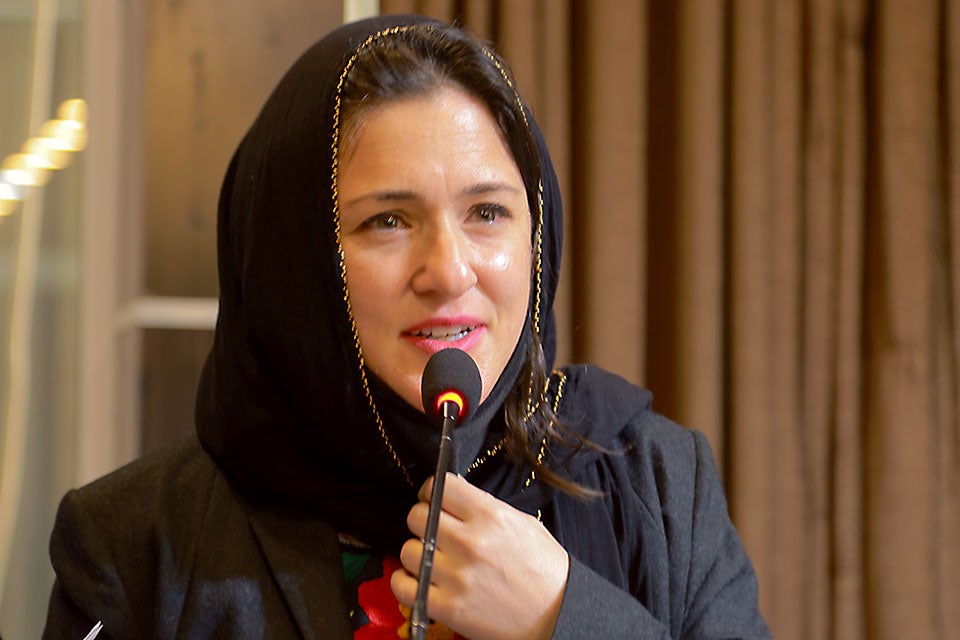
Statement by Ms Sima Bahous, Executive Director of UN Women, on the occasion of the International Day of Women and Girls in Science, 11 February 2023

9 February 2023
UN Women Executive Director Sima Bahous
  • Share to Facebook
  • Share to Twitter
  • Share to LinkedIn
  • Share to E-mail

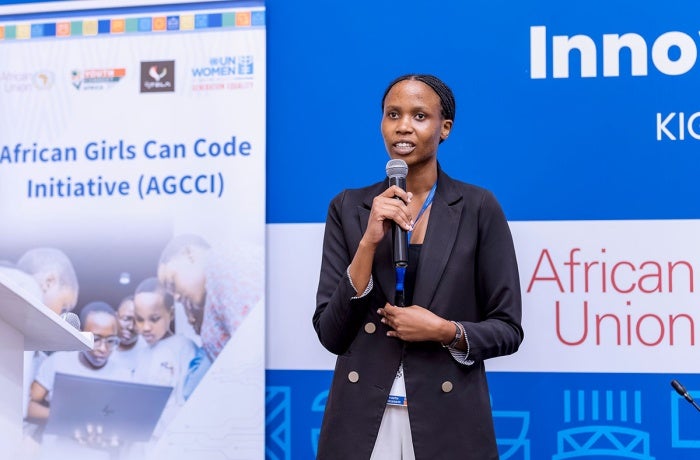
The 2023 International Day of Women and Girls in Science celebrates women and girls who have devoted themselves to science and the advancement of human knowledge and understanding as students, researchers, and practitioners.

They have made revolutionary discoveries, reinvented our future through the power of innovation, imagination and technology and paved the way for generations to come.
 

Despite their many achievements, women and girls remain underrepresented in science, technology, engineering, and mathematics (STEM) fields. Globally they are a minority of students in STEM education, at only 35 per cent, with just 3 per cent studying information and communication technology.

This directly reflects the discrimination faced by women and girls around the world. It is even more true for more marginalized women and girls, such as indigenous and afro-descendant women, women with disabilities, women in rural areas, women on the move, elderly women, LGBTIQ+ communities and adolescent girls.  It starts in their early years and is shaped and reinforced by gender stereotypes and norms. These can be found embedded in curricula, textbooks, and teaching and learning practices. The choices imposed upon girls in school shape their careers and employment opportunities as adults.

When young women look at careers in STEM they find a strongly male-dominated culture. If you cannot see it you cannot be it, and thus continues a cycle of limited representation.

Existing initiatives have proven inadequate. Change for girls in science requires a paradigm shift, a commitment to long-term, sustainable programmes and initiatives that acknowledge structural barriers and work to remove them. It must span educational reform, with new curricula that fosters girls’ curiosity in scientific discoveries from an early age, including science and technology subjects through primary school.

Teachers and educational institutions need support to consciously remove gender biases and stereotypes in educational environments, textbooks and didactic materials. It starts with making women’s contributions to STEM visible, including through connecting young women and girls with STEM professionals.

This year, the sixty-seventh session of the Commission on the Status of Women (CSW67) will consider as its priority theme “Innovation and technological change, and education in the digital age for achieving gender equality and the empowerment of all women and girls”. This is an unprecedented opportunity for the Commission to develop a definitive agenda for progress towards women’s full and equal participation and representation in STEM. Its implementation will require bold, coordinated, multi-stakeholder action.

UN Women remains ready to work with partners including through the Generation Equality Action Coalition on Technology and Innovation for Gender Equality. Together we can attain a future where scientific progress is gender-equal at its core, serving all, for the benefit of all and drawing on the talents of all.

Topics

  • Gender stereotypes
  • Education
  • Innovation and technology

Related content

Image
Sidi Haidara speaks into a microphone
Feature

One man’s quest to end female genital mutilation (FGM) in Mali

27 August 2026
One man’s quest to end female genital mutilation (FGM) in Mali
Image
A portrait of an Afghan woman in silhouette
Press release

Five years after the Taliban takeover: the normalization of the exclusion of women and girls in Afghanistan

12 August 2026
Five years after the Taliban takeover: the normalization of the exclusion of women and girls in Afghanistan
Image
Women pose in front of a bus with the Born Perfect campaign banner
Feature

Inside Liberia’s campaign to end female genital mutilation (FGM)

10 August 2026
Inside Liberia’s campaign to end female genital mutilation (FGM)

Footer menu-HQ

  • News and stories
  • Resources
  • What we do
  • How we work
  • Where we are
  • Partnerships
  • Employment
  • Procurement
  • Contact us
  • Executive Board
  • Commission on the Status of Women

Donate button menu [Footer tablet]

  • Donate

Donate button menu [Footer]

  • Donate

Social media menu

  • Facebook
  • Twitter
  • LinkedIn
  • Flickr
  • YouTube
  • Instagram
UN Women - For all women and girls

Footer bottom [Menu]

  • Copyright
  • Information security
  • Privacy notice
  • Report wrongdoing
  • Terms of use
Share this page
  • Share to Facebook
  • Share to Twitter
  • Share to LinkedIn
  • Share to E-mail

Or copy link