Universal menu

  • Global
  • Regions
    • Africa
    • Americas and the Caribbean
    • Arab States
    • Asia and the Pacific
    • Europe and Central Asia
  • Knowledge
  • Data
  • Training
  • Transparency
UN Women - For all women and girls

Main Navigation-HQ

  • Who we are
    • About us
      • About UN Women
      • Business model
      • Guiding documents
      • Worldwide presence
    • Leadership
      • Governance structure
      • Executive leadership
      • Executive Board
      • Accountability
    • Work with us
      • Employment
      • Procurement
      • Calls for proposals
      • Contact us
      • UN Women Strategic Plan 2026–2029
      • UN Women Strategic Plan 2026–2029 - social media image
        UN Women Strategic Plan 2026–2029
  • What we do
    • Focus areas
      • Ending violence against women
      • Peace and security
      • Humanitarian action
      • Leadership and governance
      • Economic empowerment
      • Innovation and technology
      • Women with disabilities
      • Youth
      • HIV and AIDS
    • How we work
      • 2030 Agenda for Sustainable Development
      • Commission on the Status of Women
      • Gender parity in the UN system
      • Intergovernmental support
      • Partnerships
      • Research and data
      • Training Centre
      • Trust funds
      • UN system coordination
      • Gender Equality Accelerators
      • Gender Equality Accelerators artwork
        Gender Equality Accelerators
  • News and stories
    • Latest
      • News
      • Articles and explainers
      • In focus
    • Media center
      • Press materials
      • Media contacts
      • Explainer: Why are women so exhausted? Care work and the mental load
      • Two adults stand at a table changing diapers on baby dolls, with laundry hanging on a clothesline behind them in a home setting.
        Explainer: Why are women so exhausted? Care work and the mental load
      • Press release: Aid cuts dismantle women’s organizations working in humanitarian crises
      • A young Ugandan woman sits with another local woman to talk
        Press release: Aid cuts dismantle women’s organizations working in humanitarian crises
  • Digital library
    • Resources
      • Publications
      • Annual reports
      • Progress of the world’s women
      • World survey on the role of women in development
      • The gender snapshot
    • GenderTerm
      • GenderTerm
      • Reprint permissions
      • UN Women Highlights 2025–2026
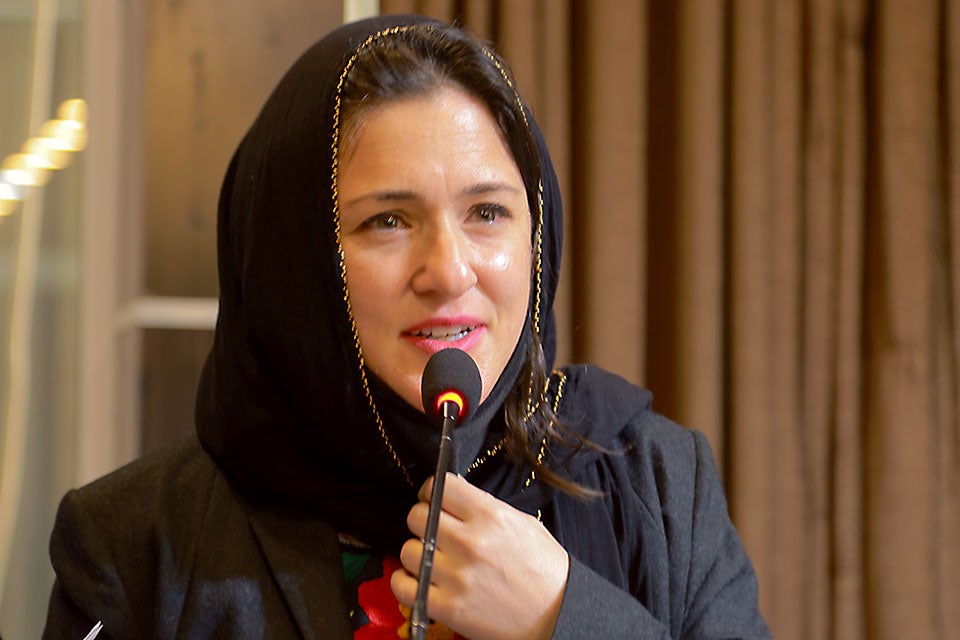
      • A smiling woman.
        UN Women Highlights 2025–2026
      • The gender snapshot 2025
      • gender snapshot thumbnail transparent
        The gender snapshot 2025
  • Get involved
    • How to get involved
      • For ALL Women and Girls
      • International Women's Day
      • 16 Days of Activism to End Violence against Women and Girls
      • UNiTE! Campaign to End Violence against Women
      • Generation Equality
      • He for She
Ask AI
https://84e5cfacd5c7e99f9825edf344450c.1b.environment.api.powerplatform.com/powervirtualagents/botsbyschema/crad4_websiteQA/directline/token?api-version=2022-03-01-preview
1
-
Ask your question here
AI website assistant

Hello, how can I assist you?

AI chatbot responses may be incorrect. Always verify important information.

Donate button menu

Donate

Breadcrumb

  1. Home
  2. Publications

Website survey

We want to know how we can improve your experience on this website. Completing this survey takes less than 5 minutes.

TAKE THE SURVEY
Image

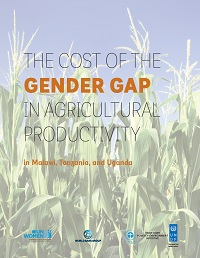
The Cost of Agricultural Productivity in Malawi, Tanzania and Uganda

Publication year 2015
  • Share to Facebook
  • Share to Twitter
  • Share to LinkedIn
  • Share to E-mail
Author(s)/editor(s) UN Women, the United Nations Development Programme–United Nations Environment Programme Poverty-Environment Initiative Africa, and the World Bank

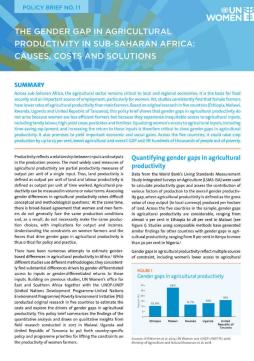
Women form a large proportion of theagricultural labour force in Sub-SaharanAfrica and thus play a vital role inensuring family nutrition and food security. InEastern and Southern Africa, agriculture continuesto be a key engine for local and regional economies,represents a critical source of income and ensuresfood security and nutrition. However, as has beenwidely documented, gender-based inequalities inaccess to and control of productive and financialresources inhibit agricultural productivity and reducefood security. A new study measuring the economiccosts of the gender gap in agricultural productivity inthree African countries—Malawi, the United Republicof Tanzania (hereafter Tanzania), and Uganda—provides further evidence that reducing the gendergap plays a significant role in poverty reduction andimproved nutritional outcomes.

The report provides a unique quantification ofthe costs in terms of lost growth opportunitiesand an estimate of what societies, economies,and communities would gain if the gender gap inagriculture is addressed. The findings of this reportare striking, and send a strong signal to policy makersin Africa as well as development partners that closingthe gender gap is smart economics. Consider this:closing the gender gap in agricultural productivitycould potentially lift as many as 238,000 people outof poverty in Malawi, 80,000 people in Tanzania, and119,000 people in Uganda.

This report is a joint production of UN Women,the United Nations Development Programme–United Nations Environment ProgrammePoverty-Environment Initiative (UNDP-UNEP PEI)Africa, and the World Bank. The collaboration was ledby UN Women, Eastern and Southern Africa RegionalOffice (ESARO).
View online/download

English

Bibliographic information

Resource type(s)
Research papers
Publishing entities
United Nations Entity for Gender Equality and the Empowerment of Women (UN Women) United Nations Development Programme (UNDP) United Nations Environment Programme (UNEP) World Bank Group (WBG)
UN Women office publishing
UN Women Headquarters Office

Tags

2030 Agenda for Sustainable Development Africa Economic empowerment Gender wage gap Gender, culture and society Malawi Rural women Tanzania, United Republic of Uganda

Related publications

The gender gap in agricultural productivity in sub-Saharan Africa: Causes, costs and solutions

The gender gap in agricultural productivity in sub-Saharan Africa: Causes, costs and solutions

18 April 2019
The gender gap in agricultural productivity in sub-Saharan Africa: Causes, costs and solutions
Women’s economic empowerment in fisheries in the blue economy of the Indian Ocean Rim: A baseline report

Women’s economic empowerment in fisheries in the blue economy of the Indian Ocean Rim: A baseline report

28 October 2020
Women’s economic empowerment in fisheries in the blue economy of the Indian Ocean Rim: A baseline report
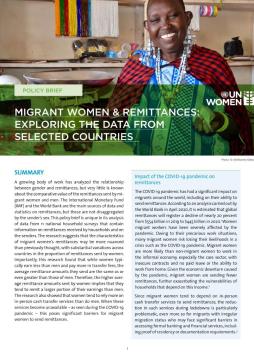
Migrant women and remittances: Exploring the data from selected countries

Migrant women and remittances: Exploring the data from selected countries

12 June 2020
Migrant women and remittances: Exploring the data from selected countries

Footer menu-HQ

  • News and stories
  • Resources
  • What we do
  • How we work
  • Where we are
  • Partnerships
  • Employment
  • Procurement
  • Contact us
  • Executive Board
  • Commission on the Status of Women

Donate button menu [Footer tablet]

  • Donate

Donate button menu [Footer]

  • Donate

Social media menu

  • Facebook
  • Twitter
  • LinkedIn
  • Flickr
  • YouTube
  • Instagram
UN Women - For all women and girls

Footer bottom [Menu]

  • Copyright
  • Information security
  • Privacy notice
  • Report wrongdoing
  • Terms of use
Share this page
  • Share to Facebook
  • Share to Twitter
  • Share to LinkedIn
  • Share to E-mail

Or copy link