
Universal menu

  • Global
  • Regions
    • Africa
    • Americas and the Caribbean
    • Arab States
    • Asia and the Pacific
    • Europe and Central Asia
  • Knowledge
  • Data
  • Training
  • Transparency
UN Women - For all women and girls

Main Navigation-HQ

  • Who we are
    • About us
      • About UN Women
      • Business model
      • Guiding documents
      • Worldwide presence
    • Leadership
      • Governance structure
      • Executive leadership
      • Executive Board
      • Accountability
    • Work with us
      • Employment
      • Procurement
      • Calls for proposals
      • Contact us
      • UN Women Strategic Plan 2026–2029
      • UN Women Strategic Plan 2026–2029 - social media image
        UN Women Strategic Plan 2026–2029
  • What we do
    • Focus areas
      • Ending violence against women
      • Peace and security
      • Humanitarian action
      • Leadership and governance
      • Economic empowerment
      • Innovation and technology
      • Women with disabilities
      • Youth
      • HIV and AIDS
    • How we work
      • 2030 Agenda for Sustainable Development
      • Commission on the Status of Women
      • Gender parity in the UN system
      • Intergovernmental support
      • Partnerships
      • Research and data
      • Training Centre
      • Trust funds
      • UN system coordination
      • Gender Equality Accelerators
      • Gender Equality Accelerators artwork
        Gender Equality Accelerators
  • News and stories
    • Latest
      • News
      • Articles and explainers
      • In focus
    • Media center
      • Press materials
      • Media contacts
      • Explainer: Why are women so exhausted? Care work and the mental load
      • Two adults stand at a table changing diapers on baby dolls, with laundry hanging on a clothesline behind them in a home setting.
        Explainer: Why are women so exhausted? Care work and the mental load
      • Press release: Aid cuts dismantle women’s organizations working in humanitarian crises
      • A young Ugandan woman sits with another local woman to talk
        Press release: Aid cuts dismantle women’s organizations working in humanitarian crises
  • Digital library
    • Resources
      • Publications
      • Annual reports
      • Progress of the world’s women
      • World survey on the role of women in development
      • The gender snapshot
    • GenderTerm
      • GenderTerm
      • Reprint permissions
      • UN Women Highlights 2025–2026
      • A smiling woman.
        UN Women Highlights 2025–2026
      • The gender snapshot 2025
      • gender snapshot thumbnail transparent
        The gender snapshot 2025
  • Get involved
    • How to get involved
      • For ALL Women and Girls
      • International Women's Day
      • 16 Days of Activism to End Violence against Women and Girls
      • UNiTE! Campaign to End Violence against Women
      • Generation Equality
      • He for She
Ask AI
https://84e5cfacd5c7e99f9825edf344450c.1b.environment.api.powerplatform.com/powervirtualagents/botsbyschema/crad4_websiteQA/directline/token?api-version=2022-03-01-preview
1
-
Ask your question here
AI website assistant

Hello, how can I assist you?

AI chatbot responses may be incorrect. Always verify important information.

Donate button menu

Donate

Breadcrumb

  1. Home
  2. Explore Our Latest News
  3. Explore Our Latest News

Website survey

We want to know how we can improve your experience on this website. Completing this survey takes less than 5 minutes.

TAKE THE SURVEY
Feature

Voices from Gaza: Amani’s story of loss

1 November 2023
  • Share to Facebook
  • Share to Twitter
  • Share to LinkedIn
  • Share to E-mail

“With her gone, I mourned the dreams we had woven together. Our shared vision of the future, all of it, had crumbled to dust.”

In southern Gaza, 34-year-old Amani is working to protect her family from the effects of the ongoing conflict and mourning the loss of a close friend. Their home, in the southern city of Rafah, seems far from the conflict’s violent epicentre, but cannot offer true safety.
Image
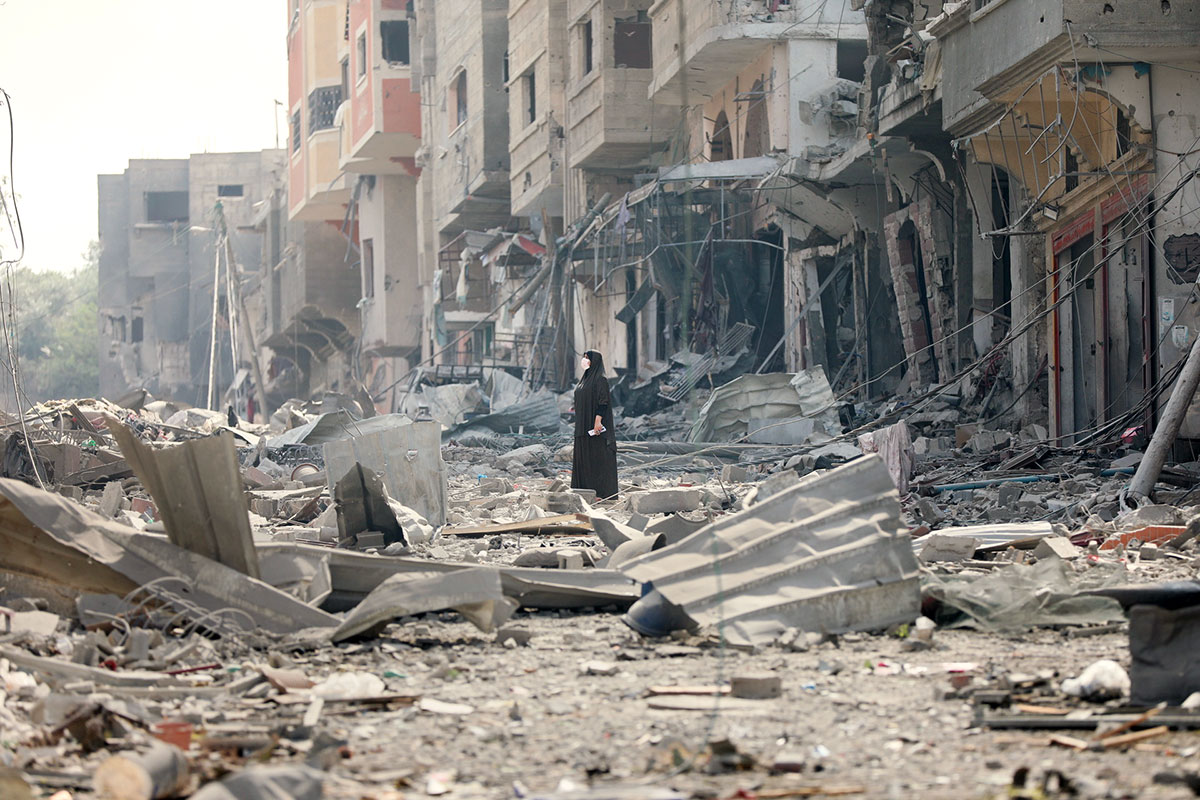
Extensive destruction is seen in the Gaza strip following Israeli airstrikes on 10 October 2023.
Extensive destruction is seen in the Gaza strip following Israeli airstrikes on 10 October 2023. Photo: WHO.

Amani works as a psychotherapist in the Gazan Ministry of Health. Her mission is to provide support to patients processing the traumas of living amid years of conflict. But she also carries the heavy burden of protecting her own family.

“In every single moment, an eerie uncertainty surrounds us. I live in continuous fear of what could happen to my children and family”, she says. “My primary responsibility is to offer unwavering support, but the sheer gravity of this duty is crushing.”

Amani is a mother of four, and has seen her oldest son, Firas, begin to abandon his dreams of a future as a lawyer amid the conflict. She says: “In the shadow of this war, the dreams and aspirations of my children have been condensed into a singular, fervent plea: to survive.”

“Pain and fear now dominate our lives”, she continued, her voice trembling. “This is a conversation I never wished to have, yet I find myself trapped by never-ending thoughts, unrelenting nightmares, and a life of torment.”

She is also carrying a crushing loss. Amani lost contact with Lamia, a 28-year-old woman who was her closest friend, during the conflict. Amani recalls her as a “vibrant, quick-witted, and resolute soul”, and “an embodiment of Palestinian women’s boundless strength and dreams”. 

Together, they worked through their master’s degree exams and dreamed of securing a scholarship for a Ph.D. programme.

When Israeli forces ordered about 1 million people relocate from northern Gaza in anticipation of a ground invasion, Amani sent messages to her friend. She feared that Lamia, like many people in the region, was unable to leave either due to physical constraints or the dangers of relocation amid the conflict.

She messaged Lamia and called her repeatedly but was only met by silence and hampered by cuts to internet access. Her voice trembled as she recalled her last attempt to contact her friend: “I posted this on social media hoping that someone would answer: ‘Lamia, are you still alive? My heart aches! I beg you, pray for her.’”

As night fell on 14 October, a person who saw her social media post delivered the devastating news: Lamia and her entire family had been entombed under the rubble of their home after it was hit by an airstrike. 

In the hours that followed, Lamia’s neighbours worked for hours to excavate them from the rubble, and prayed for their lives, but the family had not survived.

Thinking back at the last time she spent with her friend, Amani recalls a few days before the conflict when she and Lamia attended a seven-day self-care training program, calling it, “an experience I could never have imagined would mark our final moments together”.

“I clung to the hope that Lamia might emerge unscathed, but Lamia was lost to us”, she continued. “With her gone, I mourned the dreams we had woven together. Our shared vision of the future, all of it, had crumbled to dust.”

Topics

  • Peace and security
  • Conflict, war
  • Arab States/North Africa
  • Palestine, State of

Related content

Image
A woman stands amid a crowd of people and motorcycles on a busy street.
Feature

How aid cuts are threatening women’s organizations responding to Haiti’s gang violence

6 August 2026
How aid cuts are threatening women’s organizations responding to Haiti’s gang violence
Image
UNWomen_Placeholder
Statement

UN Women statement: Drone attacks by day and sexual violence by night leave no safe window for women and girls to collect water amidst rainy season in Sudan’s El Obeid

24 July 2026
UN Women statement: Drone attacks by day and sexual violence by night leave no safe window for women and girls to collect water amidst rainy season in Sudan’s El Obeid
Image
Women sit together on the floor inside an indoor space, with a woman wearing a purple headscarf seated in the foreground.
Feature

Aid cuts, employment bans, movement restrictions: The triple threat to Afghan women

16 July 2026
Aid cuts, employment bans, movement restrictions: The triple threat to Afghan women

Footer menu-HQ

  • News and stories
  • Resources
  • What we do
  • How we work
  • Where we are
  • Partnerships
  • Employment
  • Procurement
  • Contact us
  • Executive Board
  • Commission on the Status of Women

Donate button menu [Footer tablet]

  • Donate

Donate button menu [Footer]

  • Donate

Social media menu

  • Facebook
  • Twitter
  • LinkedIn
  • Flickr
  • YouTube
  • Instagram
UN Women - For all women and girls

Footer bottom [Menu]

  • Copyright
  • Information security
  • Privacy notice
  • Report wrongdoing
  • Terms of use
Share this page
  • Share to Facebook
  • Share to Twitter
  • Share to LinkedIn
  • Share to E-mail

Or copy link