


Press release: Geneva summit garners action to tackle gender discriminatory nationality laws
Geneva, 13 June 2023 — Leaders from governments, civil society and United Nations agencies convened in Geneva today at a Global Summit on Gender Equality in Nationality Laws, calling for expedited action to end gender-based discrimination in nationality laws that deny people the equal right to acquire and confer nationality on their children and spouses.
Convened by the Global Campaign for Equal Nationality Rights, UNHCR, the UN Refugee Agency, UNICEF, and UN Women, the Global Summit heard from Eswatini, Iraq and Kiribati states, which reaffirmed their commitment to achieve gender equality in their nationality laws.
While in many contexts across the world, women were historically denied the right to confer nationality to their children on an equal basis with men, multiple countries have reformed their nationality laws over the past few decades. Despite this progress, twenty-four countries still retain nationality laws that deny women the right to pass their citizenship to their children while almost fifty countries prevent them from conferring nationality on their spouse on an equal basis with men.
At their core, gender-discriminatory nationality laws undermine women’s status as equal citizens and their equality in the family, and are also a root cause of statelessness. At today’s Global Summit, leading affected activists and UN agencies also drew attention to resulting wide-ranging human rights violations caused by this discrimination, harming affected women, their families, and societies as a whole.
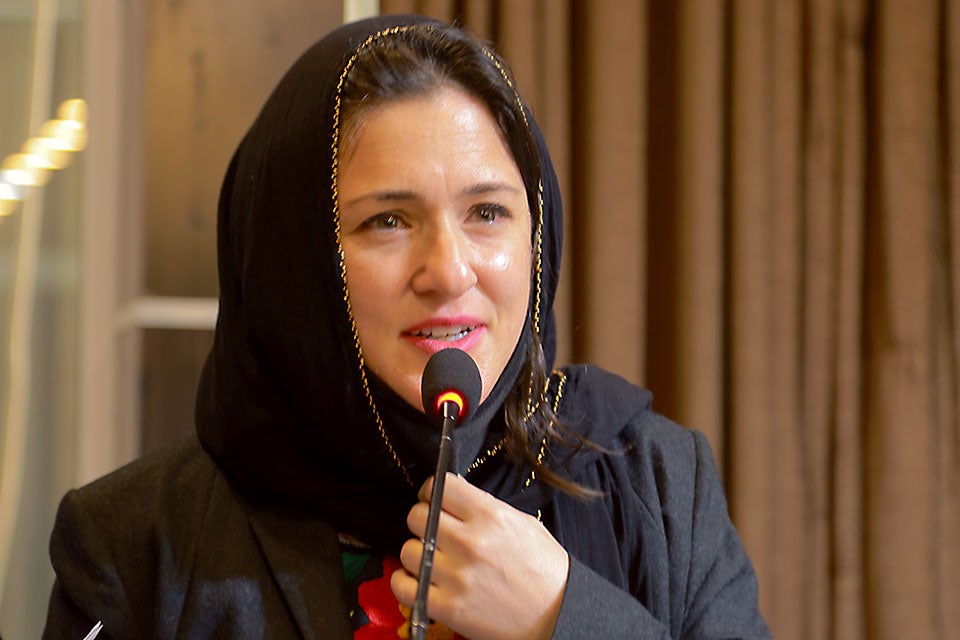
“When a state allows gender discrimination in its nationality laws, it is implicitly endorsing the notion of women as inferior and possessing second-class citizenship. Laws that discriminate and deny women equal rights with men betray their trust in society and signal that gender discrimination is acceptable, normal, and expected,” said Adriana Quiñones, UN Women’s Head of Human Rights and Development in Geneva.
Habiba Al-Hinai, Executive Director for the Omani Association for Human rights echoed this, saying: “Women are penalized for choosing to marry non-citizens, which infringes on their right to freely choose a spouse. We are calling for equality, for women to have the same nationality rights as men, nothing more, nothing less. We are not asking for charity. We are calling for our equal rights.”
Gaithiri Siva, member of the Family Frontiers Impacted Mothers Network from Malaysia, said: “Gender discriminatory citizenship laws undermine the autonomy of women and our ability to make decisions for ourselves and the wellbeing of our children. We welcome the move by the Malaysian government to table the amendments in September that will end our struggles.”
The benefits of gender equality in nationality laws extend beyond affected individuals and their families, as gender equality in nationality laws is crucial to achieving the Sustainable Development Goals, to build inclusive societies, and resolve statelessness.
“There is an increasing awareness amongst policymakers where gender discrimination in nationality laws persists that reform is needed and that gender equality in nationality laws should be embraced—that it is the right thing to do, and it is the smart thing to do,” said Catherine Harrington, Campaign Manager for the Global Campaign for Equal Nationality Rights.
Citizens’ equal right to acquire, change, retain and confer nationality is enshrined in international law and several core human rights conventions ratified by most states, including the Convention on the Elimination of All Forms of Discrimination Against Women and the Convention on the Rights of the Child. The link between children’s rights and wellbeing and parents’ equal right to confer nationality on their children, regardless of the parent’s gender, was also highlighted at the Summit.
“Without nationality, children are not protected and may be denied access to education, healthcare, family unity, and the ability to pursue their aspirations. Collaboration among governments, civil society organizations, and regional bodies towards achieving gender equality and safeguarding the rights and well-being of all individuals in the MENA region is of utmost priority,” said Marc Rubin, UNICEF Deputy Regional Director, Middle East and North Africa.
Recognizing recent reforms and progress, speakers at the Global Summit underscored that this is a man-made problem with a known, achievable solution that does not require significant resources, but rather, political will and action by States.
UN High Commissioner for Refugees, Filippo Grandi, underscored this by saying: “Statelessness and gender discriminatory nationality laws have a cure within our grasp. We have seen inspiring progress over the years, showing us all that where there is political will, it can be done, and reminding us that reform is possible, regardless of differences in language, culture or religion. Let us all do what it takes to achieve universal equality between women and men in nationality matters and consign this form of discrimination, once and for all, to the history books.”
Related content

Girls in Brazil call for ‘full and equal participation in sport, with safety and support’
Statement: The Gambia’s decision to uphold ban on FGM critical win for girls’ and women’s rights