
Universal menu

  • Global
  • Regions
    • Africa
    • Americas and the Caribbean
    • Arab States
    • Asia and the Pacific
    • Europe and Central Asia
  • Knowledge
  • Data
  • Training
  • Transparency
UN Women - For all women and girls

Main Navigation-HQ

  • Who we are
    • About us
      • About UN Women
      • Business model
      • Guiding documents
      • Worldwide presence
    • Leadership
      • Governance structure
      • Executive leadership
      • Executive Board
      • Accountability
    • Work with us
      • Employment
      • Procurement
      • Calls for proposals
      • Contact us
      • UN Women Strategic Plan 2026–2029
      • UN Women Strategic Plan 2026–2029 - social media image
        UN Women Strategic Plan 2026–2029
  • What we do
    • Focus areas
      • Ending violence against women
      • Peace and security
      • Humanitarian action
      • Leadership and governance
      • Economic empowerment
      • Innovation and technology
      • Women with disabilities
      • Youth
      • HIV and AIDS
    • How we work
      • 2030 Agenda for Sustainable Development
      • Commission on the Status of Women
      • Gender parity in the UN system
      • Intergovernmental support
      • Partnerships
      • Research and data
      • Training Centre
      • Trust funds
      • UN system coordination
      • Gender Equality Accelerators
      • Gender Equality Accelerators artwork
        Gender Equality Accelerators
  • News and stories
    • Latest
      • News
      • Articles and explainers
      • In focus
    • Media center
      • Press materials
      • Media contacts
      • Explainer: Why are women so exhausted? Care work and the mental load
      • Two adults stand at a table changing diapers on baby dolls, with laundry hanging on a clothesline behind them in a home setting.
        Explainer: Why are women so exhausted? Care work and the mental load
      • Press release: Aid cuts dismantle women’s organizations working in humanitarian crises
      • A young Ugandan woman sits with another local woman to talk
        Press release: Aid cuts dismantle women’s organizations working in humanitarian crises
  • Digital library
    • Resources
      • Publications
      • Annual reports
      • Progress of the world’s women
      • World survey on the role of women in development
      • The gender snapshot
    • GenderTerm
      • GenderTerm
      • Reprint permissions
      • UN Women Highlights 2025–2026
      • A smiling woman.
        UN Women Highlights 2025–2026
      • The gender snapshot 2025
      • gender snapshot thumbnail transparent
        The gender snapshot 2025
  • Get involved
    • How to get involved
      • For ALL Women and Girls
      • International Women's Day
      • 16 Days of Activism to End Violence against Women and Girls
      • UNiTE! Campaign to End Violence against Women
      • Generation Equality
      • He for She
Ask AI
https://84e5cfacd5c7e99f9825edf344450c.1b.environment.api.powerplatform.com/powervirtualagents/botsbyschema/crad4_websiteQA/directline/token?api-version=2022-03-01-preview
1
-
Ask your question here
AI website assistant

Hello, how can I assist you?

AI chatbot responses may be incorrect. Always verify important information.

Donate button menu

Donate

Breadcrumb

  1. Home
  2. Explore Our Latest News
  3. Explore Our Latest News

Website survey

We want to know how we can improve your experience on this website. Completing this survey takes less than 5 minutes.

TAKE THE SURVEY
Feature

How women migrants in Thailand are stopping trafficking and gender-based violence in their communities

15 November 2021
  • Share to Facebook
  • Share to Twitter
  • Share to LinkedIn
  • Share to E-mail

Migration can be a life-changing experience, but migrant workers are especially vulnerable to human trafficking and gender-based violence. San May Khine, a social worker in Thailand who was once a migrant worker herself, is supporting other women migrant workers to move past experiences of violence and build a stable and bright future in a COVID-19 world.

This story was originally published by UN Women Asia Pacific and has been edited for this website.
Image
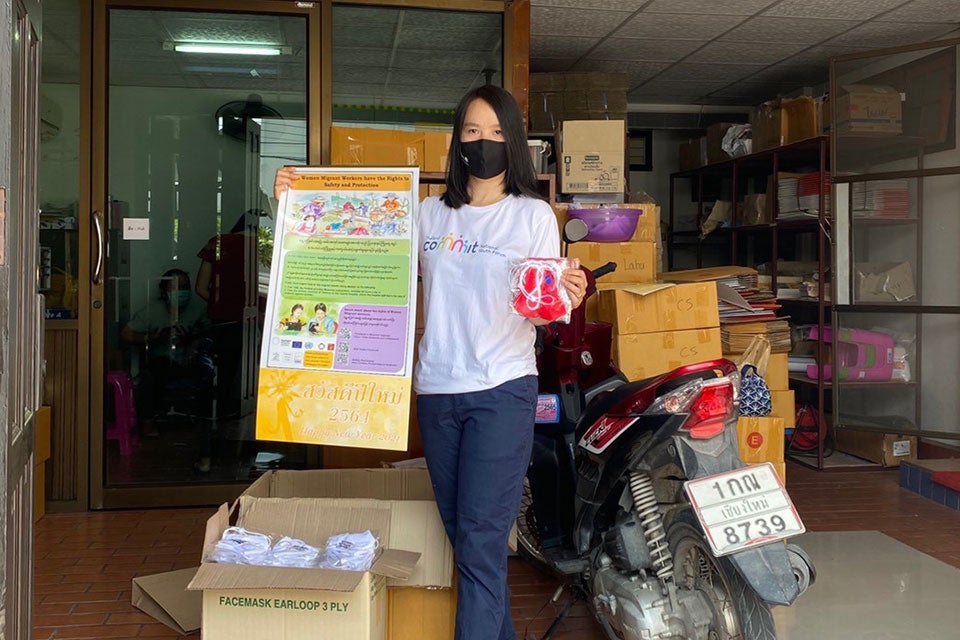
•   San May Khine  presents resources for coping with COVID-19 and personal protection equipment to women migrant workers  All Photos Courtesy San May Khine

“Migration empowered me and made me who I am today,” explains San May Khine, a Project Officer with the “Education and Identify Project” at the MAP Foundation in Thailand. Born and raised in Myanmar, Khine became a domestic worker in Thailand at the age of 14.

“I was the youngest child in my family, and I wanted to help my parents. Back then, I earned 3,500 Thai Baht (about USD 100) per month. I was excited to have that money for me and my family in Myanmar,” she explains.

“However, the working environment was exploitative. I had to work for a whole day without any leave or proper care as a child. But I did not know I had rights, so I did not even think of claiming them.”

After being a domestic worker for two years, Khine worked in various jobs, including in an orchid farm and at a construction site. “I gained more freedom as I earned more money. This would not be possible without the support of the good people that I met in Thailand.”

Finding strength in adversity

Migration can empower female migrant workers financially and help build their confidence. But, away from family and established community networks, many women struggle to find support when they need it. Once Khine found the strength to leave her abusive husband, she she wanted to support others in her migrant community to also break free of gender-based violence.
Image
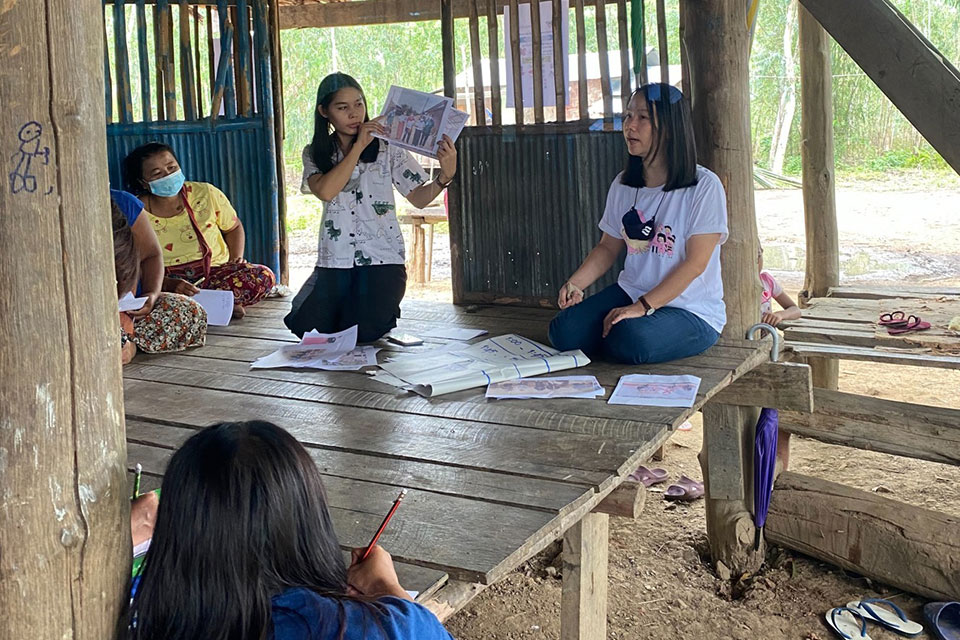
San May Khine organizies a session on violence against women migrant workers, trafficking in persons and the rights of women migrant workers in Chiang Mai, Thailand. Photo courtesy of San May Khine

“I thought only men could do things like protect the family and earn money – the traditional roles of the father. My daughter was very little, and I was terrified to leave my husband, so I endured his abusive words and acts. But, one day, I realized that I was working like he did, earning money like he did, and I was protecting my daughter, probably better than he did.”

“I had no doubt that I could be the best parent for my daughter without him. It was all thanks to financial independence and the belief I had in myself, which I gained throughout my migration experience. When women are confident and know more about their rights, they will be more prepared to break out from the cycle of violence. My role is guiding them to realize their potential and supporting their brave journey to walk away from violence,” enthuses Khine.

Khine is now a social worker, and she is part of a multi-disciplinary team in Chiang Mai province that has a large migrant population from Myanmar. She works with migrant women and their children who have experienced violence and trafficking.

“I see my past in them. I know they have unlimited, yet unrealized, potential because of what women are ‘supposed to be’. While the COVID-19 pandemic is a difficult time for everyone, it is extremely difficult for women who have had to stay within abusive relationships. I’ve seen an increase in the number of cases of violence, and also an increase in the intensity of violence.”

Migrant communities support their own

Khine’s social work is supported by the Safe and Fair Programme, jointly implemented by UN Women and ILO, in collaboration with UNODC, as part of the multi-year EU-UN Spotlight Initiative to Eliminate Violence Against Women and Girls. In Thailand, the programme is working with local civil society organizations in Mae Sot, Chiang Mai and Bangkok to strengthen coordination systems by developing local standard operating procedures.

Image
San May Khine, in a traditional Shan dress, in front of Royal Park Rajapruek in Chiang Mai, Thailand after hosting a programme on the rights of the child and women. Photo courtesy of San May Khine

“Working with women like Ms. Khine is critical,” explains Kohnwilai Teppunkoonngam, the National Programme Coordinator of UN Women in Thailand. “Having experienced that life firsthand, they know the reality that women migrant workers are living and how best to help them.”

The programme has also been supporting peer network groups and civil society organizations across the ASEAN region to better support women migrant workers. “Research shows that women migrant workers who are survivors of violence seek immediate support and help from friends, fellow women migrant workers or local civil society organizations,” notes Valentina Volpe, the Ending Violence against Women Specialist at the UN Women Regional Office for Asia and the Pacific.

“The Safe and Fair Programme encourages and supports the establishment of migrant women’s networks in countries of origin, transit and destination, and across countries, for peer support and information sharing.”

Khine says her work will not stop as long as there is someone who needs her. “I work to make the referral processes safer and more gender-responsive for women migrant workers and their children. I also provide interpretation support for women from Myanmar who do not speak Thai. My job is to make them more comfortable, confident, and safer. Their courage always inspires me. It is what keeps me moving… until the day every woman and girl is free from violence and trafficking.”

Topics

  • Economic empowerment
  • Migrant workers
  • Migration
  • Ending violence against women and girls
  • Trafficking/sexual exploitation
  • Asia and the Pacific
  • European Union
  • Thailand

Related content

Image
Image placeholder with UN Women logo (English) - 3:2 aspect ratio
Press briefing

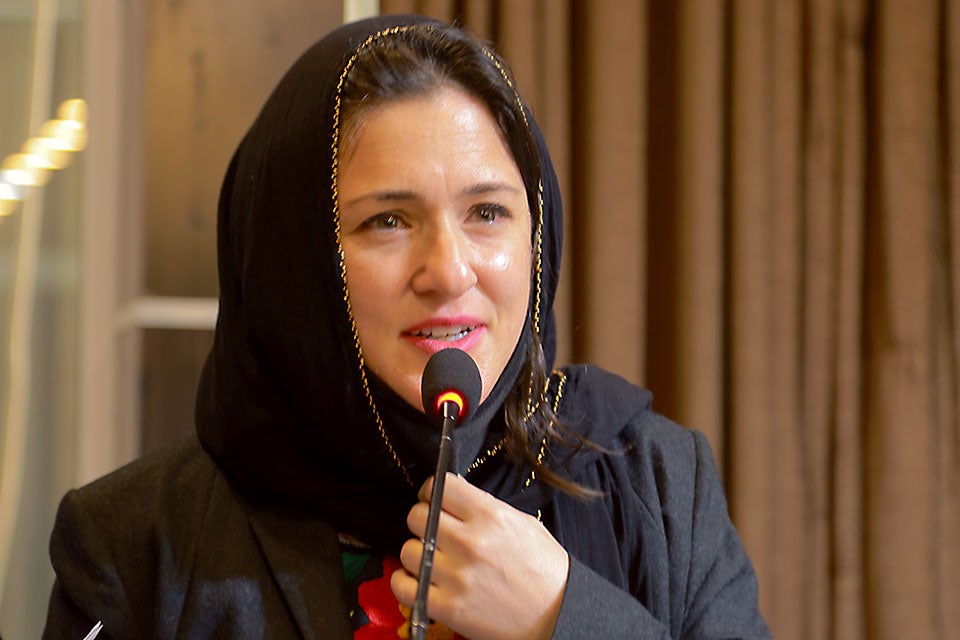
Press briefing at the United Nations by UN Women Special Representative in Afghanistan, Susan Ferguson

14 August 2026
Press briefing at the United Nations by UN Women Special Representative in Afghanistan, Susan Ferguson
Image
A portrait of an Afghan woman in silhouette
Press release

Five years after the Taliban takeover: the normalization of the exclusion of women and girls in Afghanistan

12 August 2026
Five years after the Taliban takeover: the normalization of the exclusion of women and girls in Afghanistan
Image
Women pose in front of a bus with the Born Perfect campaign banner
Feature

Inside Liberia’s campaign to end female genital mutilation (FGM)

10 August 2026
Inside Liberia’s campaign to end female genital mutilation (FGM)

Footer menu-HQ

  • News and stories
  • Resources
  • What we do
  • How we work
  • Where we are
  • Partnerships
  • Employment
  • Procurement
  • Contact us
  • Executive Board
  • Commission on the Status of Women

Donate button menu [Footer tablet]

  • Donate

Donate button menu [Footer]

  • Donate

Social media menu

  • Facebook
  • Twitter
  • LinkedIn
  • Flickr
  • YouTube
  • Instagram
UN Women - For all women and girls

Footer bottom [Menu]

  • Copyright
  • Information security
  • Privacy notice
  • Report wrongdoing
  • Terms of use
Share this page
  • Share to Facebook
  • Share to Twitter
  • Share to LinkedIn
  • Share to E-mail

Or copy link