
Universal menu

  • Global
  • Regions
    • Africa
    • Americas and the Caribbean
    • Arab States
    • Asia and the Pacific
    • Europe and Central Asia
  • Knowledge
  • Data
  • Training
  • Transparency
UN Women - For all women and girls

Main Navigation-HQ

  • Who we are
    • About us
      • About UN Women
      • Business model
      • Guiding documents
      • Worldwide presence
    • Leadership
      • Governance structure
      • Executive leadership
      • Executive Board
      • Accountability
    • Work with us
      • Employment
      • Procurement
      • Calls for proposals
      • Contact us
      • UN Women Strategic Plan 2026–2029
      • UN Women Strategic Plan 2026–2029 - social media image
        UN Women Strategic Plan 2026–2029
  • What we do
    • Focus areas
      • Ending violence against women
      • Peace and security
      • Humanitarian action
      • Leadership and governance
      • Economic empowerment
      • Innovation and technology
      • Women with disabilities
      • Youth
      • HIV and AIDS
    • How we work
      • 2030 Agenda for Sustainable Development
      • Commission on the Status of Women
      • Gender parity in the UN system
      • Intergovernmental support
      • Partnerships
      • Research and data
      • Training Centre
      • Trust funds
      • UN system coordination
      • Gender Equality Accelerators
      • Gender Equality Accelerators artwork
        Gender Equality Accelerators
  • News and stories
    • Latest
      • News
      • Articles and explainers
      • In focus
    • Media center
      • Press materials
      • Media contacts
      • Explainer: Why are women so exhausted? Care work and the mental load
      • Two adults stand at a table changing diapers on baby dolls, with laundry hanging on a clothesline behind them in a home setting.
        Explainer: Why are women so exhausted? Care work and the mental load
      • Press release: Aid cuts dismantle women’s organizations working in humanitarian crises
      • A young Ugandan woman sits with another local woman to talk
        Press release: Aid cuts dismantle women’s organizations working in humanitarian crises
  • Digital library
    • Resources
      • Publications
      • Annual reports
      • Progress of the world’s women
      • World survey on the role of women in development
      • The gender snapshot
    • GenderTerm
      • GenderTerm
      • Reprint permissions
      • UN Women Highlights 2025–2026
      • A smiling woman.
        UN Women Highlights 2025–2026
      • The gender snapshot 2025
      • gender snapshot thumbnail transparent
        The gender snapshot 2025
  • Get involved
    • How to get involved
      • For ALL Women and Girls
      • International Women's Day
      • 16 Days of Activism to End Violence against Women and Girls
      • UNiTE! Campaign to End Violence against Women
      • Generation Equality
      • He for She
Ask AI
https://84e5cfacd5c7e99f9825edf344450c.1b.environment.api.powerplatform.com/powervirtualagents/botsbyschema/crad4_websiteQA/directline/token?api-version=2022-03-01-preview
1
-
Ask your question here
AI website assistant

Hello, how can I assist you?

AI chatbot responses may be incorrect. Always verify important information.

Donate button menu

Donate

Breadcrumb

  1. Home
  2. Explore Our Latest News
  3. Explore Our Latest News

Website survey

We want to know how we can improve your experience on this website. Completing this survey takes less than 5 minutes.

TAKE THE SURVEY
Impact story

Supporting women’s entrepreneurship in Kazakhstan

5 May 2023
  • Share to Facebook
  • Share to Twitter
  • Share to LinkedIn
  • Share to E-mail

Women’s economic empowerment is an investment with high returns. It improves the conditions of individual women and their families. It lays the groundwork for global gender equality, poverty eradication and inclusive economic growth. It brings fresh perspectives, ideas and energy to businesses and industries. And yet, around the world, women remain underrepresented in formal employment and unable to access the resources necessary to start their own businesses.  

It was with this issue in mind that, in 2021, Kazakhstan pledged to open 17 Women’s Entrepreneurship Development Centers (WEDCs) in all provinces and major cities of the country—part of the country’s commitments to UN Women’s Generation Equality initiative through the Action Coalition on Economic Justice and Rights. In partnership with the National Chamber of Entrepreneurs and other international organizations, the Government of Kazakhstan and UN Women launched the WEDCs that same year, giving women across the country the opportunity to start or expand their businesses.  

The Centers provide access to information, financing and professional networks, as well as equipping women with the necessary tools and knowledge to digitize their businesses and establish them on e-commerce platforms. To date, more than 9,000 women have been provided with a total of 26,386 services.  
Image
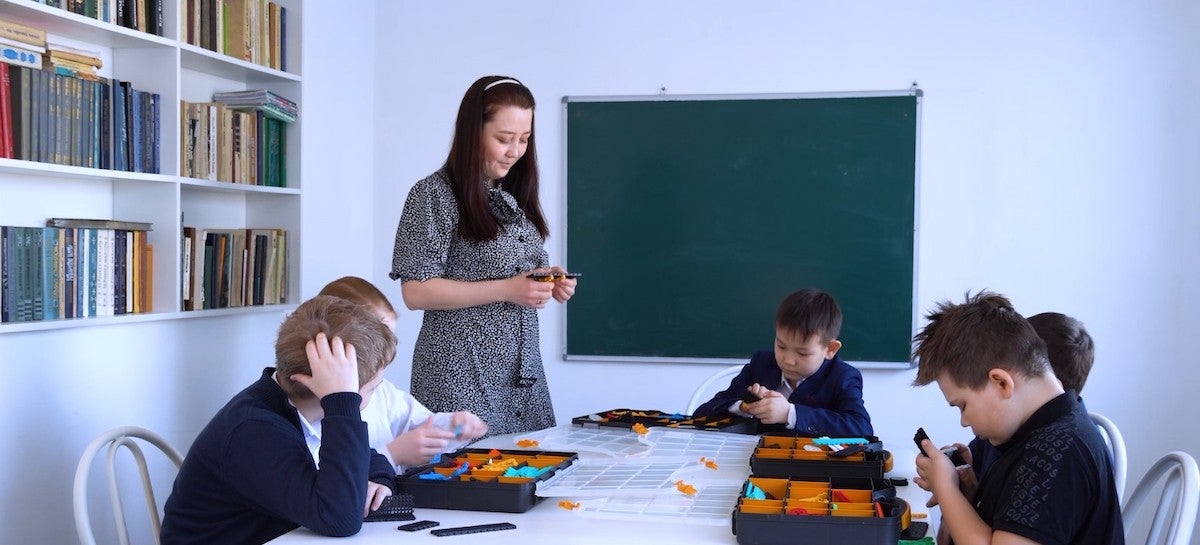
After receiving training at one of the WEDCs, Perizat Inkarbayeva's project to teach robotics and neurotechnology got a boost. Photo: UN Women Kazakhstan

“A special feature of this project was the provision of services according to the needs of women,” said Nurgul Musabekova, coordinator of the WEDCs “Among the training programs, the courses on social media marketing and marketplace business were in particular high demand. Thus, women entrepreneurs and women with entrepreneurial initiative got an opportunity to digitalize their business.” 

Perizat Inkarbayeva, founder of Dignatera, a digital technology center in Karaganda, won a grant from the city's mayor office after receiving training at one of the Centers. Her project to teach robotics and neurotechnology was recognized as relevant and in demand, especially by young students. 

"Thanks to the WEDC, I was trained in social entrepreneurship. Today there are more than 150 children studying at our center, and the income of my business has doubled,” said Perizat. “The most important fact is that children have the opportunity to learn digital technology. Our center has been operating for two years now, and since then, we have prepared many winners of national and international competitions and created new workplaces for teachers. We are proud to contribute to the development of the city, as the national innovation center of Kazakhstan."  
Image
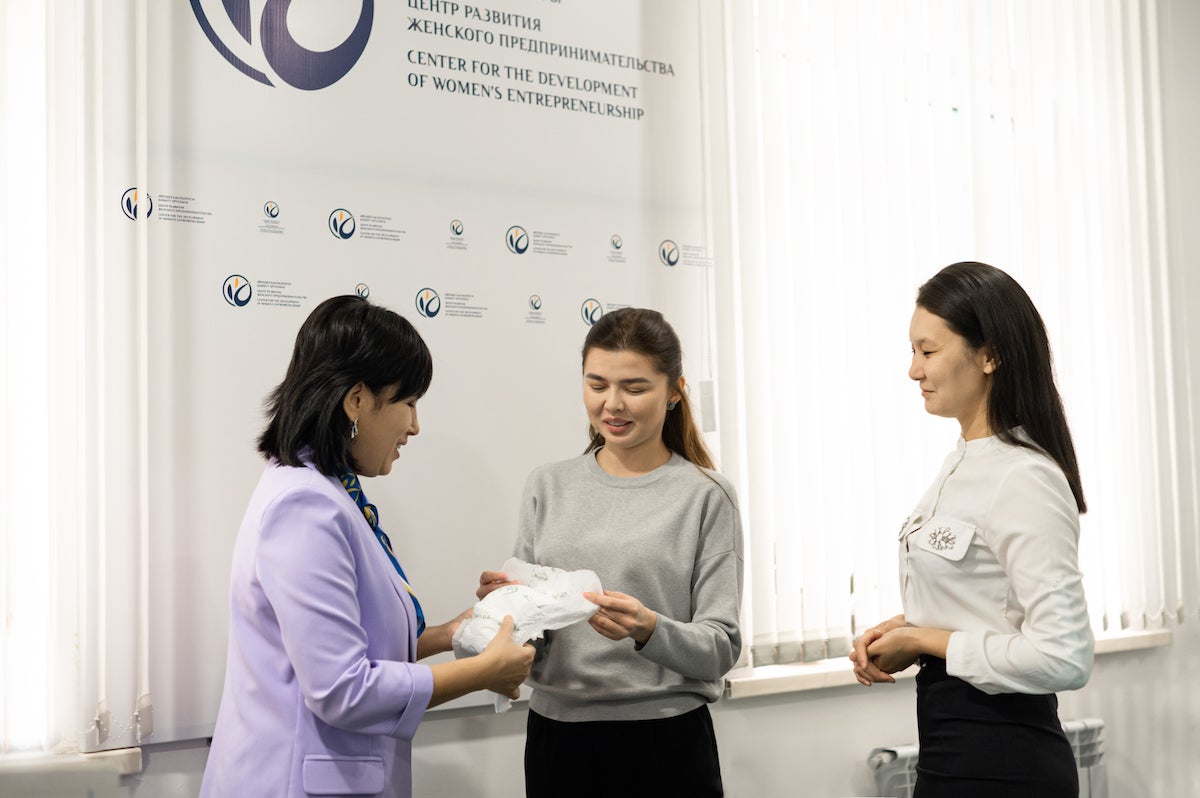
The Government of the Republic of Kazakhstan opened 17 Women’s Entrepreneurship Development Centers (WEDCs) as part of its Generation Equality commitments to the Action Coalition on Economic Justice and Rights. Photo: UN Women Kazakhstan

Nazgul Nassiyeva, from the Zhambyl region in the southern part of Kazakhstan, also received training at one of the Centers. After several months of intensive courses and seminars, she mastered social entrepreneurship, marketing and finance skills.  

“I’ve always been a businesswoman, but it’s only now that I decided to open my own business. My training at the Women’s Entrepreneurship Centre and my personal story put me on this path”, says Nazgul. 

Her business produces high quality, affordable diapers for children with disabilities—a product developed on the basis of her own personal experience.  Along with a team of specialists, she is also working to create a mobile application that would enable mothers of children with disabilities to form a support community.  

Founded with the financial and technical support of international organizations, from 2023 the WEDCs initiative will continue to grow under full government funding of USD 2 million secured by the Ministry of National Economy of the Republic of Kazakhstan. 

Generation Equality is the world’s leading initiative to accelerate investment and implementation on gender equality. It brings together organizations from every part of society to catalyze progress, advocate for change and take bold actions together. 

The Generation Equality Action Coalition on Economic Justice and Rights promotes gender equality by addressing economic and social barriers that prevent women and girls from realizing their full potential.  

Kazakhstan has committed to establishing 17 resource centers across the country to implement a concept of “One village – one product”, mainstreaming public incentives and investment programs for women in the informal economy, including agricultural producers, processors and manufacturers, that offer them decent work, improved market access and better earnings.  

This project of the National Chamber of Entrepreneurs (“Atameken”) is supported by the Ministry of Labor and Social Protection, the National Commission for Women Affairs, Family and Demographic Policy under the President of the Republic of Kazakhstan, the Government of Kazakhstan, UN Women, UNDP, and the Asian Development Bank. 

This story of impact was produced by UN Women Kazakhstan with information of the Government of the Republic of Kazakhstan. 

Learn more about Generation Equality here: https://forum.generationequality.org/  

Explore more commitments like this one using the Commitments Dashboard: https://dashboard.commitments.generationequality.org/  

Topics

  • Generation Equality
  • Economic empowerment
  • Entrepreneurship
  • Innovation and technology
  • Europe and Central Asia
  • Kazakhstan

Related content

Image
Image placeholder with UN Women logo (English) - 3:2 aspect ratio
Statement

UN Women statement for International Equal Pay Day 2026

18 September 2026
UN Women statement for International Equal Pay Day 2026
Image
A young woman poses for a portrait while wearing a UN Women vest
Feature

Serving through crisis: UN Women’s humanitarian workers on what keeps them going

17 August 2026
Serving through crisis: UN Women’s humanitarian workers on what keeps them going
Image
Nepal is part of a growing global movement to transform care systems that work better for women, families, and communities. UN Women’s Transform Care Investment Initiative Asia-Pacific calls for catalytic investments to benefit at least 100 million women and girls and create 125 million new employment opportunities in the care economy by 2035, and reduce women’s unpaid care work. In this photo, a woman assists an older woman walking on the street. Photo: UN Women/Srijana Bhatta
Feature

Kathmandu is a caring city – here’s what that means for women

17 July 2026
Kathmandu is a caring city – here’s what that means for women

Footer menu-HQ

  • News and stories
  • Resources
  • What we do
  • How we work
  • Where we are
  • Partnerships
  • Employment
  • Procurement
  • Contact us
  • Executive Board
  • Commission on the Status of Women

Donate button menu [Footer tablet]

  • Donate

Donate button menu [Footer]

  • Donate

Social media menu

  • Facebook
  • Twitter
  • LinkedIn
  • Flickr
  • YouTube
  • Instagram
UN Women - For all women and girls

Footer bottom [Menu]

  • Copyright
  • Information security
  • Privacy notice
  • Report wrongdoing
  • Terms of use
Share this page
  • Share to Facebook
  • Share to Twitter
  • Share to LinkedIn
  • Share to E-mail

Or copy link