
Universal menu

  • Global
  • Regions
    • Africa
    • Americas and the Caribbean
    • Arab States
    • Asia and the Pacific
    • Europe and Central Asia
  • Knowledge
  • Data
  • Training
  • Transparency
UN Women - For all women and girls

Main Navigation-HQ

  • Who we are
    • About us
      • About UN Women
      • Business model
      • Guiding documents
      • Worldwide presence
    • Leadership
      • Governance structure
      • Executive leadership
      • Executive Board
      • Accountability
    • Work with us
      • Employment
      • Procurement
      • Calls for proposals
      • Contact us
      • UN Women Strategic Plan 2026–2029
      • UN Women Strategic Plan 2026–2029 - social media image
        UN Women Strategic Plan 2026–2029
  • What we do
    • Focus areas
      • Ending violence against women
      • Peace and security
      • Humanitarian action
      • Leadership and governance
      • Economic empowerment
      • Innovation and technology
      • Women with disabilities
      • Youth
      • HIV and AIDS
    • How we work
      • 2030 Agenda for Sustainable Development
      • Commission on the Status of Women
      • Gender parity in the UN system
      • Intergovernmental support
      • Partnerships
      • Research and data
      • Training Centre
      • Trust funds
      • UN system coordination
      • Gender Equality Accelerators
      • Gender Equality Accelerators artwork
        Gender Equality Accelerators
  • News and stories
    • Latest
      • News
      • Articles and explainers
      • In focus
    • Media center
      • Press materials
      • Media contacts
      • Explainer: Why are women so exhausted? Care work and the mental load
      • Two adults stand at a table changing diapers on baby dolls, with laundry hanging on a clothesline behind them in a home setting.
        Explainer: Why are women so exhausted? Care work and the mental load
      • Press release: Aid cuts dismantle women’s organizations working in humanitarian crises
      • A young Ugandan woman sits with another local woman to talk
        Press release: Aid cuts dismantle women’s organizations working in humanitarian crises
  • Digital library
    • Resources
      • Publications
      • Annual reports
      • Progress of the world’s women
      • World survey on the role of women in development
      • The gender snapshot
    • GenderTerm
      • GenderTerm
      • Reprint permissions
      • UN Women Highlights 2025–2026
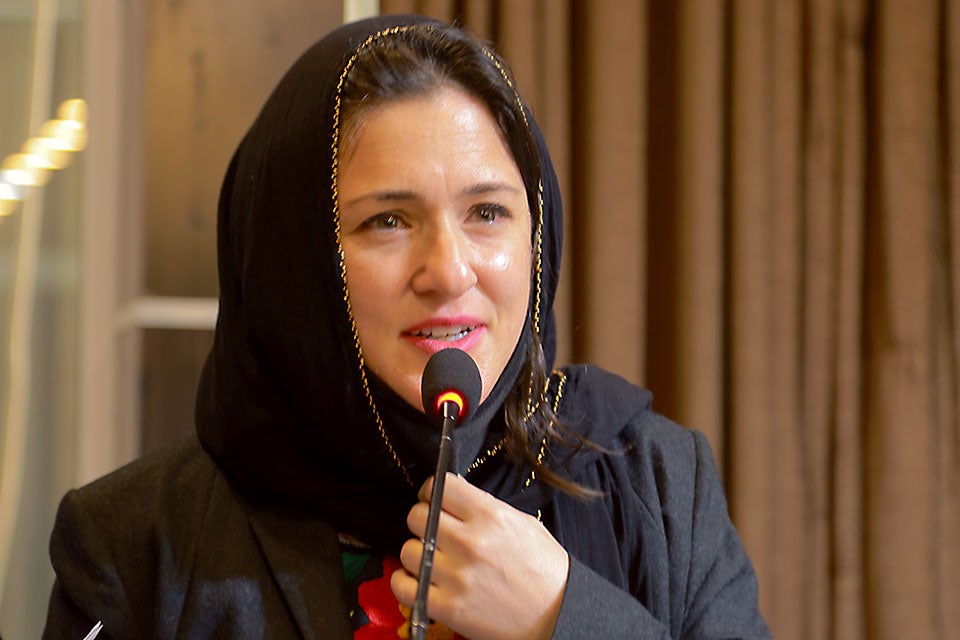
      • A smiling woman.
        UN Women Highlights 2025–2026
      • The gender snapshot 2025
      • gender snapshot thumbnail transparent
        The gender snapshot 2025
  • Get involved
    • How to get involved
      • For ALL Women and Girls
      • International Women's Day
      • 16 Days of Activism to End Violence against Women and Girls
      • UNiTE! Campaign to End Violence against Women
      • Generation Equality
      • He for She
Ask AI
https://84e5cfacd5c7e99f9825edf344450c.1b.environment.api.powerplatform.com/powervirtualagents/botsbyschema/crad4_websiteQA/directline/token?api-version=2022-03-01-preview
1
-
Ask your question here
AI website assistant

Hello, how can I assist you?

AI chatbot responses may be incorrect. Always verify important information.

Donate button menu

Donate

Breadcrumb

  1. Home
  2. Explore Our Latest News
  3. Explore Our Latest News

Website survey

We want to know how we can improve your experience on this website. Completing this survey takes less than 5 minutes.

TAKE THE SURVEY
Speech

Speech: Re-calibrating our global conversation on care

Opening statement by UN Women Executive Director Sima Bahous on “Embracing the principle of co-responsibility in care and domestic work” at the high-level panel in the context of the 77th session of the UN General Assembly.

27 September 2022
UN Women Executive Director Sima Bahous
  • Share to Facebook
  • Share to Twitter
  • Share to LinkedIn
  • Share to E-mail

Today’s dialogue is most timely. The Care Economy is taking centre stage at a moment when gender equality globally is under attack and at risk of regression. The COVID-19 pandemic demonstrated how fundamentally linked care is linked to inequality. Let me give you some evidence. The pandemic led to an estimated 512 billion additional hours of unpaid childcare work for women across the globe.

The gender gap in employment, already large before the pandemic, has expanded across almost all countries, threatening to increase gender pay gaps. Research shows us that partnered women with children, especially young children, experienced sharper pandemic-related drops in labour force participation than men. In fact, women’s labour force participation is projected to remain below pre-pandemic levels in 169 countries and areas.

COVID has revealed the world’s dependence on women as unpaid and primary care-givers. Women’s work has proven essential. But it remains largely unrecognized and unsupported, especially in times of crisis. This has had results that have seriously and negatively affected women’s livelihoods and futures.

Today’s event is an opportunity to re-calibrate our global conversation on care. Using the intensified spotlight on care systems provoked by COVID, we now have an opportunity to reassess the care economy through the lens of gender equality. This is a conversation that has its foundations in Generation Equality. This critical and unprecedented multi-stakeholder platform, which is convened by UN Women, was born from a recognition that gender equality implementation and action needs global acceleration. It brings together stakeholders from across sectors to make ambitious commitments to advance women’s and girls’ rights worldwide.

I am very proud that the Global Alliance for Care, co-convened by the National Institute of Women of Mexico (INMUJERES) and UN Women, is a collective commitment of Generation Equality’s Action Coalition for Economic Justice and Rights. It is powerful evidence of the impact we are seeing in just one year since the Alliance’s launch in Mexico City and Paris.

As we will hear today, we have an unparalleled opportunity to transform the care economy and accelerate results on gender equality and across the SDGs through: 1. Investing in quality, affordable, and accessible care services and infrastructure; 2. Implementing policies that recognize, reduce, and redistribute women’s and girls’ unpaid work; and 3. Representing and rewarding paid care workers.

All of us have a role to play—UN bodies, member states, youth-led organizations, the private sector, civil society, international organizations and philanthropy.

Allow me to share just one example. UN Women and ILO are jointly delivering results through “Promoting Decent Employment for Women through Inclusive Growth Policies and Investments in the Care Economy”.  Policy tools have been successfully developed that provide a blueprint for governments to cost care system needs, assess coverage gaps, and estimate the employment and fiscal returns of investment in care infrastructure. Over 35 of our country offices are working with a range of partners—government, civil society and other development actors to advance the policy agenda to transform the care economy. Since the launch of the Care Alliance, 78 governments, international organizations, the corporate sector and civil society organizations from around the world have joined the Alliance. This clearly shows us the growing prominence of care and care work on the global agenda.

The Global Alliance for Care exemplifies therefore a model of co-responsibility and public and private investment into comprehensive care systems. Those investments, commitments and innovative solutions will create resilience to crises, strengthen our economies and advance gender equality and women’s economic empowerment.

The women of the world have waited too long already for this. Together, we now have an opportunity to make a lasting change in how we recognize, affirm and support care work across our societies. Let us not wait a moment longer.

 I thank you.

'Women’s work has proven essential. But it remains largely unrecognized & unsupported, especially in times of crisis.'
- @unwomenchief Sima Bahous speaking at the Global Alliance For Care event on Embracing the Principle of Co-Responsibility in Care & Domestic Work.

#UNGA pic.twitter.com/lWxk7MkALU

— UN Women (@UN_Women) September 27, 2022

Topics

  • Economic empowerment
  • Unpaid work
  • COVID-19
  • Care and support services
  • Executive Director

Related content

Image
Nepal is part of a growing global movement to transform care systems that work better for women, families, and communities. UN Women’s Transform Care Investment Initiative Asia-Pacific calls for catalytic investments to benefit at least 100 million women and girls and create 125 million new employment opportunities in the care economy by 2035, and reduce women’s unpaid care work. In this photo, a woman assists an older woman walking on the street. Photo: UN Women/Srijana Bhatta
Feature

Kathmandu is a caring city – here’s what that means for women

17 July 2026
Kathmandu is a caring city – here’s what that means for women
Image
Women sit together on the floor inside an indoor space, with a woman wearing a purple headscarf seated in the foreground.
Feature

Aid cuts, employment bans, movement restrictions: The triple threat to Afghan women

16 July 2026
Aid cuts, employment bans, movement restrictions: The triple threat to Afghan women
Image
A photo of a happy and affectionate family, seated on the floor next to fresh food they are sharing
Press release

Media fact sheet: Five reasons why the care economy is one of the most transformative investments of our time

24 June 2026
Media fact sheet: Five reasons why the care economy is one of the most transformative investments of our time

Footer menu-HQ

  • News and stories
  • Resources
  • What we do
  • How we work
  • Where we are
  • Partnerships
  • Employment
  • Procurement
  • Contact us
  • Executive Board
  • Commission on the Status of Women

Donate button menu [Footer tablet]

  • Donate

Donate button menu [Footer]

  • Donate

Social media menu

  • Facebook
  • Twitter
  • LinkedIn
  • Flickr
  • YouTube
  • Instagram
UN Women - For all women and girls

Footer bottom [Menu]

  • Copyright
  • Information security
  • Privacy notice
  • Report wrongdoing
  • Terms of use
Share this page
  • Share to Facebook
  • Share to Twitter
  • Share to LinkedIn
  • Share to E-mail

Or copy link