Universal menu

  • Global
  • Regions
    • Africa
    • Americas and the Caribbean
    • Arab States
    • Asia and the Pacific
    • Europe and Central Asia
  • Knowledge
  • Data
  • Training
  • Transparency
UN Women - For all women and girls

Main Navigation-HQ

  • Who we are
    • About us
      • About UN Women
      • Business model
      • Guiding documents
      • Worldwide presence
    • Leadership
      • Governance structure
      • Executive leadership
      • Executive Board
      • Accountability
    • Work with us
      • Employment
      • Procurement
      • Calls for proposals
      • Contact us
      • UN Women Strategic Plan 2026–2029
      • UN Women Strategic Plan 2026–2029 - social media image
        UN Women Strategic Plan 2026–2029
  • What we do
    • Focus areas
      • Ending violence against women
      • Peace and security
      • Humanitarian action
      • Leadership and governance
      • Economic empowerment
      • Innovation and technology
      • Women with disabilities
      • Youth
      • HIV and AIDS
    • How we work
      • 2030 Agenda for Sustainable Development
      • Commission on the Status of Women
      • Gender parity in the UN system
      • Intergovernmental support
      • Partnerships
      • Research and data
      • Training Centre
      • Trust funds
      • UN system coordination
      • Gender Equality Accelerators
      • Gender Equality Accelerators artwork
        Gender Equality Accelerators
  • News and stories
    • Latest
      • News
      • Articles and explainers
      • In focus
    • Media center
      • Press materials
      • Media contacts
      • Explainer: Why are women so exhausted? Care work and the mental load
      • Two adults stand at a table changing diapers on baby dolls, with laundry hanging on a clothesline behind them in a home setting.
        Explainer: Why are women so exhausted? Care work and the mental load
      • Press release: Aid cuts dismantle women’s organizations working in humanitarian crises
      • A young Ugandan woman sits with another local woman to talk
        Press release: Aid cuts dismantle women’s organizations working in humanitarian crises
  • Digital library
    • Resources
      • Publications
      • Annual reports
      • Progress of the world’s women
      • World survey on the role of women in development
      • The gender snapshot
    • GenderTerm
      • GenderTerm
      • Reprint permissions
      • UN Women Highlights 2025–2026
      • A smiling woman.
        UN Women Highlights 2025–2026
      • The gender snapshot 2025
      • gender snapshot thumbnail transparent
        The gender snapshot 2025
  • Get involved
    • How to get involved
      • For ALL Women and Girls
      • International Women's Day
      • 16 Days of Activism to End Violence against Women and Girls
      • UNiTE! Campaign to End Violence against Women
      • Generation Equality
      • He for She
Ask AI
https://84e5cfacd5c7e99f9825edf344450c.1b.environment.api.powerplatform.com/powervirtualagents/botsbyschema/crad4_websiteQA/directline/token?api-version=2022-03-01-preview
1
-
Ask your question here
AI website assistant

Hello, how can I assist you?

AI chatbot responses may be incorrect. Always verify important information.

Donate button menu

Donate

Breadcrumb

  1. Home
  2. Explore Our Latest News
  3. Explore Our Latest News

Website survey

We want to know how we can improve your experience on this website. Completing this survey takes less than 5 minutes.

TAKE THE SURVEY
Statement

Putting survivors at the forefront of the global movement to end female genital mutilation

6 February 2024
  • Share to Facebook
  • Share to Twitter
  • Share to LinkedIn
  • Share to E-mail

Joint Statement by UNFPA Executive Director Dr. Natalia Kanem, UNICEF Executive Director Catherine Russell, OHCHR High Commissioner Volker Türk, UN Women Executive Director Sima Bahous, WHO Director-General Dr. Tedros Adhanom Ghebreyesus on the International Day of Zero Tolerance for Female Genital Mutilation

[Also available in Arabic]

NEW YORK, 6 February 2024 – “Today, on the International Day of Zero Tolerance for Female Genital Mutilation, we reaffirm our dedication to the girls and women who have been subjected to this grave violation of human rights. Every survivor's voice is a call to action, and every choice they make in reclaiming their lives contributes to the global movement to end this harmful practice.

“More than 200 million girls and women alive today have undergone female genital mutilation. This year, nearly 4.4 million girls will be at risk of this harmful practice. This equates to more than 12,000 cases every day.

“In keeping with the commitments outlined in the Beijing Declaration and Platform for Action, those agreed during the 25th Anniversary of the International Conference on Population and Development , Generation Equality, and other normative frameworks including The Convention on the Elimination of All Forms of Discrimination Against Women and the Convention on the Rights of the Child and their general recommendations, as well as Sustainable Development Goal target 5.3, we reiterate our commitment to prevent and respond to this harmful practice against women and girls.

“Female genital mutilation is a violation of women’s and girls’ rights, one that endangers their physical and mental health and limits their potential to lead healthy and fulfilling lives. It increases their risk of serious pain, bleeding and infections and the likelihood of other health complications later in life, including risks during childbirth, which can imperil the lives of their newborns.

“That is why, in our pursuit of a world free of discrimination and practices that harm girls and women, it is imperative that we turn our attention to the voices that matter most – the voices of survivors.

“We must amplify the voices of survivors to raise awareness and inspire collective action, and promote their power and autonomy by ensuring they have an active role in prevention and response interventions.

“Survivors have first-hand knowledge of the challenges they face and the tools needed to eliminate the practice. It is crucial that we invest in survivor-led movements, especially at the grassroots level, by dedicating resources that will advance their efforts.

“We also must ensure that comprehensive and culturally sensitive services are available and accessible. This includes strengthening the provision of health care and social and legal services to support survivors.

“UNFPA and UNICEF, as the lead agencies of the Global Joint Progamme on Eliminating FGM, OHCHR, UN Women, and WHO, and other United Nations entities remain steadfast in partnering with survivors as community champions and leaders and ensuring their voices and perspectives inform programmes to prevent and respond to FGM. Indeed, investing in movement-building and promoting girls’ and women’s agency is at the core of the UN Joint Programme on Eliminating FGM.

“We celebrate progress that has been achieved: The practice of FGM has been declining over the last three decades, and in the 31 countries with nationally representative prevalence data, around 1 in 3 girls aged 15 to 19 today have undergone the practice versus 1 in 2 in the 1990s.

“As of last year, the Joint Programme supported more than 11,000 organizations, of which 83 per cent were grassroots organizations partnering with coalitions and survivor-led movements, advocating for changes in policies and laws, and championing changes to social and gender norms.

“Yet there is an urgent need for even more targeted, coordinated and sustained efforts if we are to achieve our common goal of ending female genital mutilation by 2030. Together, led by survivors, we can consign this harmful practice to history, once and for all.”

Topics

  • Ending violence against women and girls
  • Harmful practices

Related content

Image
UNWomen_Placeholder
Statement

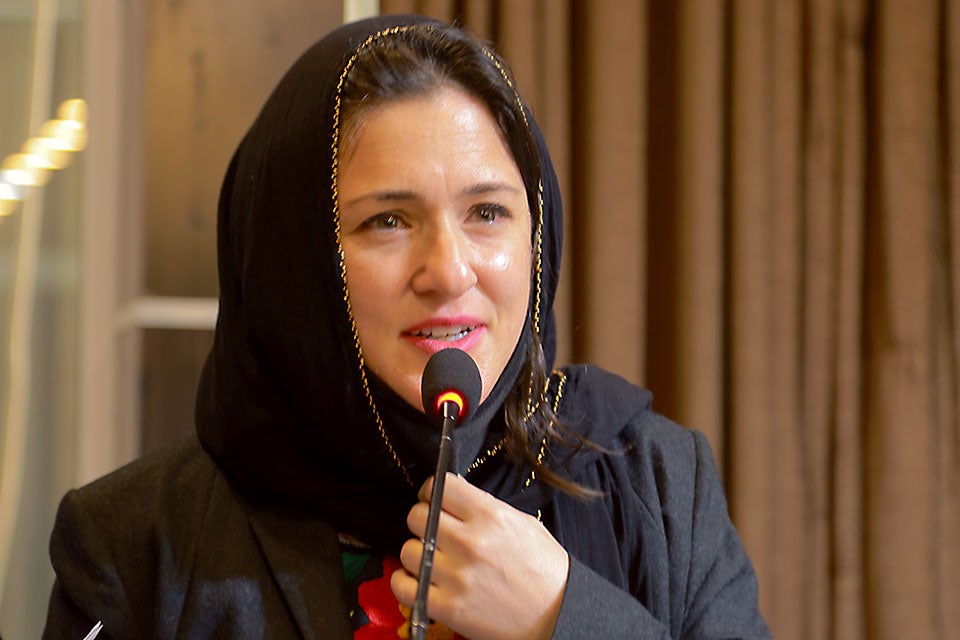
A year since Afghan women staff barred from entering United Nations premises across the country

7 September 2026
A year since Afghan women staff barred from entering United Nations premises across the country
Image
Sidi Haidara speaks into a microphone
Feature

One man’s quest to end female genital mutilation (FGM) in Mali

27 August 2026
One man’s quest to end female genital mutilation (FGM) in Mali
Image
Image placeholder with UN Women logo (English) - 3:2 aspect ratio
Press briefing

Press briefing at the United Nations by UN Women Special Representative in Afghanistan, Susan Ferguson

14 August 2026
Press briefing at the United Nations by UN Women Special Representative in Afghanistan, Susan Ferguson

Footer menu-HQ

  • News and stories
  • Resources
  • What we do
  • How we work
  • Where we are
  • Partnerships
  • Employment
  • Procurement
  • Contact us
  • Executive Board
  • Commission on the Status of Women

Donate button menu [Footer tablet]

  • Donate

Donate button menu [Footer]

  • Donate

Social media menu

  • Facebook
  • Twitter
  • LinkedIn
  • Flickr
  • YouTube
  • Instagram
UN Women - For all women and girls

Footer bottom [Menu]

  • Copyright
  • Information security
  • Privacy notice
  • Report wrongdoing
  • Terms of use
Share this page
  • Share to Facebook
  • Share to Twitter
  • Share to LinkedIn
  • Share to E-mail

Or copy link